




«Monsieur»: when Cinderella wears a sari and a dream
Cinema Wednesdays cinéma - Hélène Lavoyer
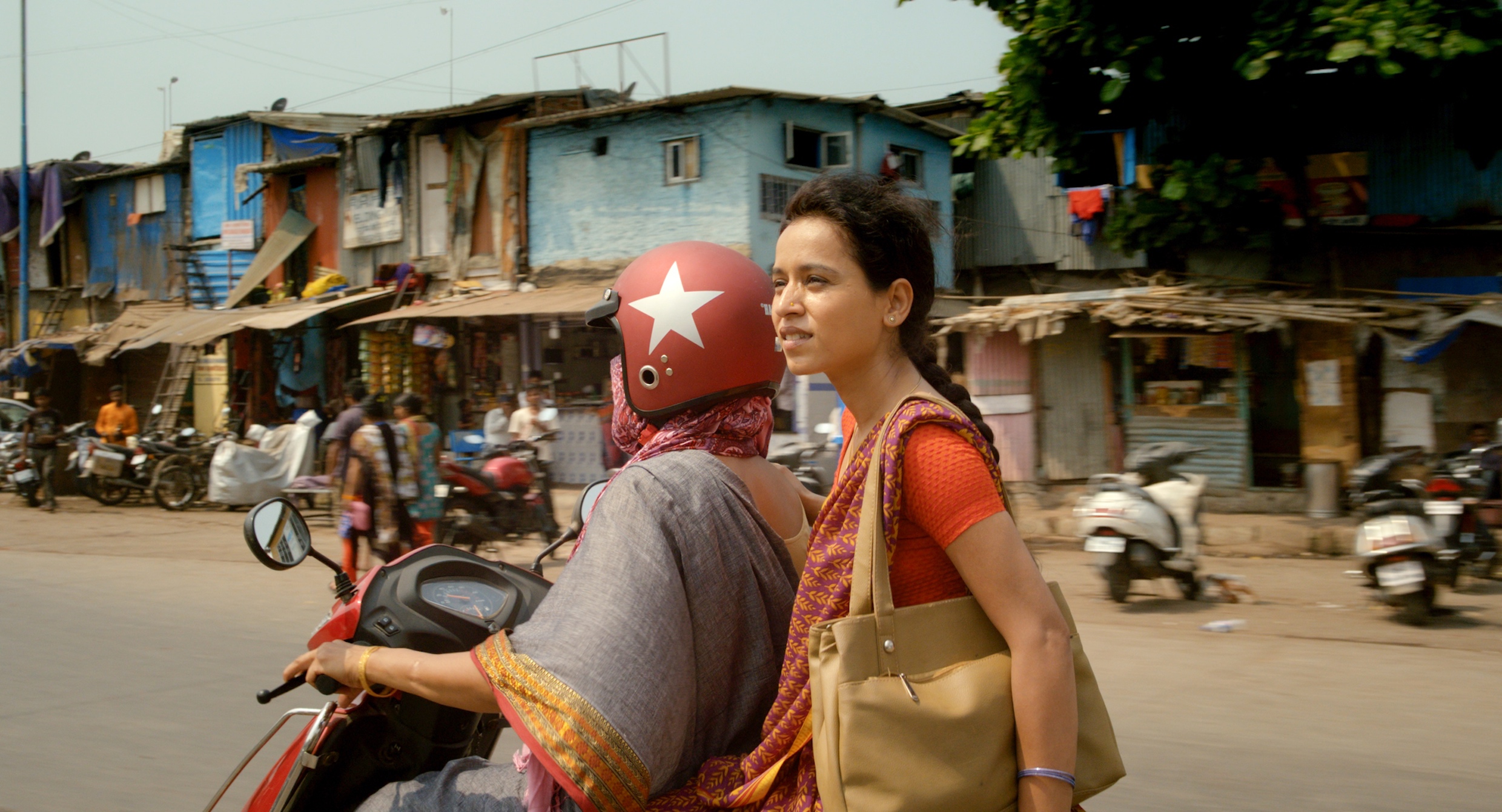
A wide shot of a young woman in a room whose dim light contrasts with the brightness outside. Silently, we follow her outside and discover a rural village in India. The colors are earthy and sandy, the orange, blue and silver of the saris jump out at us, and we can hear the sounds of nature and bursts of voices. The young woman, Rajna, says goodbye to her grandmother and sister before settling on the back of a motorcycle and beginning her journey back to Bombay. Her face shows neither joy nor sadness, but rather resignation.
When she arrives at her destination, her modest origins stand in stark contrast to the luxurious apartment at the top of a skyscraper she enters, where she begins by tidying up, the tinkling of her bracelets the only soundtrack. Later, having dozed off while reading a magazine, Aschwin enters. Hastily, she stands up. The well-groomed man immediately appears distraught, downcast. After a moment's hesitation, Rajna withdraws without a word and without bringing him the dinner she had prepared for him.
One scene follows another, and for Rajna, daily life consists of two things: her work as a servant to Aschwin, a rich man whose marriage has just been annulled and who is gradually recovering from the ordeal, and her dream of becoming a seamstress. At a time when the young man is at his lowest ebb, Rajna's presence is a support; and her determination in all the things she undertakes to achieve her ends make her a truly brave woman, as he will tell her. A kiss between them will turn their lives upside down.
«No matter what you think... or feel. I'll always be your servant.»
A society of castes
In India, it's common practice for members of certain low castes to be employed by wealthy Indians, mostly from well-to-do castes. Sometimes, this work enables the servant's family to start a course of study or training, but it's a double-edged sword, since it also maintains an extremely rigid and standardized division of society. With Mr., This system, which reduces social mobility to an elusive dream, is being called into question.
As is often the case, love is the means to cross all boundaries and achieve the greatest things. But Rohena Gera hasn't used the mushy recipe, which would have advocated that her modern-day Cinderella gets out of her poor situation thanks to a prince who falls under her spell despite her rags. Rajna has character, and above all an ambition that goes beyond marriage, and, generous as he is and in love as he becomes, he never positions himself as savior, leaving Rajna free to feel humiliated by his behavior.
«Your mom wouldn't even sit at the same table as her. If you really love this girl, leave her alone.»
Because the film was shown in its original version, viewers can notice the different registers of language used in exchanges between the characters. The rich often don't even give their employees a glance, but Rajna and Aschwin mix Hindi and English in their exchanges, while those between the rich are mostly in English. Rajna, on the other hand, when chatting with the building's janitor, her servant friend or the cloth merchants, speaks only in Hindi, punctuated by a few words of English.
The contrast between two lives and two worlds
In the image and on the soundtrack, the cleavages between rural and urban, poverty and wealth, are well expressed; while its place of origin is almost tu, the city is very present. First through sound, with the incessant hum of various engines and the symphony of horns that characterize India's super-urban places like New Delhi. Then there's the image, with Bombay seen from inside the apartment or from the height of the building's roof terrace, and Bombay seen from the height of the building's roof terrace, and Bombay seen from the height of the building's roof terrace, and Bombay seen from the height of the building's roof terrace, and Bombay seen from the height of the building's roof terrace, and Bombay seen from the height of the building's roof terrace.
The theme of poverty is treated with honesty, but not in such a way as to make us feel sorry for either of these situations. The viewer quickly understands the pride that drives Rajna, but also that «this is the way things are»; it's as if things can't be changed - as reaffirmed by the harsh injunctions of Aschwin's father when the latter confides in him his love for Rajna - so we have to accept them and make the best of things in other ways, which is what Rajna does by undertaking her sewing studies.
The beginning of the film, which recounts in images his little journey from the countryside to the city, offers a magnificent transition and makes the viewer feel that something is happening here. Throughout the film, the music serves as a link between the two, with traditional sounds sharing the soundtrack with contemporary, more rhythmic and electronic music. The dialogues are carefully crafted, giving the impression that the story being told is approaching reality.
The director gives us some fine camera movements, including travellings from the living room where Aschwin stands to the kitchen that Rajna occupies most of the time when she's in the apartment. The two appear so close, even though a whole world separates them. The city is always Aschwin's background, and the interior Rajna's. This difference between Rajna and Aschwin was used extensively by Rohena Gera.
A beautiful Cinderella story
Sir, a sobering for this new interpretation of the Cinderella tale, in which we meet a complete a complete, living servant. She is at the center of the story, who reveals how the stigma of society can weigh on an individual's life and the psychology of an individual. Rajna refuses to be humiliated by a relationship relationship with him (in both their worlds), though her heart would know how to love him back, as we see in the final scene that brings them together on the building, but not in the way we think.
The film's script, imagery and message are carefully crafted, strong and convincing. The ending leaves the viewer's imagination wide open, allowing them to play a part in shaping the story. Whatever the case, viewers will find happiness in a story that is impossible to tell, but which has helped the two characters to grow, giving them the opportunity to remain true to themselves and their dreams. It will also take him on a journey through the streets of Bombay and a part of Indian culture.
«Rajna?
- ...
- Aschwin?»
Write to the author: [email protected]
Photo credit: © Xenix Films
| MONSIEUR |
|---|
| India, 2018 |
| Production: Rohena Gera |
| Screenplay: Rohena Gera |
| Interpretation: Tillotama Shome, Vivek Gomber, Geetanjali Kulkarni |
| Production: Inkpot Films |
| Distribution: Xenix Film |
| Duration: 1h38 |
| Release date: January 9, 2019 |
You'll also like


 French
  German
  English
Leave a comment