




A desperate little manual for understanding French politics
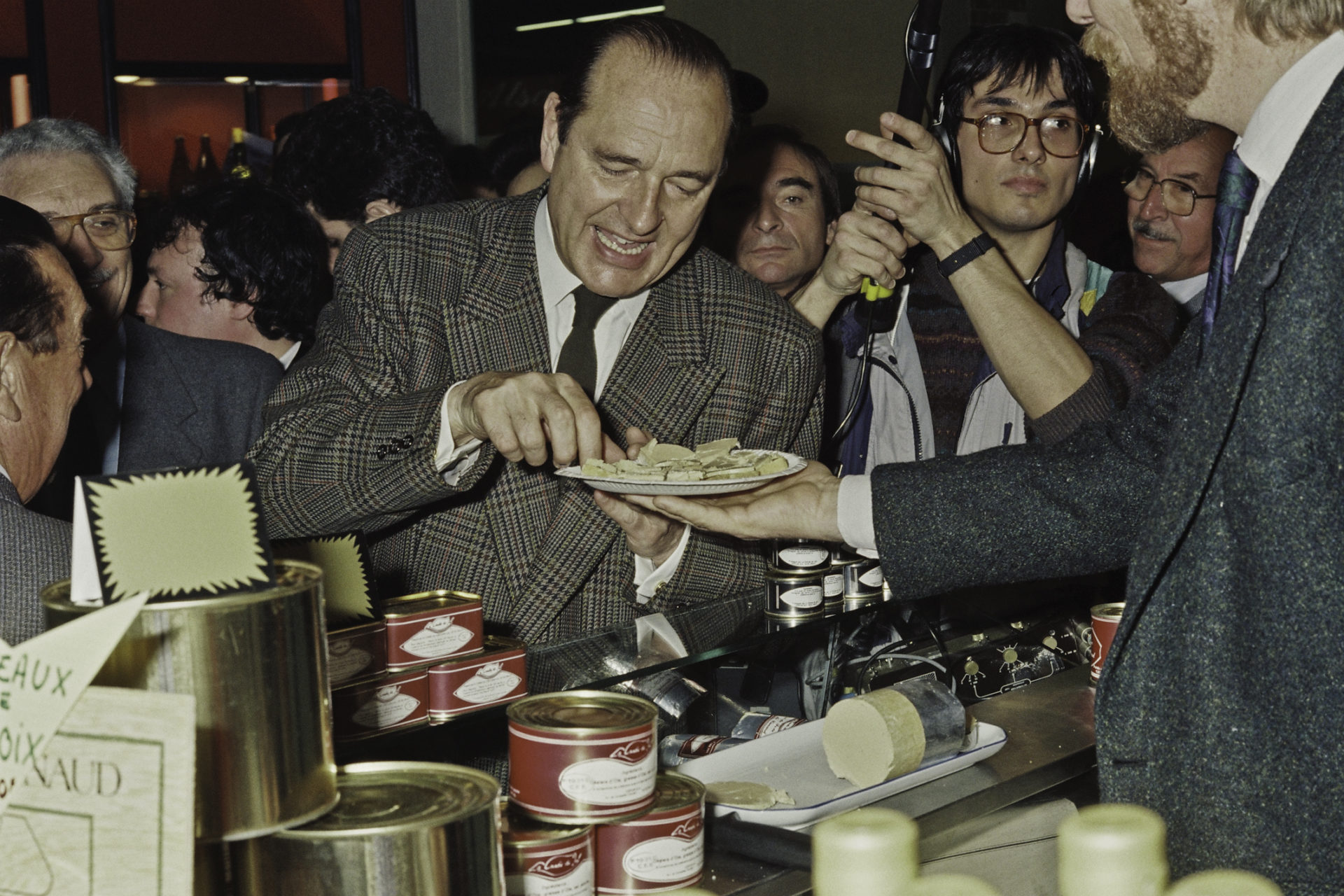
Jacques Chirac at the 1990 International Agricultural Show. Photo by INRA, DIST, Jean Weber (via Wikimedia), under CC BY 2.0
In this article, Nabil Djarfi describes the French government regime as «the capitulation of the critical spirit to the partisan principle». He regrets that clan logic prevails over facts and arguments.
«And in many ways, France resembles an immense criminal court of justice, where alternation in power simply allows the protagonists to swap roles, prosecutor, judge, jurors, defenders and public.» So said Maître Sureau, in his acceptance speech to the Académie, on the day of his reception, when he drew, horse standing, and before an assembly completed by the honors of Bernard Cazeneuve, François Fillon, and the First Lady of France, an exhilarating portrait of French politics and society.
In a powerful speech, delivered in the style of a State of the Union address, he seemed to recall that France had chosen intelligence as its mode of governance. The year was 2020. A blessed time, when the porosity between political parties was far more established and the political situation, according to the President of the Republic's own admission, fuzzier than it is today. Covid was beating the drums in the media, the world was potentially worried about Iranian reprisals on US military bases in Iraq following the assassination of Qassem Soleimani, Ukraine had stable borders and we were then convinced that Donald Trump would win the elections at the end of the year.
In other words, the world is changing rapidly, dangerously and without the consent of the people, and sometimes in contradiction to their expression.
In the space of three months, the world's public - and the French-speaking public in particular - has seen the inconsiderate comings and goings of every political commentator and celebrity on television to contribute to the prevailing morass of what they believe should be the personal, unilateral decision of the President of the French Republic. In retrospect, the President has a role: in addition to being the guarantor and father of every French-speaking person on this planet, when he's not the piercing scarecrow on which all popular frustrations congeal, he is - and it's the Constitution that rightly reminds us of this - the arbiter of institutions. As such, he is fully entitled to appoint whomever he wishes to the executive post. Unfortunately, the approval of the French-speaking Swiss, Belgians, Luxembourgers, or even the people, is not formally required for him to take this decision. That France is not a democracy, as many French-speaking people understand it, is an absolute fact that can be debated, just when there are plural and sometimes contrary definitions of what a democracy is. Interpretations of its nature, often filled with commonplaces, tend to make the public debate even fuzzier than it was before. And that's exactly what commonplaces are for: to be able to express everything, to make realities correspond to our own will, and to find some simpleton ready to adhere to this truth as long as he believes it to be superior.
It was in this deafening landscape, at the crossroads of chaos and order, that Savoyard Michel Barnier, a European negotiator whose coriability was forged around the painful Brexit issue, senior civil servant, former minister and recidivist MP, took the helm of Matignon.
And for a discreet observer, unaware of everyone's sensitivities, he can, during a social dinner, discreetly define the political preferences of the table in turn, if he has a keen enough ear and a slightly educated mind, to assume, listen to and weigh opposing opinions, as well as determine their partisan origin. For everyone claims, according to their affinities and wishes, to be the paragon of democracy, the ultimate defender of fundamental freedoms, and it's often because of those who don't think like us that the world is going badly. This perpetual confrontation is the culmination of the French institutional path. The model of governance, based on alternation, is clearly the capitulation of the critical spirit to the partisan principle.
Then each guest will say: what the President of the Republic is doing is anti-democratic. Here you'll recognize a discreet voter who didn't choose to vote for Renaissance. The other, whose previous remark we know was politely addressed to him, the principal accused at the table, refusing this criticism (for, you understand, he is an enlightened individual, the phœnix of the host of these woods), will defend his case, putting forward the idea that the President of the Republic, having been elected by direct universal suffrage, every action he subsequently undertakes - so much the worse for constitutionality - would only be the absolute expression of democratic power in motion. If you listen carefully, and with a skill you'll learn, you'll certainly hear, between the main course and dessert, depending on the nuance he adds after his assertion, the political tastes and preferences of the guests. You'll know that the popular vote (i.e. the counting of the votes strictly speaking), has now, in record time, become the metronome of the far right, France's leading party for thirty years without ever being fit to govern. You will observe, with some bewilderment, the extreme left, whose recent taste for democracy, hatred of dictatorial coups and revulsion of the verticality of power are in direct contradiction with its internal modes of election, its licentiously blurred associations with autocrats, and its deliberately opaque governance structure, refueling on caviar. And, despite the anti-democratic nature of this recent appointment, a curious undead man, his body dull, stinking and fetid, with discrete snails escaping from his pores, stamped Parti Socialiste, will congratulate himself that this remains a success, because the Rassemblement National is not in power.
Finally, it's no longer so much arguments and logic that cement public action, but rather real or assumed membership of a political fringe or style. While we're toiling away, pretending to be interested in the Nation's higher interests, anyone who tries to adopt a Helvetian calm is covering himself in ridicule, considering that transpartisan proposals could one day revive the French spirit in all its splendour and grandeur. By refusing to work together, the parties and voters have signed a first transpartisan founding act: that of the death of political society, fragmented into several micro-societies that can only live side by side.
In the face of this parlor-like morass, anyone who hasn't had the intelligence of restraint, common sense and good virtue to understand the state of the political game and its repercussions on public debate, will see the partisan troublions prey on his naiveté and ignorance, to convince him that they are the voice of reason, and that, consequently, he should listen to them rather than anyone else. Then, those who are wise enough will understand that being right is no longer enough in the midst of the noise of salons and the cramped cohort of sickly ideas, of false devotees, shamelessly taking up the flag of the logos and drape himself in it, as if he were the sole custodian of the Gallic cockerel. The rooster, beyond the symbol of an affront to the Empire, reclaims its deep-rooted nature.
Who could say, with certainty and method, the true political color of the French people? Attempts always end in a clash of biases. What's so singular about the hexagonal drama is that, beyond the apparent quantum entanglement in which the nation is immersed, this superposition of states wanting, for example, the best healthcare system in the world to be reformed, no one noticed for a moment that the problem was linked to the mode of governance whereby some act by tyranny, for the duration of a given mandate, over others. This stinking stupidity was, it seemed, far too low for the sharp minds at the table to even slightly dampen its stench.
Despite the vertical nature of the figure of the President of the Republic, since the septennat was replaced by the quinquennat, l’organization of a mid-term legislative election is a sign, supposedly, of vitality and democracy., Whatever the results, and whatever the reasons for the election. However, it would be ill-advised to believe that a political party torn apart and disavowed even before taking its seat is fit to govern. It's illuminating, moreover, to note that the argument used to excuse the vote of full powers to Pétain by the Front Populaire chamber (i.e., the disintegration of the parliamentary group, preventing the Front Populaire from voting with a single voice), is only acceptable when it comes to revisionism on the history of the Second World War.
And so, seated at the table, having eaten their fill, and continuing to harangue our guests about what he believes to be democracy, the silence falls - that of the brave in the field of honor, proudly weary of the excess of intelligence gushing forth at this table. And once again over the final wine, after having gorged themselves on entrecôtes, blanquettes, chanterelles, their eyes lost, they had all just remade the world by remaking French politics. All would agree afterwards that it had been a memorable, happy moment, and that on occasion, they'd have to do it again - and they would. None of them had found any takers for his theories, and some of them would go on to insult their neighbor, whose cause they had spent two hours trying to win over to their own, convinced, like everyone else, that they were conversing with Christ himself. The only downside was the bill, addressed to nobody, on the corner of the table. «Put it on our tab», and slamming the door immediately afterwards.
While social unrest, war on a massive scale, a major demographic shift and a record deficit flood through France's doors, the leading political force remains abstention., despite one of the most successful political offerings on earth. La Fontaine, in Power of Fables, In his book, ’The Frivolous Heads of the Plebs«, he had an apt phrase to define the plebs: »animals with frivolous heads", who listen only to pleasant talk, and it doesn't matter if Athens is in danger, as long as the talk amuses us. Despite the absolute pincers in which they find themselves, and the dangers that society presents them with, this fringe of the population still refuses to vote. This should be the only objective lesson to be drawn from these elections: a resounding failure of the political system, despite the ordeal and the dangers, once again. The constant impression that neither parliament nor voters really understand what's at stake in this election, nor the dangers and challenges facing French society, creeps in little by little, leaving us to fantasize that this frame will go ahead no matter what, and this conviction is as much shared by it as by the Titanic, believing to the end that the iceberg will never graze it. Meanwhile, the restaurant bill remains paid on credit.
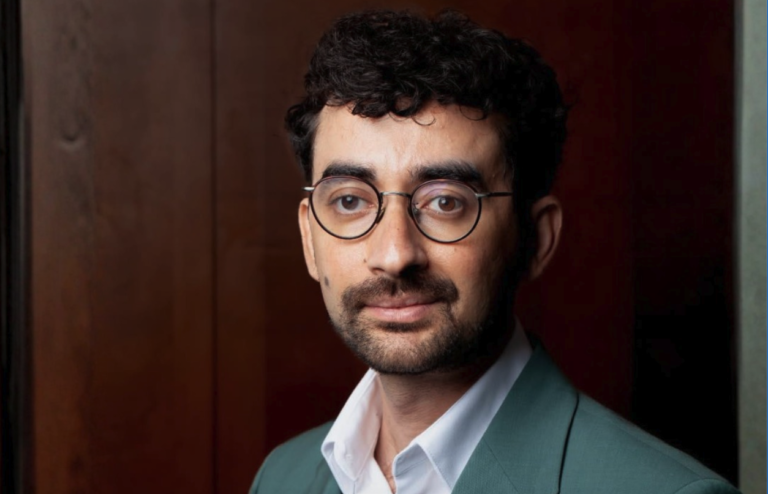
Nabil Djarfi is a graduate in political science and international relations. Parisian by birth, heart and blood, he is a Genevan by adoption..
You have just read an open-access article. Debates, analyses, cultural news: subscribe to support us and get access to all our content!

You'll also like


 French
  German
  English
Leave a comment