




David Betz: «Civil war is inevitable in the long term»
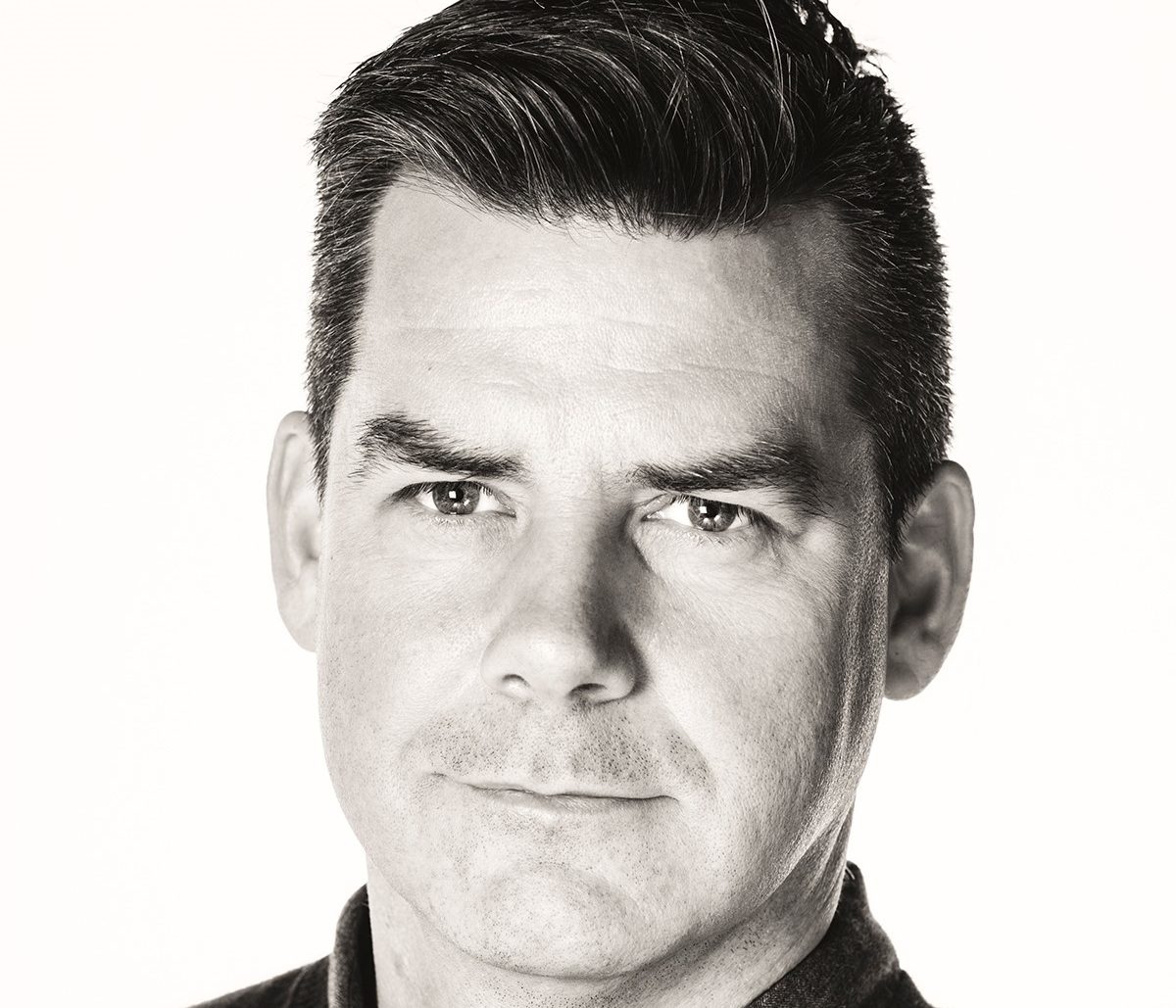
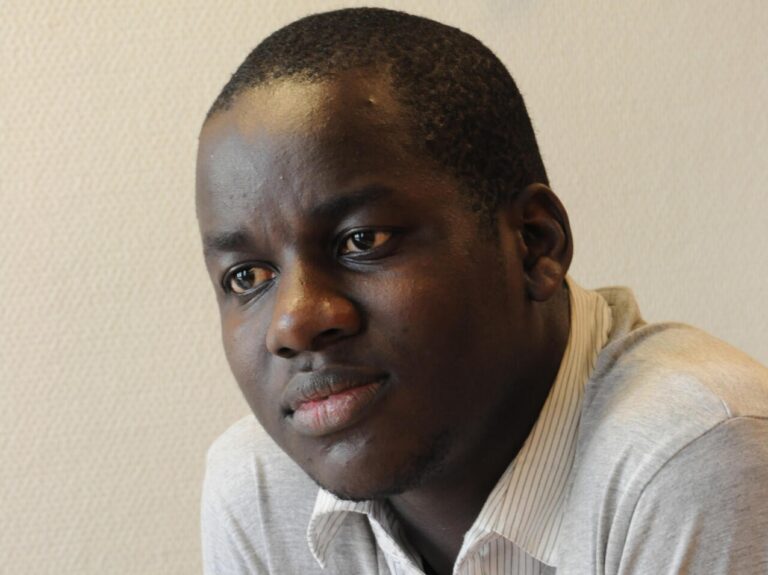
Professor at the renowned King's College London, David Betz is particularly interested in contemporary war issues.
According to David Betz, professor at King's College, the West has crossed a critical threshold: the weakening of political legitimacy, the fragmentation of identities and the loss of social cohesion are all factors in future violent insurrections.
David Betz is Professor of War Studies in the Contemporary World at King's College London. His main areas of research include insurgency and counter-insurgency, information warfare, and civil-military relations and strategy. His thesis, heralding the emergence of large-scale violence, has recently gained notoriety in the UK, a country he believes is on the road to civil war. He is the author of an article entitled «The Future of War Is Civil War», published in Social Science (vol. 12, 2023), around which this exclusive interview is structured.
Le Regard LibreYour central thesis is that, in the not-too-distant future, large-scale civil conflict is inevitable in a number of Western countries. Was there a triggering event or was it a gradual realization that led you to develop this scenario?
David Betz: My academic career coincided with the September 11 attacks. I specialized in the study of insurgency and counter-insurgency, focusing in particular on the mass psychological and communicational aspects of these phenomena. The way in which these conflicts now reverberate back to the home countries of the intervening powers via the networks of globalization and diasporas has forced me to take into account the domestic dimensions of these conflicts: national realities and the interactions between these «theaters» of war are now interconnected. One characteristic of the wars of the 21stth century is precisely that they are not geographically confined.
The turning point in my thinking, however, was the 2016 referendum on the United Kingdom's membership of the European Union (Brexit). More precisely, it was the way in which the British political elite attempted to sabotage the execution of the democratic mandate using every means at its disposal that deeply shocked me. That process is now all but complete: the current British government has, in essence, surrendered to the European Union (EU).
Read also | Immigration: Labor Faces a Reality Check
This behavior appeared to me to be particularly dangerous, as it compromises both social stability and the legitimacy of institutions, two essential pillars in the prevention of insurrectionary phenomena. Legitimacy cannot be reduced to legality alone, but depends more broadly on consent to be governed. This consent is based on the necessary perception that the political system responds to the preferences expressed by voters at the ballot box. If there is one prevailing idea in counter-insurgency, it is that legitimacy is the neuralgic point of conflict.
This weakening of legitimacy is not a problem confined to Great Britain.
That's right. Today, a belief that has become commonplace in Western countries is that voting is pointless, that politics is merely a theater devoid of consequences, in which the important decisions are taken upstream of the democratic process. In other words, the most fundamental political idea – legitimacy – has been profoundly eroded. In short, legitimacy is a form of political «magic»: if it is present, the cost of governance is low; if it is lacking, the cost can become exorbitant. The weakening of a system's legitimacy encourages citizens to evade it, or even to seek to overthrow it.
It is also revealing that the fear of a violent fragmentation of society now exists even within those segments of the British population traditionally most attached to the status quo.
How would you describe the civil wars to come?
I use the term «civil war» in its most basic sense, i.e. armed conflict between parties who, at the start of hostilities, were under the same sovereign authority. This definition is minimal, but sufficient. However, the term has come in for criticism in the West: future internal conflicts will not only involve «compatriots» in the traditional sense of the term, but rather an indigenous population and communities of immigrants who do not necessarily share allegiance to the host nation, or even reject it. This expression encompasses all the social, ethnic and political elements of the conflict, while terms such as «revolt», «uprising» or «revolution» certainly capture aspects of the phenomenon, but rather suggest an explosive, one-off event.
What I want to emphasize is the gradual nature of a process that will take place over a long period of time and will not end quickly. This type of conflict will be waged by paramilitary groups and militias vying for control of one territory or another, while the remaining conventional forces of a declining state attempt to exert some influence over events. In this scenario, only a few highly secure areas will remain under total state control.
«Civil war» could therefore be translated as violent insurrectionary processes.
«Insurrection» is indeed another term that seems analytically relevant to me. It designates a social movement opposed to status quo, It's a phenomenon that transgresses legal and institutional rules in order to achieve changes deemed unattainable through ordinary political channels. It can be compared to an iceberg: the submerged part concentrates the deep dynamics that give the phenomenon its energy, while the violence represents the tip on the surface. We tend to focus on the visible part of the insurgency, when what should worry us is the mass that propels it from the depths. Once it breaks through the surface, as is the case today, it's probably too late to stop it. Ironically, the same governments that have been studying how to defeat insurgencies abroad for the last twenty years seem to have applied the manual for provoking them at home to the letter.
What are the key factors in this scenario?
I see the confluence of two main vectors. The first is the revolt against the elites, i.e., the opposition between what David Goodhart has called theSomewheres, locally rooted individuals, and the Anywheres, cosmopolitan elites embracing a post-national ideology and controlling the institutions to a very large extent.[1]. This dynamic is reminiscent of the peasant revolts in Europe between the XIVth and the XVIIth century, caused by a mixture of economic, social, political and cultural factors, often amplified by one-off crises. Today, this vector is manifested by the emergence of social movements mobilized around the idea that Anywheres change the rules of the game to the detriment of the majority's interests and preferences. In short, the conviction that the elites are no longer living up to their part of the social contract.
The risk is that this revolt will evolve into a «dirty war», with the characteristics seen, for example, in certain South American countries (attacks on judges, politicians and journalists), and, in return, a security crackdown that only feeds the phenomenon. If its capital of legitimacy is exhausted, the state will be reduced to reacting rather than acting, and will hardly be able to rely on patriotic sentiment or the consent of its citizens.
What is the second vector?
That of identity. Against a backdrop of increasing violence, social disorganization and impoverishment, individuals will tend to retreat to their latent tribal affiliations in search of security and protection. This process of residential segregation by affinity will progressively empty formerly mixed neighborhoods and localities, consolidating ethnic enclaves – a phenomenon already observable in some European conurbations, such as Brussels and London. In the UK, this divide is particularly pronounced between the indigenous and Muslim populations. Because of their size, growth rate, strong internal cohesion and solid religious identity, they remain largely impervious to assimilation. In many cases, second- and third-generation Muslims are even further removed from the host society than their first-generation counterparts.
In the UK, your work has been welcomed by a number of politically moderate podcasters and commentators.[2]. How was your thesis received in strategic and defence circles?
Indeed, my thesis has met with a positive response from a wide cross-section of the public, suggesting that many people do indeed sense the imminence of conflict. Many have reacted by saying that what I'm expressing corresponds to thoughts they've had in private, but which they didn't dare express out loud.
Also read | Our special report «When elites are irresponsible»
On the official front, reaction from defense and strategy circles has been cautious. Nevertheless, I have had some direct contact, and there are many indications that these issues are being discussed. It has recently emerged that the British government has raised the possibility of civil conflict at Cabinet level. No government, however, has so far publicly admitted to contingency planning for civil war. Unofficially, judging by the many former senior police officers, political figures and members of the security services who have contacted me, it is clear that my analyses are widely shared within these circles.
What about the academic world?
It evolves slowly. It often takes months, even years, for a debate to take shape and become visible in citation databases. I am nevertheless encouraged by the fact that researchers from a wide variety of disciplines have contacted me to share their work, which often complements my own. There's nothing iconoclastic about what I'm saying; many researchers had reached this conclusion long before me. The idea that trust, an essential element of social capital[3], is in free fall in Western societies is now a well-documented fact, and theories on the causes of civil wars are clear: polarized, fractured societies, with gaps in expectations[4] and a loss of confidence in conventional political mechanisms, have all the characteristics needed to trigger a conflict.
How do you interpret the frequency of protests and riots in countries like the UK, France and the USA? Is it the scale, nature or pace of these mobilizations that reveal a systemic failure?
These three aspects seem important to me, and all point in the same direction. States are generally capable of managing one or two major protests, even when they exceed local capacity, by mobilizing forces from other regions. But there are limits, and states are already under strain.
By way of illustration, it took a whole week to put an end to rioting and looting in London in August 2011. Since then, the number of police officers in this country has fallen, especially those with adequate training and equipment. Protests often appear localized, sporadic and disorganized. There seems to be no visible coordinating structure capable of chaining actions together or strategically modulating their intensity. In the short term, this eases the burden on the security services, but the absence of identifiable leadership deprives the government of real levers for action. There is no one to co-opt, sanction or negotiate with. It is a mistake to believe that an organic movement without leadership cannot act strategically.
How can spontaneous movements make strategic choices?
In recent decades, the most striking development in the study of terrorist networks and insurgency phenomena has been their protean, multi-headed nature. Researchers now agree that what makes them effective is a coherent and compelling strategic narrative, an interpretive framework addressed to a «community of conscience», which exposes the gravity and urgency of a collective resentment, designates a principal enemy, proposes a clear course of action (often violent, but not exclusively), and invites support for the cause in an emotionally mobilizing way.
The aim of such a narrative is not to prescribe precise thought or conduct to individuals. It does not constitute an operational order, but an interpretative framework structuring the perception of events. Once this framework has been established, it tends to reinforce itself. As Victor Hugo put it[5], Nothing is more powerful than an idea whose time has come«. When this framework is shared by a sufficient number of individuals, the direction of their actions becomes implicit: no instructions are necessary, and everyone spontaneously deduces the course of action to take. However, this type of strategic narrative has taken root in the imagination of some European populations, who come to believe that they are being displaced, quickly and intentionally, in their own country. They never asked for it; it was forced upon them, even when they explicitly rejected it at the ballot box.
You identify multiculturalism as a major fault line, and American political scientist Robert Putnam's work on social capital seems to be at the heart of your thinking. How does the rise of ethnic diversity in Europe fit in with your thesis?
Robert Putnam's work is indeed fundamental. Bowling Alone[6] convincingly demonstrated that social capital plays the same role in a society as financial capital does in an economy. Putnam proposed in later studies – since confirmed by numerous researchers – that ethnic diversity weakens social capital. This weakening can be measured in terms of reduced confidence in interpersonal relationships, less volunteering and charity, increased fear of crime, a feeling of loneliness and generalized alienation. Putnam's hope was that, over time, the benefits of multiculturalism would become more apparent, while its costs would diminish. Unfortunately, this hope has not been realized, and social cohesion is now in rapid decline. The absence of social cohesion is one of the main conditions conducive to civil conflict.
Until recently, the idea that multiculturalism in Europe has been an obvious failure was rather confined to the margins of public debate.
Yes, and you will note that it is now widely shared. Indeed, this reality has been explicitly recognized by figures who can hardly be accused of extremism. A decade ago, Prime Minister David Cameron (2010-2016) echoed Chancellor Angela Merkel's (2005-2021) words about Germany[7], warning that multiculturalism was leading to the formation of ghettoized and mutually alien communities[8]. More recently, at a press conference to present the White Paper on immigration reform, even Labour Prime Minister Keir Starmer spoke of the risk of immigration turning Britain into an «island of foreigners», a statement he has since disavowed.[9].
Read also | The Great Replacement: back to text
Moreover, if the idea of the «demographic replacement» of Europeans is now taken seriously even by moderate segments of the population, why don't the elites come up with a more convincing alternative interpretation? And why do the authorities seem to prefer censorship, in the name of the fight against «disinformation», going so far as to imprison certain opposition figures?
What decisions or events do you think have accelerated this demographic and social phenomenon?
We could identify some of them by going back a long way in history, but from a more practical point of view, I think it's the adoption of a strictly economic vision by governments that has caused the most damage. From the mid-twentieth century onwardsth century, nations ceased to be perceived as living human communities. From the point of view of their leaders, whether on the left or the right, they became mere balance sheets, profit and loss statements on a national scale. And now, as the ship begins to sink, the bankers are seizing the helm. This explains, in part, the trajectories of figures such as Rishi Sunak in the UK, Mark Carney in Canada, or Mario Draghi in Italy.
And if I had to pinpoint a turning point in the UK, I'd go back to Tony Blair's government (1997-2001), which in 2000 claimed that its «central political aim» was to transform the country through immigration, and to «rub the right's nose in diversity».»[10], in his own words.
What makes you think we've already crossed a critical threshold?
Not one event in particular, but rather the growing realization among European populations that mass immigration will eventually lead to demographic transformations that will profoundly alter their culture and society. Projections for the UK, for example, suggest that there's nothing irrational about this fear.[11]. While this idea has long been associated with far-right conspiracy, it has now become almost commonplace. It is this awareness, and the sense of urgency that accompanies it, that marks the real tipping point.
Is there a scenario in which this trajectory could be reversed?
No. I can't see any plausible scenario under current rules that would allow us to significantly alter this trajectory. There is no real political way out. Anti-system parties, such as Reform in the UK, Alternative für Deutschland (AfD) in Germany or the Rassemblement National in France, will see their electoral prospects considerably reduced by «legal warfare», i.e. the deliberate judicialization of the political adversary, as well as by a whole panoply of tried and tested techniques for defending the status quo. And even if they did manage to get elected and prove themselves genuinely determined to bring about far-reaching change, these political groups would come up against a wall of administrative obstruction and constant bureaucratic sabotage.
Which European countries do you think have the highest probability of violent civil conflict?
The work of American political scientist Barbara Walter[12] have established that, when a set of conditions conducive to civil war are met, the annual probability of conflict is around 4%. From this basic figure, anyone can calculate the cumulative probability on the time scale of their choice.
To these probabilities we must add an important element: one of the predictors of civil war is the existence of an ongoing conflict in a neighboring country. In other words, if a single country descends into civil war within a political area without real borders, such as the EU, we can expect the phenomenon to spread rapidly elsewhere.
The countries closest to the breaking point are probably France and the UK. Ireland, however, presents, in my opinion, the greatest risk of explosion. The same tensions I mentioned earlier are present there, perhaps even more intensely, but in a context marked by a relatively recent history of civil war and violent resistance. Not all countries on the continent present the same risks. Eastern Europe, for example, having been occupied by the Soviet Union for decades, was spared the early stages of the Western process of uprooting and cultural destructuring, the consequences of which are so evident in Western Europe today.
Olivier Moos is a Doctor of Contemporary History (University of Fribourg and EHESS).
You've just read an unpublished open-access article. Debates, analyses, cultural news: subscribe to support us and access all our content.
[1] D. Goodhart, The Road to Somewhere: The Populist Revolt and the Future of Politics, Hurst, 2017.
[2] For example: «Is civil war coming to Britain? David Betz & Mary Harrington», UnHerd: https://www.youtube.com/watch?v=okLu7RgMoV4&ab_channel=UnHerd; The Coming British Civil War – David Betz«, Maiden Mother Matriarch, ep. 124: https://www.youtube.com/watch?v=Gid48FgiHho&ab_channel=MaidenMotherMatriarchwithLouisePerry
[3] Social capital refers to all the material, informational and symbolic resources to which individuals and groups have access through their networks of relationships, shared norms and mutual trust. It fosters solidarity and mutual aid, facilitates individual action, and functions as a mechanism that reduces the costs of coordination and cooperation. A structuring factor in social and political life, social capital contributes to the quality of governance and economic development.
[4] The concept of’expectations gap refers to the gap between the expectations citizens place in a political system, and the system's ability or willingness to meet them.
[5] Apocryphal version attributed to Victor Hugo, developed from his expression «One resists the invasion of armies; one does not resist the invasion of ideas», which appears in his essay Crime story, Calmann-Lévy, 1877. «Nothing is more powerful than an idea whose time has come» is the most common form in English.
[6] Robert D. Putnam, Bowling Alone: The Collapse and Revival of American Community, New York: Simon & Schuster, 2000.
[7] «According to Merkel, the multicultural model in Germany has «completely failed,»», Le Monde, October 17, 2010.
[8] «Multiculturalism has failed in Britain – Cameron», Reuters, February 5, 2011.
[9] «Starmer apologizes for ‘island of strangers’ remark», Financial Times, June 25, 2025.
[10] The expression is attributed to Andrew Neather, former advisor to Tony Blair, Jack Straw and David Blunkett, in an article entitled «Don't listen to the whingers-London needs immigrants», London Evening Standard, October 2009.
[11] See: Matt Goodwin, Demographic Change and the Future of the United Kingdom: 2022-2122, Center for Heterodox Social Science Report No. 3, University of Buckingham, May 29, 2025.
[12] How Civil Wars Start: And How to Stop Them, Crown, 2022.

You'll also like


 French
  German
  English
1 comment
Having lived in Seine Saint Denis since 1980....
It's obvious that serious popular unrest is about to erupt between France and its "native" immigrants, and their offspring, who are mainly of African origin, including the Maghreb and Central Africa.
The system deliberately hides the origins of people living in different regions of France.
Since '81, a policy of guilt-tripping has been instilled in people's minds by the Socialist Party.
Since then, the development of anti-white "French" hatred has taken root, and faced with 15/20 million French people of Muslim immigrant origin, there are few solutions to re-establish a socio-cultural balance.
Leave a comment