




«The Crusade» or the desirable collapse
Cinema Wednesdays - Alice Bruxelle
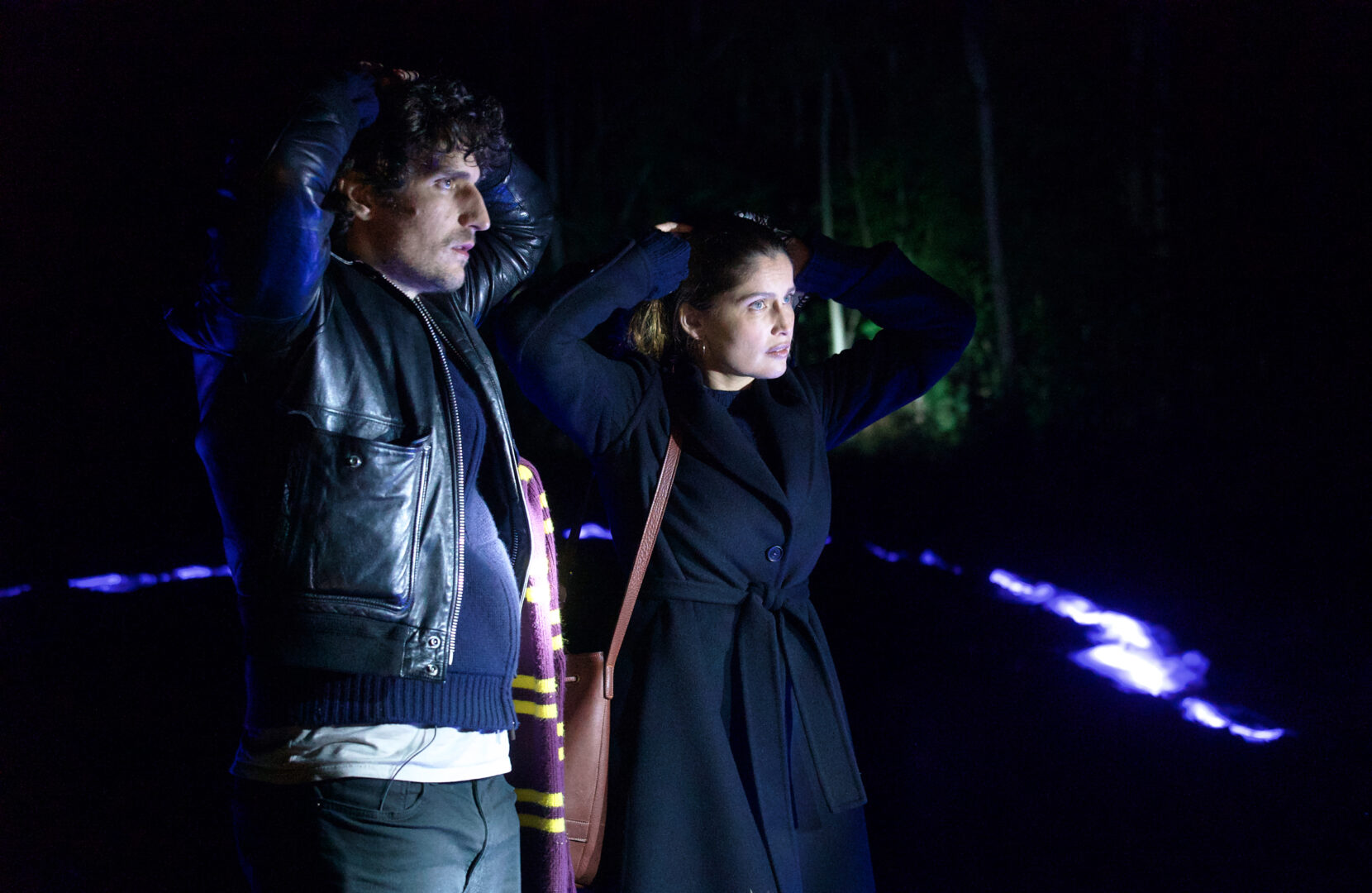
Following on from The faithful man (2018), Abel and Marianne are back in action with The Crusade. Once again directed by Louis Garrel and co-written with Jean-Claude Carrière, will this short ecological drama be as enduring as the ideology it advocates? Certainly not.
Can the disappearance of a Dior dress help combat global warming? In part, yes, according to Louis Garrel. Joseph Engels, son of Parisian couple Abel (Louis Garrel) and Marianne (Laetitia Casta), has secretly sold his parents' most luxurious possessions to fuel an ambitious project: saving the planet by irrigating the sea in the Sahara. If the parents see this as a disaster, they'll soon realize that making a profit from over-consumption in favor of an ethical project will save face. And not just any ethical project, since it's about saving the whole of humanity in peril. Incomprehension gives way to amazement at the heroic deed of their child prodigy.
The couple's sudden material dispossession leads Abel and Marianne down a path of marital and individual self-awareness and introspection. A real threat of collapse will unearth the unspoken and existential questions of adults gripped by a new guilt at not being able to offer a decent world to their offspring.
Z vs. boomers
The theme is not new. Today, we're witnessing a generational schism in which the so-called Z generation - born between 1997 and 2012 - reproaches the previous generation for their casual enjoyment of what society has to offer. This is the film's unique strength, in that it manages to depict a certain referentiality at play within bourgeois households. Two camps coexist: that of the adults whose discussions on ecology rhyme with confusion, and that of the children, complicit and amused by their ignorance. The filmmaker's bias is clear: the children no longer need the adults, who are overwhelmed by the children's organization and courage to see their project through. The signs of this are Joseph's precocious sexual maturity, the many shots of him alone, and his struggles with relationships worthy of an adult story.
Above all, Garrel blurs his intellectual image to leave room for the performances of the children who lead the game. Abel is a man whose sudden glorification of his son will send him back to his average existence, where his dreams and ideals are stuck in his youth. He will try to redeem his conscience by putting up sorting bags, an obvious self-mockery on the part of the director and the couple. Seeing Laetitia Casta metamorphose into a bee rescuer after years on the catwalk for some of the world's top designers borders on naive redemption rather than a genuine ecological struggle.
The erasure and disintegration of parental authority is thus the source of the childish verve of the climate movement, reminiscent of the activist's discourse. Greta Thunberg, which Marianne views. It is this upward movement of values, from the bottom up, that the film proposes. The disappearance of seemingly insignificant objects leads to a restructuring of conjugal and existential relationships; seemingly innocent children become spokespeople for the global climate movement; the model of the African continent on display in the Bois de Boulogne becomes reality at the end, when the sea has artificially colonized the Sahara desert. But why can't this movement achieve the greatness it aspires to?
Missed Radicality
The Crusade is conspicuous by the absence of its subject: the’ecology. Garrel offers viewers a solution that has already been thought out, crafted and perfected. All that's left for the film to do is weave the new conflictuality engendered by the new generation's scheming, but its surprisingly short running time - just over an hour - doesn't allow for the realism and subtlety that the characters« simplistic torments would require. The solution to all climatic ills is technological. When Abel and Marianne finally discover the model of the African continent, the children explain that they have put the companies »in competition" to select the one capable of implementing the project.
The profit generated by the sale of luxury goods is what saves the planet. Garrel thus creates an interdependence between the old world and the new - in short, the new world would never have seen the light of day without the old. We could almost thank Christian Dior for having indirectly contributed to the struggle. The filmmaker unmasks himself: he only wants to preserve what is. Under the guise of offering us a better world, it in fact deploys a bourgeois phantasm of self-preservation. The film misses out on the very essence of ecology: its radicalism and consubstantial subversion.
Read also | Ecomodernism, an interesting path to a joyful ecology
When the sea reaches the desert (a sign that the childish scheme has reached its goal), Marianne, riding a dromedary, smiles. A smile that testifies to a return to normality. Abel and Marianne can continue to gossip in their well-kept apartment among friends; they'll continue to take cabs; and, who knows, Laetitia Casta will once again don her designer dresses to parade with a repentant spirit.
For example Night Moves (2013) by Kelly Reichardt, in which young environmental activists blow up a dam in the name of their convictions. With her trademark acuity, the American filmmaker succeeds in combining ecological themes with radicalism. By capturing the complexity of the psychological path leading to violence, she shows restraint, without imposing a preconceived vision or solution on the audience. But The Crusade, on the other hand, outbids banalities and conformism. This cinematic deception leads to a realization: we come to wish for collapse.
Write to the author: alice.bruxelle@leregardlibre.com

You'll also like





 French
  German
  English
Leave a comment