


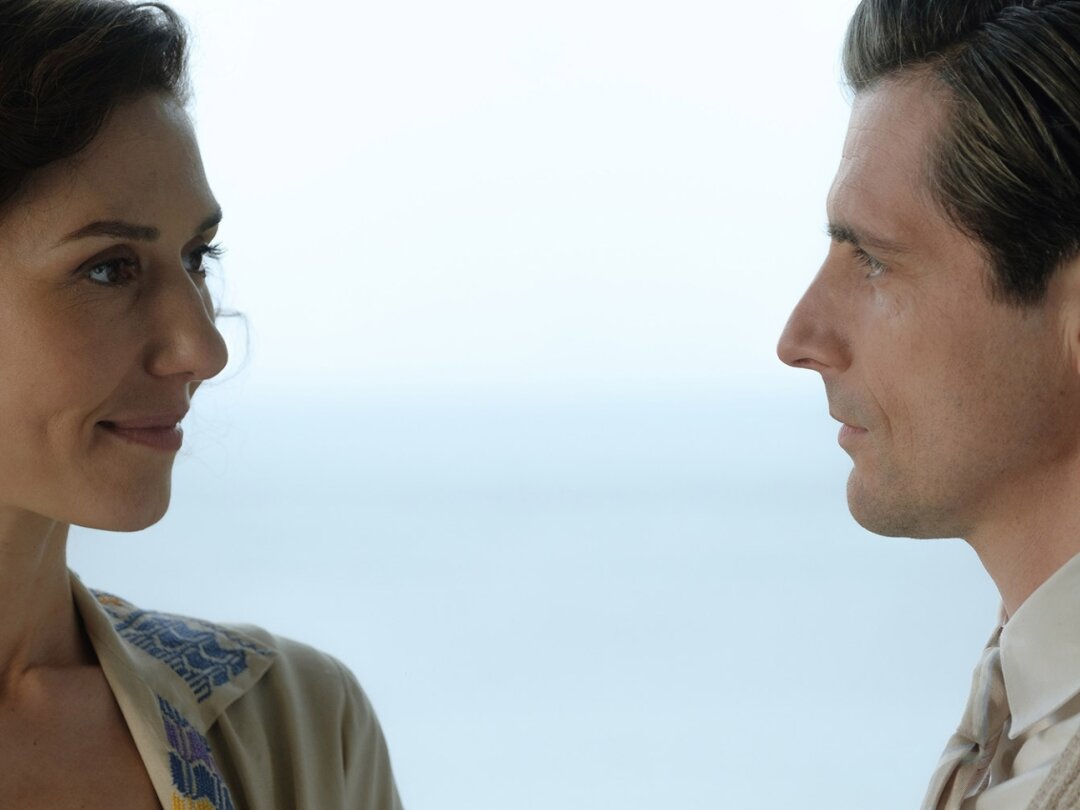
His latest film immerses us in the creative process of the famous Bolero by Maurice Ravel. Unfortunately, she relegates Misia Sert, nicknamed the Queen of Paris, to the role of muse. A disappointing performance that tarnishes this biopic.
Famous for its simple, repetitive melody, a dance movement with an invariable tempo, the melody of this work is uniform and repetitive for 17 minutes. Its revolution lies in the variations in orchestration alone: a gradual, revolutionary crescendo in E major. If this description evokes nothing on reading, listening to the first notes is enough to hum an internationally successful tune, the Bolero by Maurice Ravel, first performed in 1928.
Maurice Ravel, a composer of genius, was not always unanimously acclaimed. Anne Fontaine's film opens with the young pianist repeatedly failing to win the Prix de Rome, despite the fame of his compositions. Fortunately, these rejections don't stop the brilliant man, reassured by his mother (Anne Alvaro): «the juries will miss him», she says. We're in the 1920s. It's the artistic avant-garde, and Paris is teeming with composers as talented as Stravinsky, Debussy and Satie.
An authentic role
Played brilliantly by Raphaël Personnaz, himself an amateur musician, Ravel shyly navigates his way through the mundanities of Paris, and we feel his mysterious, endearing personality. Ida Rubinstein, superbly played by actress Jeanne Balibar, is the star dancer of the moment, the queen of Russian ballet. One evening, she sets her sights on Ravel, whom she believes in fiercely, and asks him to compose her next ballet. He accepts, delighted, but terrified of failing.
Anne Fontaine subtly plunges us into the intricacies of composition, rendering us helpless in the face of Ravel's blank page. We anguish for him, following him in his doubts and the vicious circles of procrastination.
The spectator accompanies Ravel in his gentle idleness, between Belle Epoque Paris and charmingly landscaped secondary villas, his stomach in knots as he approaches the rendering of this ballet, under pressure from the impatient Ida Rubinstein. However, despite his best efforts, the page remained blank.
A smiling muse
Fortunately, from time to time, he has a woman at his side, and not just any woman: the patron of the arts, pianist and intellectual Misia Sert. She supported him, listened to him, tried to seduce him; she was for him a muse, a friend, as she was for the most important artists of the time, including Mallarmé, Cocteau, Renoir, Vuillard, Vallotton and Diaghilev.
We understand that her husband at the time, Alfred Edwards, holds the fortune and cheats on her constantly. She claims to be free and independent, but this character finds no depth in the performance.
Indeed, Dorier Tellier, in the role of Misia Sert, is a tall, beautiful woman, but totally insipid. Her blissful smile throughout the film, even during the most tragic scenes, seems completely inadequate. Her conversations with Ravel are limited to quotes like «You have to dare in life». As if it were her simple beauty, her sweetness and her few words that had captivated the composer and all the artists of his time.
The Queen of Paris falls from her throne
Yet Misia Sert was much more than that. Her great friend, Coco Chanel, said: «There's every woman in Misia. Writer Marcel Proust called her a »monument of history«, while composer Erik Satie called her nothing less than a »magician«.
True, she was beautiful (and a rather charming beauty at that), but what appealed so much to artists was her intelligence, her whimsical personality, her eccentricity and her great artistic culture. She contributed to the greatest successes of her time, through her patronage, vision and interpersonal skills. She was also a great musician, who regularly played at dinner parties with some of the greatest names in the business.
And yet, in this film, she's reduced to a few banalities. We can't believe that it's Doria Tillier who's misinterpreting this role, so much so that she was able to portray an eccentric woman, full of complexity, when she played Madame Adelman in Nicolas Bedos' film. So how did Anne Fontaine miss this woman? Out of ignorance, we hope. Yet she knows the subject well, having portrayed Chanel, Misia Sert's great friend, in her previous biopic Coco before Chanel in 2009.
Fortunately, Maurice Ravel seems more authentic. On screen, we sense his inner self, his meticulousness, his exacting standards. Above all, his sensitivity; all the sounds around him inspire him. In fact, one of the film's highlights is when everyday sounds, such as a silk glove rubbing against the skin, become a veritable source of creation for him. The rustle of life is transformed into rhythmic music.
An experimental air
But for Ravel, the Bolero, it's not music. This mythical tune was born somewhat out of obsession. Played on the piano, the first notes kept turning over and over in the composer's mind, to the point of obsession. Pressed for time, and with the help of his maid's advice, he decided to rehearse the tune for the 17 minutes ordered. It's a musical experience, thanks to the crescendo that creates the tension and sensuality so strong and distinctive of the Bolero.
Unfortunately, the film lacks tempo. Fortunately, some scenes are grandiose, thanks to professional guidance, notably when Ravel conducts an orchestra playing his Bolero. The photography is pretty and classic. And then there's the soundtrack: a pure moment of musical bliss!
But if you want to get as close to Misia Sert as you do to Ravel's masterpiece, the best way is surely to go and see the Bolero by Maurice Béjart, next June in Lausanne, and admire paintings by Bonnard and Vuillard, to name but a few, in which Misia is magnificently portrayed, returning to her throne.
Write to the author: aude.robert-tissot@leregardlibre.com
 French
  German
  English