




Venture capital: it's not the money that's lacking, it's the will

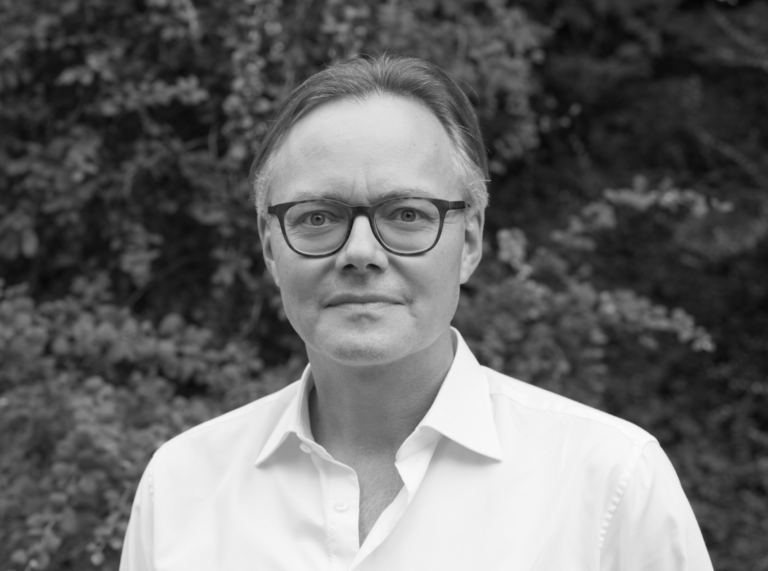
Florian Schweitzer is a founding partner of venture capital firm b2ventures. Photo: DR
Switzerland is rich. And yet, startups find it hard to raise capital. To change this, a change of mentality is needed. It also requires perseverance - and an intelligently supportive government.
Alphabet, Amazon, Apple, Meta, Microsoft, Nvidia and Tesla are each worth over $1,000 billion. Five of these seven companies are under 30 years old. Spotify, the largest company created in Europe in the last 20 years, has a market capitalization of around $100 billion. The most successful Swiss startup of the last 30 years is Actelion, acquired in 2017 by Johnson & Johnson for $30 billion.
What explains this disparity? What resources do we lack in Switzerland, a country that is rich and celebrated as a world champion of innovation?
It's often said that there isn't enough venture capital or venture capital (VC) in Switzerland. That's a little too easy. This article takes a more nuanced look at the situation.
1. The market: 330 million inhabitants in the United States versus 500 million in Europe
Since their inception, the American web-based tech giants have benefited from network effects and a more mature startup ecosystem, with experienced venture capitalists and significant financial resources at their disposal. When Facebook was created, many similar approaches existed in Europe, but none of these companies were able to scale up in the way that the homogeneity of the American market allowed. Language barriers, in particular, fragmented the European market of 500 million inhabitants into dozens of sub-markets.
Language barriers are now overcome by translation tools such as DeepL. Technology will gradually eliminate all other barriers, so that Europe too will become a single market. Customs clearance, for example, will be automated within ten years. We can therefore be optimistic about the future of the market, even if many startups still have to overcome significant obstacles, particularly in highly regulated markets such as the financial sector.
2. Mindset, know-how and ecosystem: thinking and acting big
In Switzerland and Europe, we're probably the world champions of bad faith, and we're fulfilling our own prophecies by shooting ourselves in the foot. What we need is more courage and focus: to concentrate on the really big goals and concentrate our resources. This also applies to the development of the startup ecosystem. In Switzerland alone, we have countless start-up initiatives, start-up competitions and other initiatives. business plan and conferences. Two major conferences should suffice. We could divide them up according to the startups' development phases.
For the earliest phase, the «START Summit» was established. With the «Slush», Finland is setting an example of the impact of concentration; the whole country is proud of this global magnet for startups, with countless volunteers and members of government personally involved.
If we don't yet have any tech giants in Europe, it's also because founders and investors haven't yet gone through enough learning cycles. All too often, highly promising European start-ups have been sold to Chinese or American tech giants for CHF 30-300 million and hailed as great successes, instead of daring to take the road to autonomy through an IPO. What's encouraging is that more and more founders are starting from scratch rather than taking a permanent vacation. Mindset and ambition are probably the decisive levers for the big breakthrough.
For more mature startups, called scale-ups, The challenge remains that Silicon Valley is two decades ahead of Europe. For the CEO of a European unicorn - i.e., a startup with a market value in excess of $1 billion and a team that grows from 100 to 1,000 employees in two years as part of a «hypergrowth» strategy - only a handful of mentors throughout Europe, who have experienced just that, come into play. In San Francisco, there are over a hundred just around the corner. The same applies to investors and boards of directors, who often don't even know how to develop a company. Patience is therefore also needed in this iterative generational process. All market players should work collectively to take startups public as independent businesses, so that they can continue to flourish. However, the European capital market is currently too fragmented, which explains why the really important startups are listed in New York.
However, it is striking to note that many family offices of wealthy Swiss are not using their money very effectively in the startup ecosystem. They invest directly in startups without any particular experience, but often inefficiently and at valuations that are often far too high or too low. They could make better use of the money «saved» by philanthropically bypassing intermediaries to improve the innovation pipeline. They could, for example, encourage interdisciplinary collaboration at the best universities.
3. Is there a shortage of capital for Swiss startups?
Yes, we hear it all the time. It's said that countless startups don't have the opportunity to prove themselves. But it's not that simple. Firstly, if 100% of all startups seeking capital were to obtain funding, the venture capital (VC) asset class would have a very strongly negative average return and would therefore be in its death throes.
Secondly, the venture capital ecosystem has also developed substantially in Switzerland over the past three decades. There is virtually no other country in the world where startups that have successfully raised a seed round from investors have a 35% probability of receiving a next round of funding, known as «Series-A», from VCs. The European average conversion rate from seed to Series-A funding is around 19 % within 36 months of the seed round.
Thirdly, the more mature the startup, the larger the financing rounds, and the more attractive it is to invest across continents, given transaction costs that remain more or less constant. Transaction costs include the investor's working time. This is precisely why so many American venture capitalists take part in Series B financing rounds in Europe and beyond. They like to fly regularly, as valuations tend to be lower here than in the US. This suggests that the European system could «support» more capital.
However, there are increasing signs that venture capital returns are declining in the US. More and more capital is being invested in larger and larger venture capital funds. For example, General Catalyst and Lightspeed Ventures have recently launched new funds every two years. Europe is currently on a four-year cycle. Fund volumes are also several times higher than the European average, at $8 billion and $7 billion respectively.
One of Europe's challenges is that we still have too few VCs investing in very capital-intensive business models, because they fear (and rightly so) the risk of subsequent financing. This is a problem with regard to highly promising themes such as quantum computing, where European universities are still at the global forefront, but will probably be outstripped by China and the USA when it comes to commercialization.
This is why the State is regularly asked to intervene as an investor. In principle, it has two options.
A) The French government participates directly in startups as a sovereign wealth fund
Under this model, the state creates a venture capital fund that invests directly in startups. Perhaps because the state wishes to support certain sectors in particular.
But is the state a better investor in quantum computing, nuclear fusion or biotech startups? The author knows of no such model that has ever worked in Europe. All known examples have led to «adverse selection» over the past two decades, i.e., they have financed companies that had not received capital from private venture capitalists and that subsequently failed in their great majority, so that the programs have been financially costly overall. At the same time, there were no positive exceptions to justify the programs. It could certainly be argued that the SWF only invests when a private investor takes the lead. But this approach has also failed spectacularly to date.
B) The State participates indirectly in startups as a fund investor
Unlike sovereign wealth funds, which invest directly in startups, many governments have set up «funds of funds» (FoF). These funds invest in venture capital funds managed by professionals.
The European Investment Fund (EIF), which has provided a positive return to invested states for over two decades, can now invest €3 billion a year in startups using this FoF approach, and mobilize several times this amount in additional private capital; as a rule, it provides well under 49% of the fund's volume. This FoF approach therefore has an important catalytic effect in mobilizing private capital, especially as we know that the EIF has a very thorough vetting process and negotiates good contracts for fund investors.
Swiss pension funds are beginning to invest systematically in venture capital funds. Indeed, performance is good and know-how is also growing in this field. Pension funds have the legal freedom to do so. So there's no need to force them to invest in start-ups. This approach, which has been tried in the past, is reminiscent of communism.
Public funds only for the country?
If a «Swiss Investment Fund» were to be developed, one of the first questions would be whether these funds would then have to be invested in Switzerland. If the regulations are designed as for the EIF, i.e. that public funds from the EU must also be invested in the EU, then this works. The alternative is that, as soon as such a fund participates in a venture capital fund, it must invest a multiple of the public funds in Swiss startups. This model probably also leads to adverse selection, as few VCs would accept this money. As we've seen in Catalonia, for example, the biggest problem is that VCs who want to raise funds abroad but fail to do so then set up in the same country where they receive state funding.
Conclusion: we're not short of resources. What we entrepreneurs, venture capitalists and investors lack family offices, It's the collective will that counts. Individuals will change this by gradually moving the bar of success upwards, serving as an example to other founders and an incentive to investors. And perhaps this won't just happen incrementally. Politicians and voters also need to make a clearer distinction between spending and investment. The state needs to save on the former. Investing is about looking to the future in a thoughtful and courageous way.
Florian Schweitzer is a founding partner of venture capital firm b2venture.
You have just read an open-access analysis from our operation «Entrepreneurial spirit» and contained in our supplement «Vive l'esprit d'entreprise» (Le Regard Libre special issue N°5).
You'll also like


 French
  German
  English
Leave a comment