
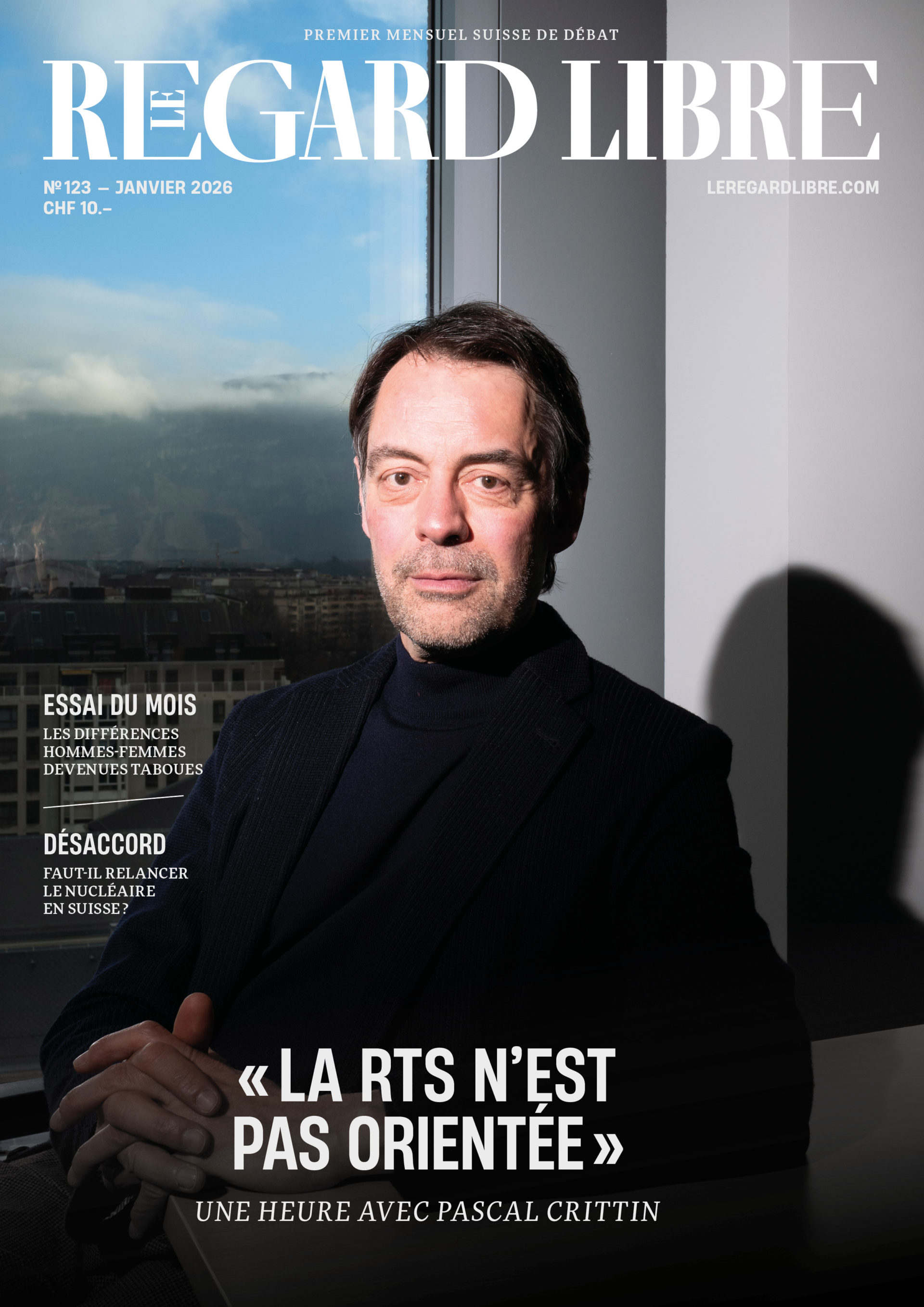


Le Regard Libre special issue «Ecologie - Pour un revirement intégral» - Sébastien Oreiller
Chapter III: Mother's departure (continued)
Rhe walked from the church, while the doctor passed him by in his car, walking slowly from the icy land of his ancestors, made the evening coffee and bread, put the brothers and sisters to bed and went to sleep. It was cold, and he thought. He thought about what his future life would be like now that his mother was dead, and what it would be like for his children, and his children's children. He saw hay and harvest, vineyards and wooden stools. He felt on his tongue the taste of bad wine, he smelled the odor of dirty bodies, the secretions of beasts in the stable, and those of men in a hole outside, behind the house. He saw the birth of the rich, and the sweatpants of the poor. He saw the tiredness of the old, and the donkeys straining to carry the weight of the faggots, he saw the backs of his children when age would have seized them too, bent and aching, and their shoes studded, and he turned his gaze to the plain. The river smoked in the heat and mingled with the steam of the train as it split the brown, destitute ground like lightning, brilliant and elusive.
The dream was without form or logic, so foreign were the novelties to him, and the train meandered along the hillside, spreading roads, tar, bringing stations and stops, over which scattered, like an anthill, the doctor's cars he'd passed earlier. When they dissipated, incomprehensible, and reached his vague height, the cars were no longer filled only with doctors, but with men and women he knew. In some of these faces, he recognized his mother's features and perhaps his own, her smile. But his children hadn't become doctors, nor were they drivers, and yet they were on their way home, to mansions out of nowhere, the likes of which he'd never seen. Not even at L****. Real palaces, scattered across the plains and forests, everywhere illuminated by the fires of industry. At the windows, shadows danced and rejoiced. People ate to their hearts' content, and at last there was no lack of anything. He believed that God had reconciled and, having restored his beloved ones to their original condition, had given them water and fruit, a nakedness full of pomp and circumstance, and a tamed nature. He saw the changes, and he loved them, as a ship loves a storm, and he laughed at those wrinkled old faces that groaned on the sidewalks and lamented the suffering. Oh, how sweet the air had become! How easy it had become to live! Why was that? Weren't we better off when we had to suffer?
He laughed so hard he woke up, but his laughter was only the storm pounding against the walls. The snow was there. He was shivering. He had to get up and fetch the wood he'd put out to dry, to light the stove. He had to grind coffee and cut bread with a saw. The brothers and sisters had fallen ill, they had been cold. He would spend the winter in front of the fire, carving tools or telling tales aloud. He couldn't read. So much the better. He wouldn't have to teach the children. Except perhaps the last one, but that would be done by the parish priest, and he'd be the parish priest himself. One less mouth to feed. Four more to go. This was no dream. There was no harvesting machine, no cure for disease. The men were strong, but the children lonely, and relationships distant. At least the air was pure, and winters were winters, and summers summers. What does it matter to die, when you die in the big sky?
END.
Write to the author : sebastien.oreiller@netplus.ch
Photo credit: © valais.ch
 French
  German
  English