




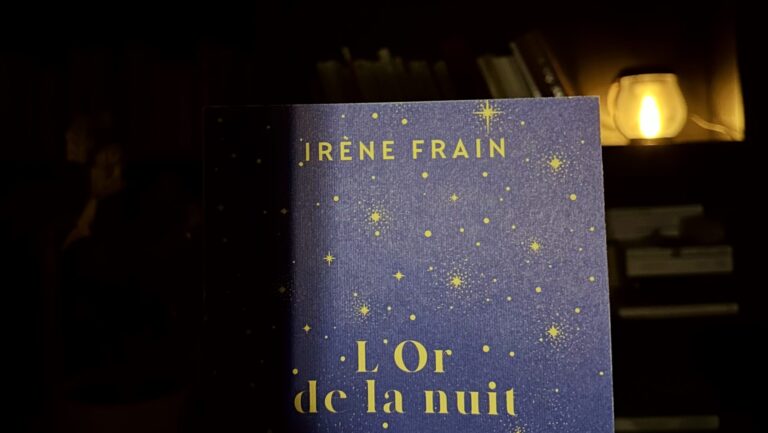
«Le Sang», extract no. 1

Le Regard Libre N° 25 - Sébastien Oreiller
Chapter I: Loss
They weren't born old. At most, their days, from the sweet vines of November, have flowed sparser and denser on the red earth, the thirsty earth that dictates the joys and sorrows of sowing and harvesting. Stingy with tenderness, they watched over the little they had, their silent joys, with the eye of one who has nothing, and that's why they cherished them on our features, many years later, when we smiled at them. Born of silent misfortunes. Born of the dead joys of their youth.
They passed like a cold-water stream through the mountains, running under the sun, and yet they, too, were young. Briefly. My father's father was not yet twenty when he lost his youth one day in the fields. He took her by the hand as he left, and let her play while he worked, alone, at the edge of the woods overlooking the plain. As always, when the day had come to an end and the sweat was burning his laborious neck, she had fallen silent, and he had no longer heard her song, that of the waterfalls and the little children. He had called out to his youth, but had not found it. Perhaps it had become lost, fickle, where the coppices are uncultivated and the gorges greedy, in the hollows where, sometimes, the spirit takes young people, and from which they do not return. Maybe he'd also gone deaf, like his father who'd died seven months earlier, tired like him, and hadn't had the courage to look for her.
At home, hoping that she would have preceded him, he found only the fire in the hearth, and above the hearth, the cherished image of the father. «I've been waiting for you,» said the mother, and he kissed her wrinkled cheeks, which had seen seven children born, and sometimes die, of which he was the first. He took the youngest on his lap, still round and blond like something to be eaten, a sun-gilded delicacy that would have been forgotten; she didn't stay and ran away, too, but more cheerfully, crawling towards the ugly doll inherited from her sisters. Now it was the boys' turn. Three of them. Still young, but like him already destined to grow strong and bend the earth beneath their shoulders; for the time being, while mother tended the vines and apple trees, it was the cattle they tamed with their long sticks, one or two heads each, almost as young as they were, and like them the hopes of the herd. They were red and noisy, some had no teeth, but all of them were restless on the wooden bench next to him. He said nothing.
Standing on the rustic floor, his mother saw him, and understanding in her mother's heart, she smiled at him and poured him a cup of that bad coffee we used to drink even in the evening, with black bread. He was already tough, without the sun and worries, like today, making him even tougher in the eyes of others, and more dangerous perhaps. The mother could see the son, but the little girl had already returned, demanding, with her toothless lungs, the same snack as her brothers.
It was evening, the first evening stingy with youth, which penetrated her small bedroom with lavender and mauve fragrances, impregnating her sheets with warm tenderness, and rising to her head. He ran fresh mountain water over his body, still burning from the summer's labors, removing the stains of the ungrateful earth from his legs, and the male odor of sweat from his back. Outside, it was the Midsummer bonfires in the still-clear night. He didn't want to go, he wouldn't go, knowing too well that his youth couldn't be there, hostile as it was to useless clamor and shouting. And yet, he had no choice; her face had made him sad in the mirror, and he had to forget.
Write to the author : sebastien.oreiller@netplus.ch
You'll also like



 French
  German
  English
Leave a comment