



«The plot against America»
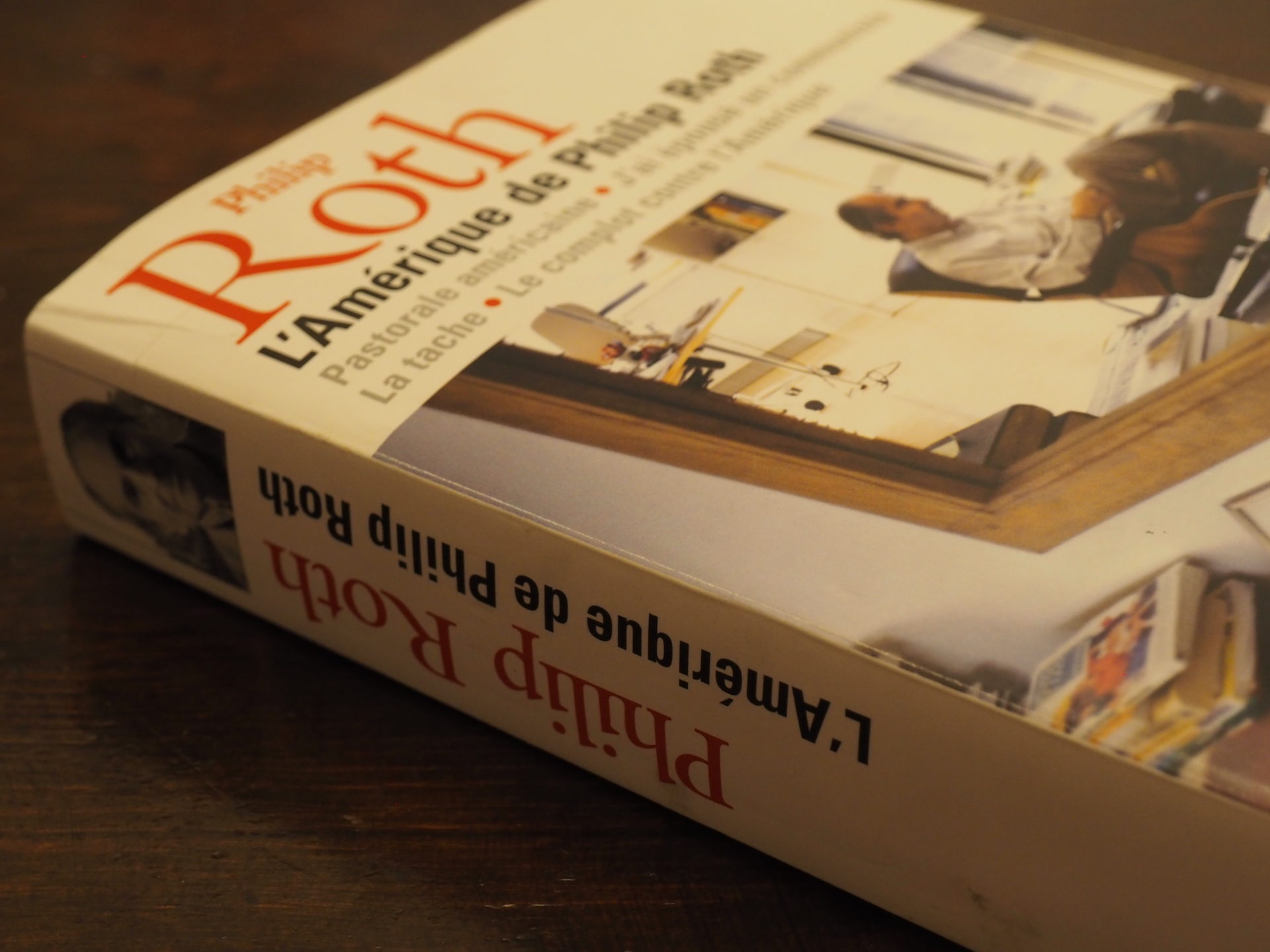
Photo: Loris S. Musumeci for Le Regard Libre
Philip Roth's dystopia depicts life in an America that has become anti-Semitic. The modified story shatters our certainties and rekindles a fear that had previously lain dormant within us.
Philip Roth's book, published in 2004 in the United States, is certainly not one of his best-known writings, or one that one would spontaneously cite when discussing the mark he has left on literature. Yet, just as much as others, The Conspiracy Against America fits between American pastoral care (1997) and La Tache (2000). The preoccupations that have marked his work are present here, such as the place of the Jew and the role of history. But above all, this novel is about fear, the fear that hangs over us permanently and forever.
The shape is in keeping with the main theme of fear, since The Conspiracy Against America is presented in the form of a dystopia, a genre that attempts to imagine history in a version that would turn out badly or very differently. In this day and age, the dystopia has a particular resonance and is always a success. This is borne out by the public's keen interest in the novel 1984 (1949) by George Orwell and its recently published translation, which is more terrifying and closer to the text than the original French version. This genre reflects our age of widespread fear, more or less justified, and a feeling of generalized chaos. Our fragile world seems ready to descend into evil at any moment.
A tale of childhood and fear
A tale of fear in dystopia, but also of Roth's childhood, as he takes undisguised pleasure in reviving his native Jewish neighborhood of Newark, New Jersey. The story takes place in the late '30s and early '40s, at a pivotal time for humanity, between the Great Depression of '29 and the beginnings of the Second World War. Little Philip recounts the tragic chain of events of his childhood in the Weequahic neighborhood and on Chancellor Avenue.
In any dystopia, there has to be a point at which history becomes fiction. It's in the midst of the 1940 American presidential campaign, at the Republican Convention held to nominate a candidate for the presidency, that the fiction begins. Facing the Republicans, the Democrats put forward Franklin Delanoe Roosevelt (or FDR in the book) for the third time - and against the two-term tradition established by George Washington.
Then a surprise guest bursts into the Republican convention, fresh from the plane he'd been piloting until then: Charles Lindbergh, American aviation hero, the first to cross the Atlantic in his motorized aircraft, the Spirit of Saint Louis, but also a supporter of traditional American isolationism and a notorious anti-Semite. He was quickly acclaimed as a candidate by his party, and then as President of the United States of America on the strength of his promise to keep the country out of the war in Europe, which his opponents claimed FDR would have liked to join.
Read also | American pastoral care, a book that says it all
From then on, unimaginable events befall little Philip, his brother Sandy and his parents. The country they knew would change, and the family's grip on events would disappear. The rest is all about the Roths' tribulations in an America that has become hostile to them.
It's also a story seen and told by a young boy. The author's challenge was to get a young boy to tell and discover the story that was working against them. Through his eyes, which don't grasp everything, young Philip repeats what his father says and listens to his brother, cousin and close relatives. Lost in the midst of opinions, he abandons his certainties and grows up much faster than he should. Philip confronts the problems of grown-ups while remaining caught up in his own childish problems, and his childish reactions sometimes make us smile, as when he discovers the first rudiments of sexuality.
Fear is continually associated with the Jews and remains present in the Roth household. The fear of Jews who once felt free and safe, but now have to live in a world that is crumbling around them. The fear that takes hold and becomes a constant when innocence has fallen and everything and everyone becomes a danger to oneself:
«[Those] were the most painful moments we'd ever experienced: our vulnerability was staring us in the face, and I felt that the destruction of our world was underway. I realized that of all men, my father was the most stubborn, that he was bound hand and foot by his good instincts and their excessive demands.»
A critical or historical work?
The novel also tackles the question of the place of Jews in the Western world. An eternal preoccupation for this people and for the author, who are constantly seeking their place among the Christians around them. It's the very current question of identity and the multiple identities that have to be reconciled. Jewishness and the everyday life of an ordinary Jewish family coexist with numerous references to American patriotism.
American politics, the way it works and its great symbols are brought to life. The figures of the founding fathers Jefferson, Adams and Franklin, and their constitution, are always present, whether in the adults' discourse or through the stamp collection that young Philip values more than anything else in the world, and in which we find the greatness of the United States through its exploits or its great men. These Jews are American Jews.
When it came out, the book was particularly resonant in the context of the George W. Bush presidency. Some drew parallels with the situation at the time: a retrograde, ultra-conservative president who would surreptitiously install a dictatorship in the United States. However, the author cuts short this hypothesis in an interview with World:
«Many equally well-meaning readers also wanted to read the story of the Lindbergh administration as a metaphor for taking aim at the Bush administration. I suspect this misreading stems from the fact that they were desperately waiting for a voice to express their outrage and concern at the Bush administration.»
Admittedly, comparison is not reason, but the book regained its appeal with Donald Trump's rise to power in 2016. Trump is transformed into Lindbergh, a man of instinct just like himself, uncontrollable and populist. As in the novel's title, Trump sees plots against him and men in the press who want to take him down. Russia's possible collaboration in his election may recall the real Charles Lindbergh's links with Nazi Germany, which decorated him.
Read also | Portnoy and his complex, the art of the touch
Yet Roth's intention was not to illuminate the present with the past, but the past with the past, and so any conclusions about the present situation should not hold us back too long, even if the correspondences are striking. Above all, this work remains an essay in history gone wrong, and a loss of innocence in a world where nothing could change. To enable readers to distinguish between what existed and what was imagined, Roth has included a historical note at the end of the book, along with the sources from which he drew.
The final resolution, however, leaves us circumspect. Fans of sleight-of-hand and twisted conclusions, albeit well thought-out, will be satisfied. In any case, the story keeps the reader on the edge of his seat, waiting with bated breath for events to unfold that will systematically take him further into a fear that may or may not be well-founded.
Write to the author: clement.guntern@leregardlibre.com
You have just read an article from our Philip Roth special report, published in our print edition (Le Regard Libre N° 43). Debates, analyses, cultural news: subscribe to support us and access all our content.
You'll also like



 French
  German
  English
1 comment
[...] Read also: The conspiracy against America [...]
Leave a comment