




Brassens in the STO: a French taboo

He would have been 101 this year. Brassens, the tender and gruff libertarian anarchist, author of dozens of brilliant and immortal songs, is universally and unreservedly celebrated. However, the career of this poet from Sète in the early '40s deserves to be examined.
February 1943. The German occupying forces imposed the Service du Travail Obligatoire (S.T.O.) and ordered French nationals born between 1920 and 1922 to join labor camps across the Rhine to contribute to the Nazi war effort. Born in 1921, the young Brassens received his "feuille de route" at the town hall on 14 May.th arrondissement de Paris. Direction Basdorf, near Berlin, on pain of punishment. Unemployed, he hesitated for a moment: if he disobeyed orders, he would cause more trouble for his parents, whose reputation had already suffered from the petty theft committed by the son in Sète, but also for his Aunt Antoinette, who was taking him in in Paris. So he decides to obey.
In Basdorf, a small town a few kilometers from Berlin, Georges is assigned to the cylinder workshop, where he works every day to recondition Bramo aircraft engine parts for the Luftwaffe. In the evenings, after work, he chisels out his first texts and forges strong friendships. He even had access to a piano. Meanwhile, in France, tens of thousands of S.T.O. draft dodgers joined the maquis and fought against the occupying forces. In March 44, while on leave in Paris, Brassens chose not to return to Germany. He hid out in the countryside for several months, until Paris was liberated in August of that year.
Why did Brassens, the rebel, bow to Vichy orders for a time? How could the fierce anti-militarist agree to lend a hand to the enemy's war economy? Fear of sanctions? Looking for a little nest egg (S.T.O. workers received a meagre monthly salary)? The hope of getting enough to eat in times of famine? In any case, all testimonies agree on one point: Brassens, in Basdorf, could hardly bear the suffering of his companions, and was happy to share his bowl with those who were hungrier than he was. As for his post-war life, marked by eleven years spent in a slum south of Paris with no water, gas or electricity, it proves that the artist was not in the least materialistic. What's the answer? Perhaps the answer lies in her songs, which are more than a political message; they are the expression of a vision of the world and a way of life.
Songs in the form of a manifesto
Brel was an enraged man, Ferré an anarchist. Gainsbourg was a self-confessed «aquoibonist», and Renaud once declared himself, for the duration of a song, a «militant of the party of birds, whales, children, earth and water...». Brassens, on the other hand, is more of a simple, rustic character («Auprès de mon arbre je vivais heureux, j'aurais jamais dû m'éloigner de mon arbre»), with a strong aversion to fame and its imposed figures («Trompettes de la renommée, vous êtes bien mal embouchées»), sensitive to the pain of men («Pauvre Martin»), of women («La complainte des filles de joie», «Les sabots d'Hélène») and also of nature, damaged by human activity («Le grand chêne»).
He celebrates love, whether innocent («Les bancs publics») or forbidden («A l'ombre des maris»), but refuses to see it institutionalized («La non-demande en mariage»). Not a nationalist by any stretch of the imagination, he's hardly a patriot. In response to Bernard Pivot's question «Et vous Brassens, vous aimez votre patrie? - he replied: »I don't love my homeland, but I do love France«. His only true homeland is friendship, a cardinal value for the author of »Copains d'abord« and »Chanson pour l'Auvergnat«. As for his political commitment, it was limited to a fierce anti-militarism, expressed notably in the song »Les 2 oncles«, in which he dismisses Uncle Martin and Uncle Gaston, »one a friend of the Tommys, the other a friend of the Teutons«. He went even further, rejecting excessive militancy, proclaiming, not without humor, and in song: »To die for ideas? All right, but a slow death!.
In retrospect, Brassens' stance in the face of adversity seems in line with that which prevailed among French S.T.O. workers: no sabotage, no zeal, no cowardice, no heroism. A form of stoic indifference.
Guilty neutrality?
In 1943, Brassens was 22 years old and his country was occupied by the Nazis. A free spirit with no particular ties, he could have joined the Resistance. We would have liked him to have been Joséphine Baker, Saint-Exupéry, René Char or Romain Gary, those creative geniuses who were also war heroes. But the young poet had no doubt already decided that «music that marches to the beat is none of his business». So be it. Brassens' profound disgust for war and its atrocities honors him, but is pacifism an option when a totalitarian enemy imposes combat on you? Do we even have the choice of remaining neutral in the face of Hitler?
And if Brassens was subsequently able to create freely, it was thanks to the sacrifice of others. «Moi qui n'aimais personne, eh bien je vis encore», he wrote. Indeed, he did. This freedom to write and mock, to criticize and parody, no doubt owes it to those who died for it. Dead for an idea, in other words.
Digging up the unglamorous past of an icon is a necessary but painful undertaking, especially as no one knows what he would have done in such a troubled and perilous period. Courage or cowardice? Commitment or renunciation? To console ourselves, we'll plead the right to fear, and, on reflection, we'll be glad that the poet from Sète remained alive to offer the world the fruits of his genius after the war.
You've just read an open-access article. Debates, analysis, cultural news: subscribe to support us and get access to all our content!
Cover image: Brassens © Wikimedia
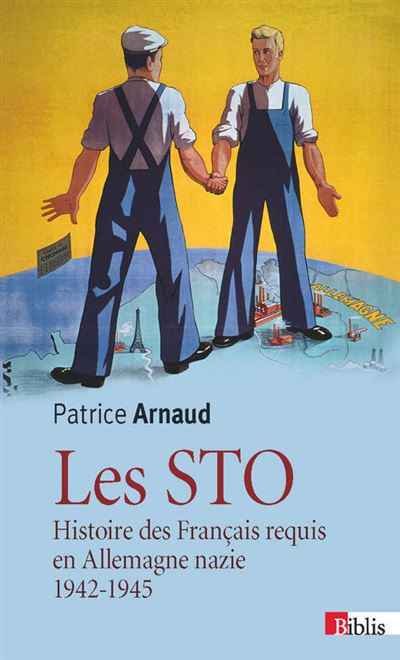
Patrice Arnaud
The STO. The story of the conscripts in Nazi Germany, 1942-1945
CNRS editions
2010
800 pages
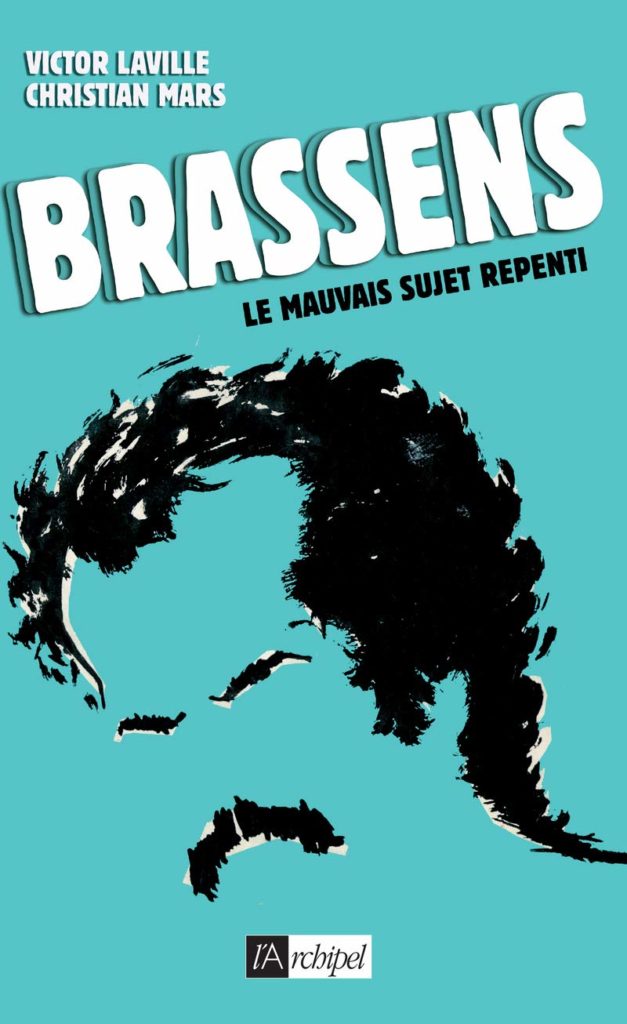
Victor Laville and Christian Mars
Brassens. Le mauvais sujet repenti
L'Archipel
2006
233 pages
Vous aimerez aussi



 French
  German
  English
1 commentaire
Je ne crois pas que Brassens avait peur, je crois qu'il n'aimait pas ce que faisait les autres le STO le dégageait de tout autre engagement patriotique.
Ce n'est peut être pas brillant mais c'est logique quand on connaît la suite.
Laisser un commentaire