




Egypt, re-election despite disaster
Les lundis de l’actualité – Clément Guntern
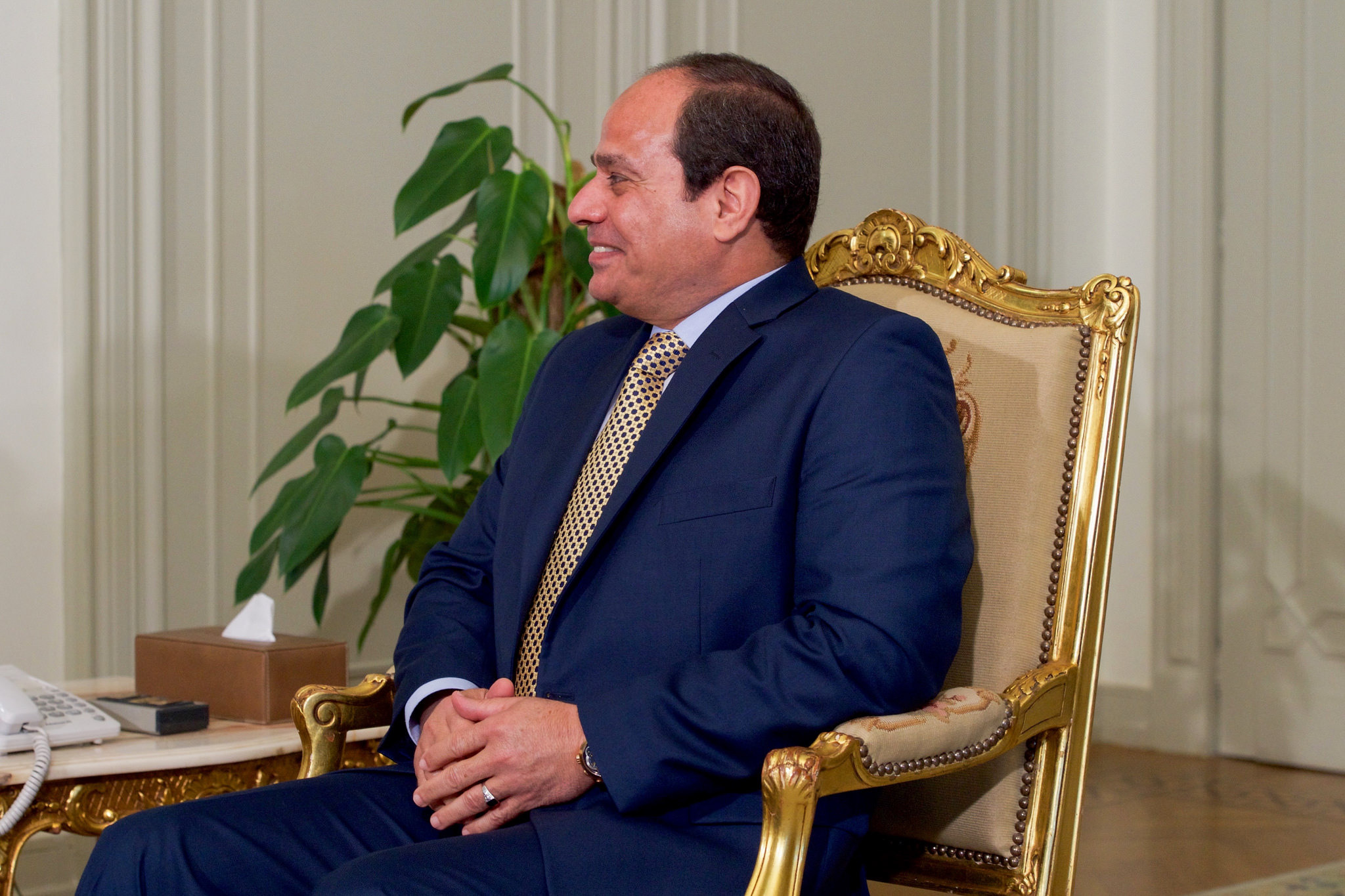
As predicted by all the experts, the first round of the Egyptian presidential election was no problem for President Abdel Fattah al-Sissi. His only opponent fared poorly. Another score was not expected, since the president's opponent was none other than one of his close friends, Moussa Mostafa Moussa. All potential rivals to the reappointment of Egypt's president-general had previously ended up in prison or had magically withdrawn themselves. To crown it all, the media are entirely in the general's pocket, and he had no hesitation in expelling one of the last permanent correspondents of Western newspapers in Egypt. As you can see, the ballot could not be held in a democratic atmosphere, and this election will be a poor indicator of Sissi's popularity.
President Sissi, having ousted his rivals and locked up the newspapers, feared only one thing: abstention. What's more, there are many discontented members of the army, which is the head of state. Sissi's second challenge is therefore the security apparatus that surrounds him. And he has already begun to clean out the ranks of the army in order to place members of his family around him. To justify his authoritarian policies, Sissi talks incessantly of external enemies plotting Egypt's downfall, thus establishing a veritable state xenophobia.
The vast majority of the Egyptian people are either indifferent or disillusioned with the current government. Indeed, since the 2011 revolution in the wake of the «Arab Spring», the Egyptian economy has been in crisis. The country had to ask the International Monetary Fund (IMF) for an exceptional loan of twelve billion dollars in exchange for internal measures. The result is 30% inflation, rising prices and a large number of Egyptians living in poverty. Admittedly, major works have been undertaken, notably in Cairo, but the effects are hardly noticeable, and the population does not recognize President Sissi's mandate as a positive one.
The country's entire economy is in a fragile state. Dependent on aid from the Gulf States and the United States, Egypt has reached an impasse. The Egyptian economy remains a cash economy, and the government is content to reap the benefits without developing itself. Tourism has plummeted, and most foreign aid goes to the military elite. Cronyism between those in power and certain companies has led to the expulsion of genuinely efficient businesses, which can no longer operate without the support of the regime. Faced with this situation, and with less and less state aid, there is a real risk of social breakdown among the population.
On the international stage, however, Egypt is back where it was before the 2011 revolution. The United States continues to provide military support to the tune of one billion dollars a year. Europeans, like France, sell arms to the regime, unconcerned by Egypt's double standards of xenophobia internally and solidity externally. Cooperation with Israel has also resumed, with the Israeli army bombing jihadists in Sinai.
La lutte contre le terrorisme que le président Sissi avait mis au rang de première priorité n’est de loin pas une réussite. Les quelques 60’000 soldats égyptiens dans le Sinaï sont incapables d’arrêter les activités de la branche locale de l’organisation Etat islamique et les attentats se sont poursuivis dans les villes notamment contre la minorité chrétienne.
These elections in Egypt were therefore a foregone conclusion. Despite widespread discontent and the absence of economic or security results, General Al-Sissi's reign shows no signs of coming to an end anytime soon. Unless the anger of the Egyptian people drives him out like his predecessor Mubarak.
Write to the author: [email protected]
You'll also like


 French
  German
  English
Leave a comment