


News Mondays - Clément Guntern
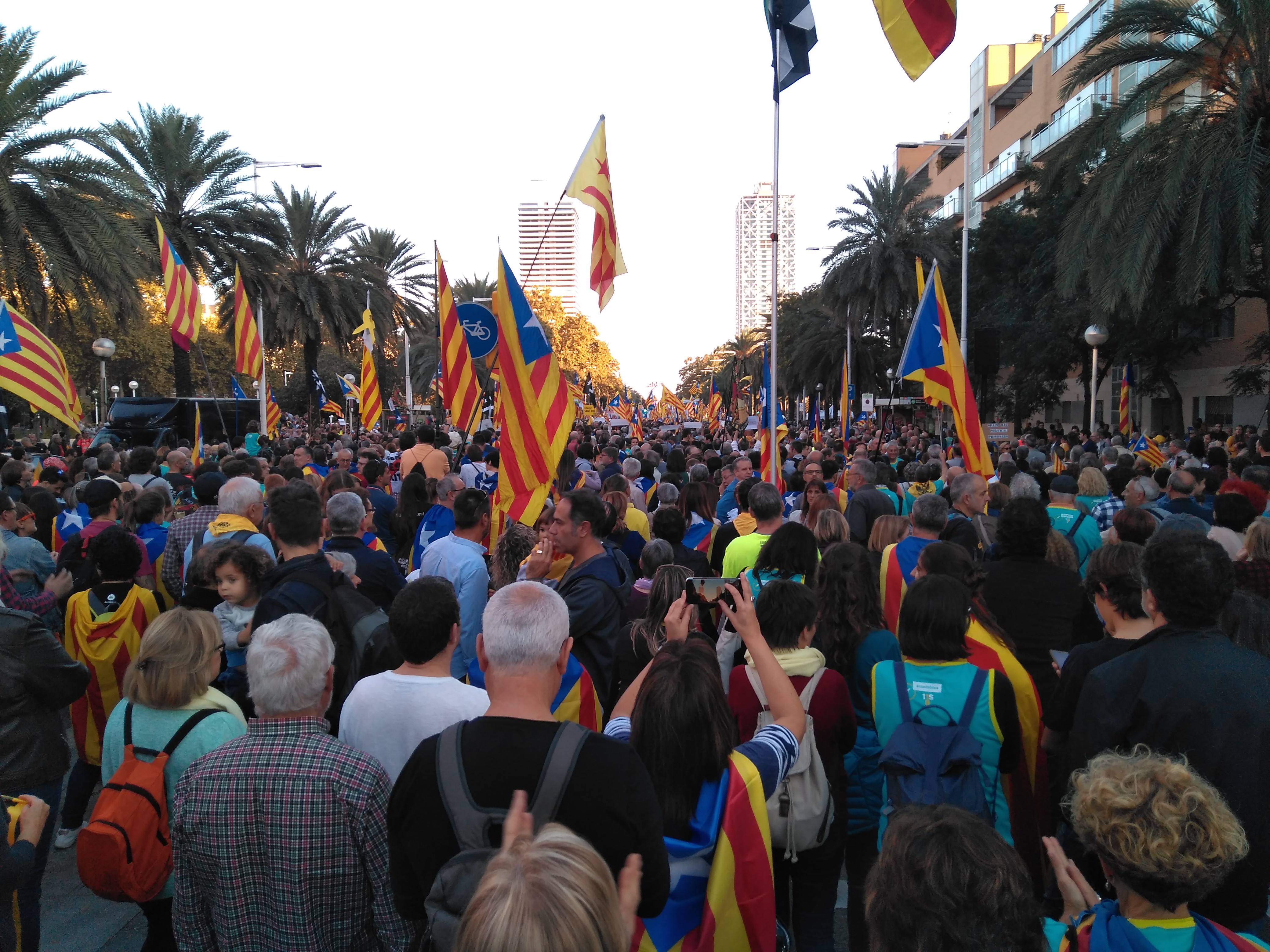
Sometimes, international news seems to speak with one voice. In recent days, mass social movements have multiplied across the globe. Some have been in hibernation for a few months, as in Catalonia, while others have been active for longer, as in Hong Kong.
The events in Iraq, Chile and Lebanon are particularly striking for their simultaneity. The common denominator is that people are taking to the streets to fight an unjust state. In Iraq, people are fighting against the corrupt, Iranian-influenced political system; in Lebanon, they've had enough of the old community structures and the impotence and corruption of the government; in Chile, it's poverty and inequality that are shaking the people. In Hong Kong, people are mobilizing out of fear of the Chinese giant and its authoritarianism; in Catalonia, it was the condemnation of the independence movement; finally, in Ecuador, a few weeks ago, people were fighting against the end of petrol subsidies.
Is this the death knell for neo-liberalism and globalization? The root of all these movements lies rather in the rejection of corruption, as the demands are so wide-ranging and affect so many different countries and situations. Corruption, which has been part of the political life of certain countries for decades or centuries, is becoming less and less tolerable - and rightly so. But are we witnessing a preview of tomorrow's political struggle, at the crossroads of polarized ideas and growing inequalities? We may well be. The final question is how successful such mobilizations are. Can change be achieved this way?
Read also | Are people dangerous?
The most recent example of the proliferation of protests is the so-called Arab Spring. The mobilizations in Tunisia, Libya, Egypt and Syria, in particular, had very different outcomes, even though they were all fighting against authoritarian regimes. The problem lies not so much in mobilization, but in the state of mind of an entire people, or rather in the internal software of countries. These have different social structures and values that favor or discourage change. It wasn't where the government was the most corrupt or unjust that protests had the greatest impact. Nor where opponents were the most violent, as witness the fate of Libya.
A government or an elite will not respond in the same way depending on its software, history, culture and social structure. In France, strikes have been part of the political landscape for decades, while in Switzerland, similar actions would certainly not lead to the same results. What's more, not all current protests have the same value, whether in Hong Kong, Iraq, Chile, Lebanon or Catalonia...
However, we must beware of thinking that a system doesn't change. It would be an intellectual mistake to think that such and such a mobilization can only fail because of the system in place. There is always a factor of unexpected change that can occur without warning, as in the case of the fall of communism in Europe. In any case, we must be wary of seeing a convergence of struggles on a global scale, and of thinking that a violent mobilization can necessarily emerge victorious.
Write to the author: clement.guntern@leregardlibre.com
Wikimedia
 French
  German
  English