



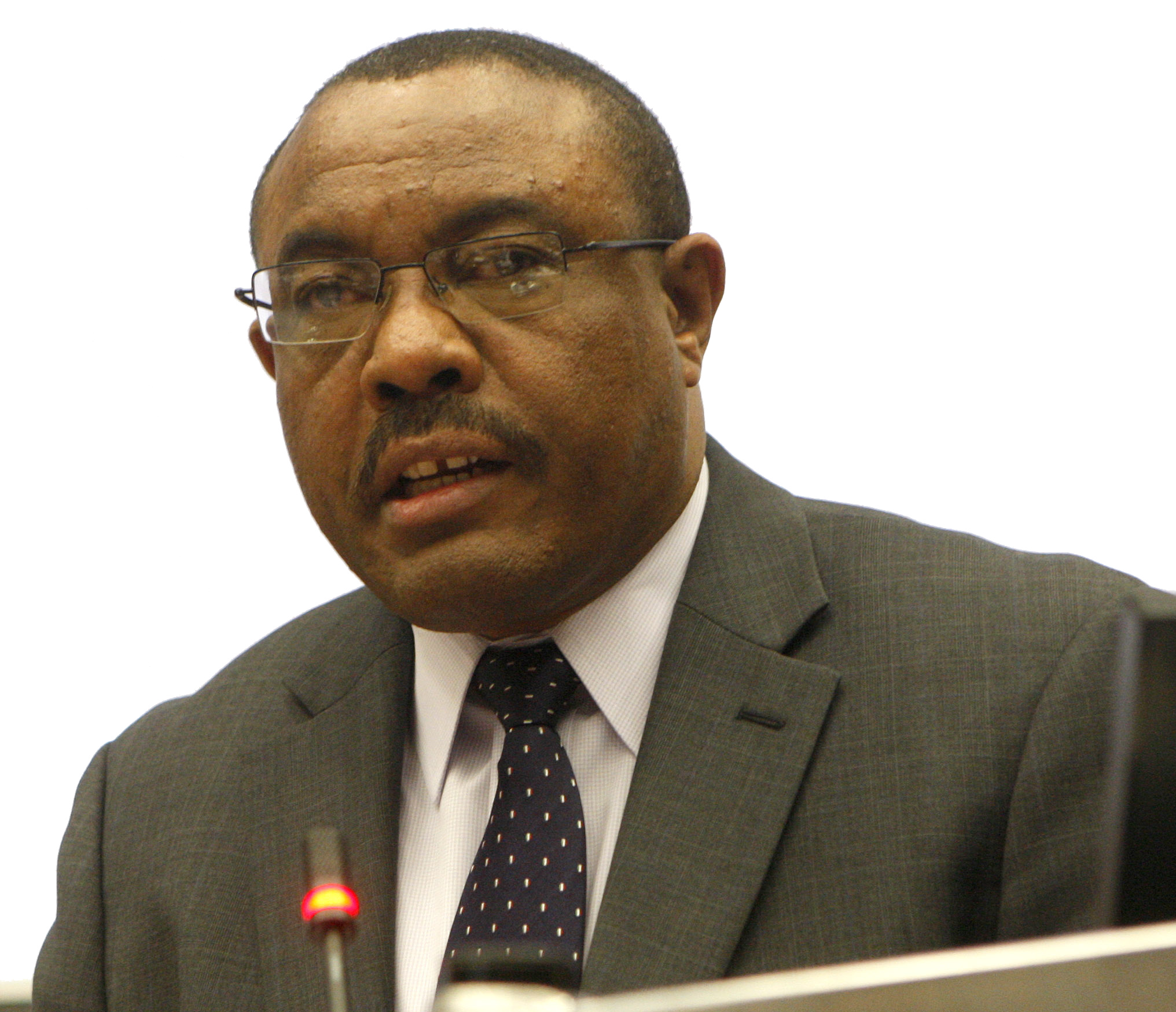
Ethiopian Prime Minister resigns and state of emergency decreed
News Mondays - Hélène Lavoyer
After almost six years in power as Prime Minister, Ethiopia's Hailemariam Desalegn resigned on Thursday. The man is a member of the country's current ruling coalition (the Ethiopian People's Revolutionary Democratic Front, abbreviated EPRDF). He will remain in office until a successor is appointed.
The day after Mr. Desalegn's departure was announced, the government issued a statement announcing the introduction of a state of emergency, «necessary to protect the constitutional system». The state of emergency had already been introduced between October 2015 and August 2016, when the Oromo and Amhara peoples rose up together against the current government.
The front of which Desalegn was a member, abbreviated «Ihadeg» for its Ethiopian acronym, was born of the alliance of four political parties - notably those of the Oromo and Amhara peoples. However, the representation of the country's two main ethnic groups gradually diminished in favor of the Tigrayans, who were in the minority.
During protests in recent years, particularly in 2015 and 2016, opponents have suffered severe repression, leading to at least 940 deaths. Today, 7,000 of the 21,000 political prisoners arrested during the previous state of emergency are still being held in Ethiopian prisons; however, in January the Prime Minister announced the acquittal and release of a number of them, ’in order to improve national consensus and broaden democratic debate’.
Does the politician's departure herald an improvement in the situation in Ethiopia? Will the demands of the Oromo and Amhara people for a more balanced distribution of wealth and an improvement in individual freedoms, which are too limited, be heard? The EPRDF, which has reigned unchallenged since 1991, will also have to make a choice: give space to the voices that have so far been stifled, or hand power back to the current guard. Let's not forget that the EPRDF succeeded in overthrowing the government of head of state Mengistu (described as a «bloodthirsty dictator») through a rebellion; isn't it time to learn from the past?
Write to the author : lavoyer.helene@gmail.com
Photo credit: Wikimedia Commons, CC BY 2.0
Vous aimerez aussi



 French
  German
  English
Laisser un commentaire