





USA - Iran: the war nobody wanted
News Mondays - Clément Guntern
In the space of a few days, the more or less open tensions between the United States and Iran have been revealed a little more bluntly, between assassination, reprisals and sanctions. What stands out at this stage is the Americans' lack of medium-term vision and the Iranians' desire not to raise the stakes too much.
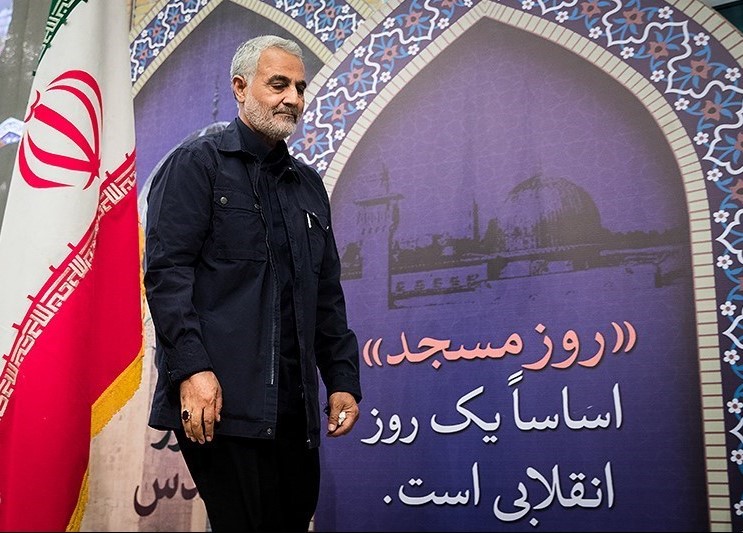
In reality, Trump doesn't really know what he wants in this story. Or with Iran in general, for that matter. According to reports in the American media, the solution of assassinating General Soleimani was the most extreme action proposed by the administration. Even the Saudis questioned whether there was a plan behind the assassination, whether Trump had any follow-through. As it turned out, he didn't really. Moreover, the President of the United States doesn't know what he wants with Iran. True, he has repeatedly threatened the country with total destruction and supports his Israeli ally, who sees it as evil incarnate. Yet, when asked if he is seeking to bring down the Iranian regime, Mr. Trump replies that this is not his goal.
No one wants it
In fact, the only government in the region that would possibly want a war here and now would be Israel. Indeed, Donald Trump is not eternal in the White House, and he represents Benjamin Netanyahu's best ally in ending the Iranian nuclear threat. But it's hard to imagine that the American president really wants war. The problem for the United States is that it cannot, once again, bow its head and back down in the Middle East. At the same time, they can't afford another long-term commitment to the region. That's what Trump has promised, and that's what he'll do against all odds. He is not a bellicose at heart, but rather an impulsive one who will respond rashly. Which, in the end, may amount to the same thing. In short, Trump doesn't want war.
On the Iranian side, the main problem is that this country, in the current situation, cannot live, or survive, other than as a regional disrupter and rival to Saudi Arabia. We know that the Iranians are desperate, and have been for a long time, to extend their domination over the region, and in particular Iraq, where they have a strong presence, to ensure their security. The Iranian nuclear deal, torn up by Donald Trump and which he believed would threaten global security, may not have given every guarantee of the Iranians' reliability, but it was in any case preferable to the current situation with the threat of war.
Iran is is cornered
When a country has reached an impasse, when it has been pushed to the fringes of the international community, especially by the all-powerful United States, it cannot be expected to adopt a passive, peaceful attitude. Its most obvious escape route, and one that avoids turning it into anyone's vassal state, is to impose itself by force, to create support and allies in the region and, if possible, among the powerful. Iran, whether it has marginalized itself or been pushed to do so, finds itself on the edge of the international community, cornered and with its back to the wall.
What might a long-term solution to such a conflict look like? We can imagine a gradual return of Iran to the international stage, as the nuclear agreement already proposed. On the other hand, the Iranian government would have to abandon its revolutionary ideas and destabilizing actions. And why not stop wishing, at the slightest opportunity, for the destruction of Israel? For the moment, Trump doesn't know where he's going with his military escalation, and Iran prefers to exhaust itself in costly external interventions, while the country suffers.
Write to the author: clement.guntern@leregardlibre.com
Photo credit: © Wikimedia CC 4.0
Vous aimerez aussi






 French
  German
  English
Laisser un commentaire