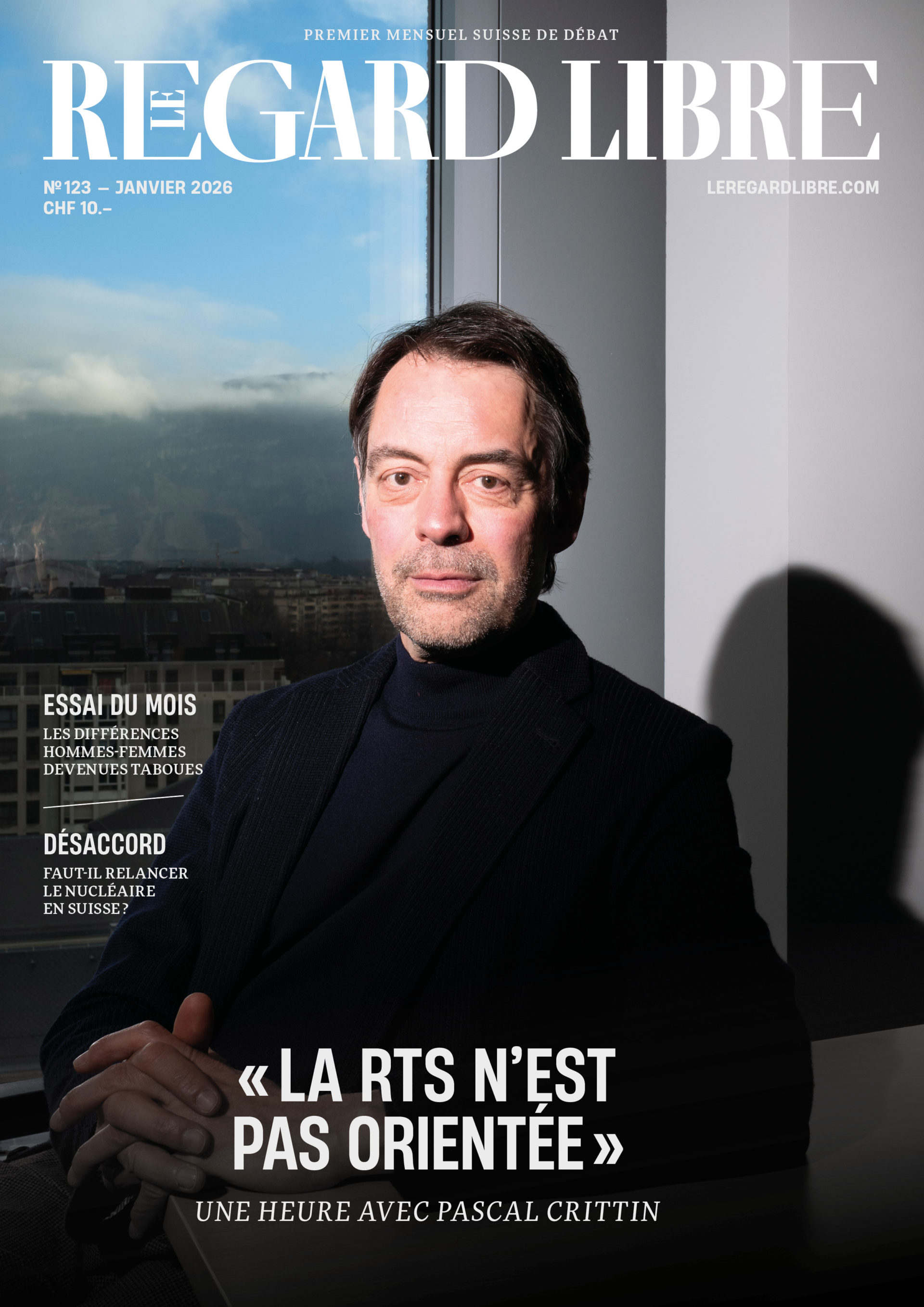






When current events bore us

News Mondays - Clément Guntern
As I write these lines and take an interest in current affairs, I find myself in a void. I couldn't find any news to stimulate my interest; only non-events, umpteenth repetitions of plays I've already seen too much of: strikes in France, tensions in Iran and North Korea, demonstrations in Hong Kong... In short, nothing very stimulating. Observers of national and international news have already realized that reading the newspapers can sometimes be boring as hell.
Unfortunately, current events - or rather, history - are by no means a tranquil river. It has cataracts in which everything tightens, everything speeds up, everything changes. It's impossible to predict the future, at least not through history. If we accept that our world works in cycles, last week we were in a soft underbelly, a period of latency before another crisis. However, it would be wrong to say that nothing is happening, because, to have an explosion, you need slow fermentations where things evolve in fragments; a moment where things are resolved little by little and where the next conflicts are prepared.
Subjects pass, then suddenly reappear in a different guise, and in the meantime, no one has seen what was coming. In all likelihood, we're doomed to chase after events and catch up with the world's evolutions.
This vision of empty news owes much to the media's approach. We only see the phenomena that emerge from normality. The rest takes place below the surface, in great currents of varying depths. Following a well-known criticism, we could say that the media are only interested in what's going wrong. But this criticism is inaccurate. We are interested in what interests us or our readers. We ignore the profound changes and long-term processes taking place in the world, far from home. And this is normal.
That's why crises sometimes take us by surprise. This naïve view of the world has been further exacerbated by the media's propensity to cut back on thought-provoking articles, investigations and reports, either due to a lack of resources or to adapt to demand. Today's readers love short, factual articles and videos that claim to explain a situation in less than two minutes.
Clearly, a choice has to be made, but misinformation threatens our societies, which are so little concerned. And yet, there are media outlets, most of them new, that offer information. slow journalism with reports where journalists take their time and don't just focus on the hot news of the moment, as with Sept.info, media partner of the Regard Libre. This approach has the merit of informing as well as telling.
I would have been wrong to think that there was nothing in the world right now for my article. I should have said that I wasn't seeing anything important.
Write to the author: clement.guntern@leregardlibre.com
You'll also like





 French
  German
  English
Leave a comment