




Rome, the city of forever
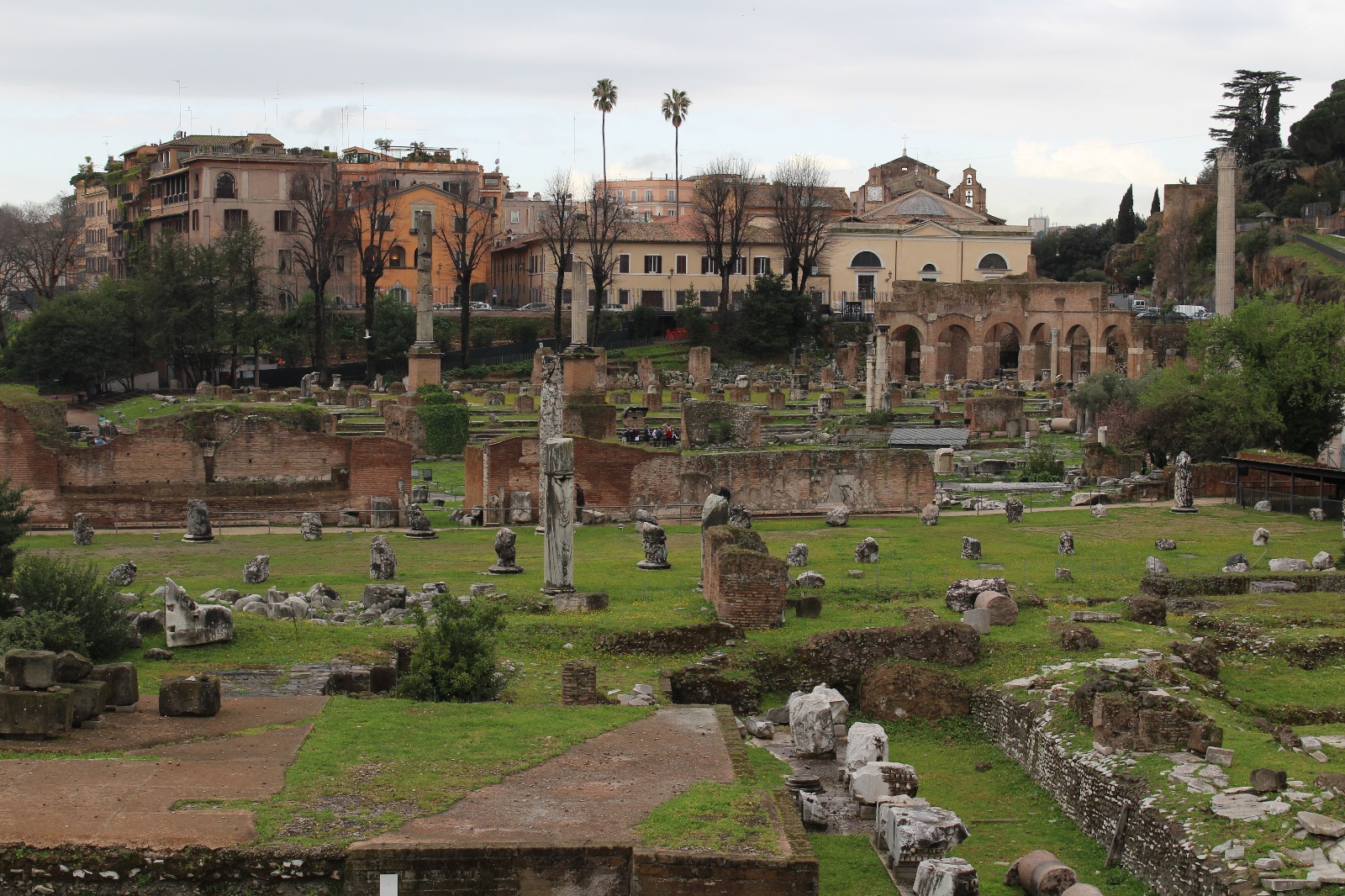
Le Regard Libre N° 39 - Clément Guntern
Despite its current invasion, the city of Rome still inspires the deepest admiration and, at times, incomprehension towards a universe that is at once so pervasive and so distant, that we often believe we understand in its entirety. On the contrary, the City, a place of mystery, always fascinates those who desire it.
The gray Tuscan sky rolls behind the windows of the train as it speeds through the countryside. The tunnels into which the convoy plunges seem to carve themselves into the slightest unevenness in the terrain. When a citadel, perched on a rocky outcrop, flashes its walls between two Tuscan showers, the train enters another tunnel; then another and another. The dry sound of the air hitting the train at the entrance begins to annoy me. Long gone are the days when, in a horse-drawn carriage or later in a train that took its time, we had time to dream of the splendors at the end of the road. The pilgrimage certainly stopped in beautiful Florence, with its magnificent works for all to see. But over there, in the distance, in ancient Lazio, the City awaited. For now, I'm content to doze off for a few more moments before the first steps into the Urbs, and rest my head against the one I love.
The attraction was strong, and I couldn't resist it. At the turn of a book, the urge returned, and my love for her won out again. Resistance was weak, and my heart was already beating at the edge of the Tiber. The train stopped, and the crowded platform was already under my feet. Hurried passers-by bypassed me and hurried on to the northbound track. The square in front of the station, just rinsed by the clouds that the train had not yet passed, was drying in the sun. Now it was time to stroll through the streets and squares of the town. Full of enthusiasm at the start, I rediscovered that today, the City, once again taken over by men from beyond the Tiber, was occupied by a teeming crowd in its alleyways and most beautiful squares. This indolence won me over. The pavement, always beaten by a crowd alternately sullen before a jewel and fascinated by a white marble horror, takes the shocks and protects the entrails of the sleeping City below. My appetite for Rome rises again within me, and it occurs to me that if the surface seems invaded, I still have the earth, the ground, to explore. The mind, faced with the multitude of buried wonders, begins to wander and dream.
The sap of Rome
Rome is as beautiful as it is deep. Metres of buried ruins still support the city today, and its insides sweat through the worn cobblestones. In the end, it's the soil that is Rome's lungs, giving it the air to survive these turbulent times. Rome's other lung is to be found outside its buildings and monuments, in the surrounding countryside which, since the time of the kings and even before, has fed its inhabitants and provided the quarries for its monuments. The Lazio peasant who tilled this land in turn mothered the city as it grew, and it is to this fertile countryside set on a dormant volcano that it owes its world-famous name. The fields and hills surrounding the city have generated its greatest past, but they also remain the future of a growing metropolis, symbolizing the almost perfect symbiosis between the city and its countryside.
Of the seven hills that lined the cradle of the early Romans, it takes a discerning eye to distinguish them all. The original Palatine, excavated then reinforced and enlarged, a hill of brick then marble where the terrain merges with the buildings, seems to have been raised by man. It was on this hill that legend placed all the symbols of Rome's foundation, and that the first emperor built his palace, as if to show that he too was rebuilding Rome in his own way. The others, scarcely more visible, sleep beneath the buildings of men, where they now enjoy a well-deserved rest.
Founding the city
It was here, on two hills separated by a marsh, on the site of the future forum, that everything began. Right from the start, as if to mark the city's eternal attachment to its land, the expression used to speak of the founding of the city, which Livy uses as the title of his work, urbem condere, means nothing more than «to draw a circle» in the ground. The very words ’city" and "Rome" merge in this expression of "Rome".’Urbs. Ville de toujours, since its name, its qualifier as a city and its foundation all coexist in the same word. So why a circle on the ground? For a long time, this legend was attributed to the Ancients' desire to celebrate the founding of the city of Rome by a symbolic act that had never existed historically. Much later, historians rehabilitated the legend, and the furrow cut in the ground by a plough once again marked the founding of the city. Right from the start, this furrow demarcated the sacred from the profane, the boundary between Rome and the outside world. A magical boundary, then, around the native Palatine, which protected men in their wooden huts. Later enlarged several times for a variety of reasons, this magic circle, known as the « pomerium »For the Romans, this marked the boundary between their sacred city and the rest of the world.
This act, inscribed in the ground, indicated the path to follow; history, in this town that had become a metropolis, was to be written and built. Rome speaks to us as much through its texts as through its urban planning. The Romans, in a language they all mastered, read their city like a huge book on the banks of the Tiber. Within its walls, every conquest, every change of power was written in a language of stone and symbolism, making this original site a celebration of the greatness of Rome, first as a republic, then as an empire. From the person who ordered the building's construction to the way it was arranged in relation to other monuments, thus responding to each other with symbolic messages throughout the urban space, not forgetting the circumstances of its construction, all these details spoke to the Romans, who celebrated their victorious collective identity in this way, far more profoundly than through the circus games.
Urban Memory
In the end, the city's deep memory was right. It was incredibly accurate. Indeed, very early on, priests recorded significant events on the «white board» that anyone could read as they strolled through the streets. The names of consuls and magistrates were recorded, as well as eclipses, increases in wheat prices and epidemics. This information, placed in the public space, was intended to reassure the people and show them that Rome was at peace with the gods.
But above all, La Mémoire de la Ville presents us with a story that has attained the status of legend: that of a small hamlet that became the center of the world, where brave men became heroes. This tale of the deeds of primordial times was known to most people of the time. Modern people, with their own vision of history, had great difficulty accepting certain founding myths. Other events, disastrous in their own right, were shaped and arranged by men to emphasize the greatness of the Roman people. How can we imagine telling our children and grandchildren that the Gauls camped for several nights in the ruins of a sacked Rome? The geese of the Capitol will always prevail, showing the assistance of the gods to the pious Romans who revere them. Yet these tragic events all the more underline Rome's destiny, for if it is the eternal city, it is because it had to be born and die so many times in this fertile land of Latium.
Rome will never take its visitor for a simpleton. None of the most important things are on offer. To walk through its ruins, but also through the city that supplanted it in the Middle Ages and Renaissance, is to find yourself constantly called upon, to represent but also to imagine the past. When you walk through this city, you're not just moving through a dream, you're in creation, always ready to see beautiful temples and strong basilica columns rise in your mind's eye. You also need to be on the lookout for the tiniest details, the tiniest fountains, to catch a glimpse of the past grandeur that Rome has never ceased to reveal to attentive passers-by. For these few old stones, lost among so many more recent ones, are but clues that Rome has passed on to us, as if to remind us that here, once upon a time, stood the most beautiful city in the world.
Write to the author : clement.guntern@leregardlibre.com
Photo credit: © Laura Fournier
You'll also like
 French
  German
  English
Leave a comment