




A little trip to Hamburg
Le Regard Libre N° 38 - Hélène Lavoyer
The discovery of a new place is always a beautiful moment of letting go, during which intuition is set free and the magic of chance is allowed to work its magic. While nothing is known, everything is revealed, and the gaze is as innocent as it is meticulous. These new places and smells, under a sky where everything, right down to the clouds, is unknown to us, perpetuate the fragile energy of the flames of curiosity.
The city of red brick buildings and turquoise roofs opened its alleys and promenades to us. Germany's second-largest conurbation, Hamburg's urban space is made up of wide roads lined with pink litter garbage cans, often crossed by crosswalks sometimes even displaying the number of seconds remaining before the light turns green.
When epochs mix with architecture
Following the Elbe route from the port of Hamburg, where much of the landscape is made up of huge liners and freighters unloading their cargoes on land, and metal structures such as cranes and cables, our footsteps lead us through small streets with tall terraced houses.
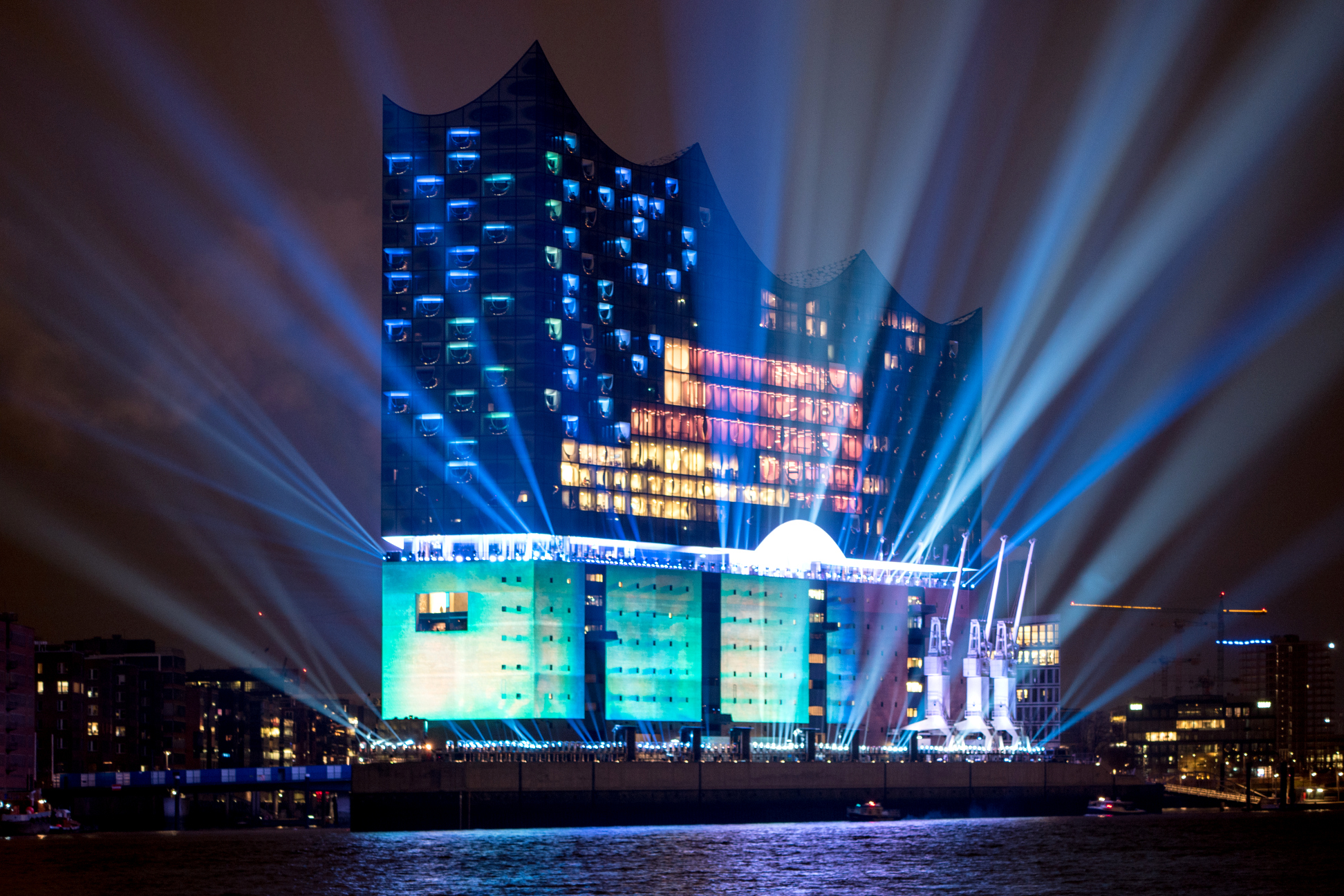
Often, the Elbe Philharmonic - affectionately abbreviated «Elbphi» by Hamburgers - makes an appearance between the buildings. Built from a former warehouse, it looks directly out over the sea and the industrial harbour, and its tip goes so far as to imitate the waves.
A quick detour not far from the famous Reeperbahn, We're standing in front of the imposing St. Michael's Church, first built in 1669 and rebuilt in 1786 after it was destroyed by lightning in 1750. It has become an important symbol of the city, and Germans are quick to recommend spending some time here to visit it.
From its many churches to its period buildings and more recent arrivals, Hamburg offers a homogeneous architectural style, which can be admired by all. buildings without spoiling it.
The Town Hall and the «Little Alster»
The Second Empire-style town hall is a long-lasting sight. The sculptures overhanging the top-floor windows, all along the turquoise roof, add even more presence to the majestic edifice already adorned with numerous details.
Built between 1886 and 1897, the imposing monument doesn't seem to care about the so-called «grip» of time; in its inner courtyard sits the fountain of Hygie, then empty of water but not of beauty, inaugurated in memory of the cholera epidemic that claimed the lives of 8605 inhabitants.
Further on, Adam and Eve engage in an eternal face-off, their sculptures embedded in the walls surrounding a dark wooden door. The hesitant gaze of the former defies the temptation perceptible on the face of the latter, who at her feet welcomes the serpent.
Then the shores of the Alster open up before our eyes. As night falls, the lights of the restaurants and the few shops still open are reflected in the water. In the afternoon, this place is teeming with a small world, and giant stuffed animals take us for a photo shoot at the «Rathausmarkt».
Fish and hamburger
Apart from the traditional Schnitzel - While there's no shortage of dishes to choose from, whether they're made in Vienna or based on cabbage or mushrooms, it's fish that takes pride of place on Hamburg's menus. Indeed, our proximity to the North Sea provides us with numerous aquatic species, such as herring, cod and crabs.
And, as we take a look at Hamburg's culinary history, how can we miss the famous hamburger, What is this «Hamburg cake»? Like other German specialties such as Berliner or the Bremer, The name ’hamburger« is a reference to the city of origin of this dish, which consists of a Hamburg steak between two slices of bread.
Originally, hamburgers were served in canteens, mainly for workers. Later, they became the main course on Hamburg America Line (or H.A.P.G.) ships sailing from Hamburg to New York. It's easy to see how, crossing after crossing, the dish found its way onto New York street corners.
The Sankt-Pauli district and its «Red Street».»
The Sankt-Pauli district has the bright, electric energy of encounters between young and old, tourists and locals. Despite this, the most striking encounters are between beggars and tourists; due to lack of habit, it's possible that pity and sadness leave a lasting impression.
Far from the consumerism of the city center, far from the luxurious atmosphere promoted by the grand hotels and chic boutiques on the banks of the Alster, the rhythms of rock, punk, techno and rap music follow one another tirelessly through the bars.
From the outside, their apparent dilapidation and the brightness of a few neon lights don't seem to reflect the warmth felt on contact with the people of Hamburg during the long walks of the day. Yet all it takes to feel welcome again is to step outside and get used to the half-light.
Write to the author : helene.lavoyer@leregardlibre.com
Photo credit: © Wikimedia Commons, Alexander Svensson
You'll also like

 French
  German
  English
Leave a comment