



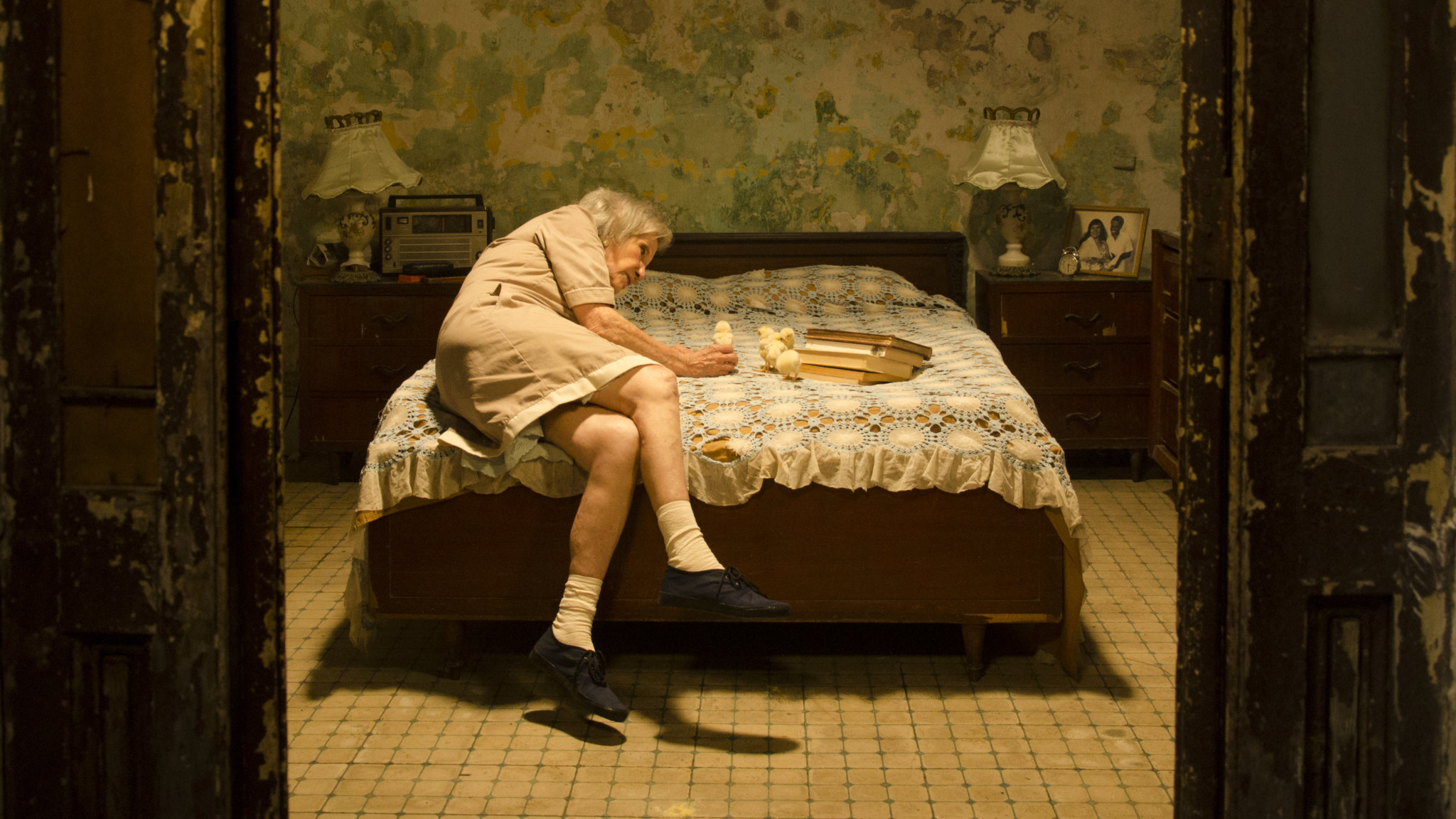
«Candelaria», a ramshackle fresco of a couple in their twilight years
Cinema Wednesdays - Virginia Eufemi
Havana, Cuba, 1994. The island is undergoing an American economic embargo. Opposition voices are heard on the radio, people take to the streets to protest against the crisis, but the old couple we follow seem to miss out on these events, too busy satisfying their own basic needs - a hot meal, running water, electricity. Candelaria, close to eighty, is still working - economic conditions oblige her to do so - despite her advanced age, as a chambermaid in a tourist establishment. In the evenings, she sings typical local songs accompanied by a small orchestra.
Her husband Victor Hugo - who perhaps only shares the famous poet's love of books - resells cigars and plays baseball with the employees of a factory, to whom he reads the results of the games during the day. One day, Candelaria finds a camera in a basket of dirty laundry at work and decides to bring it home. This object will lead our couple to rediscover each other after so many years of habit and routine. «When did I stop looking at you?» Victor Hugo tenderly asks Candelaria.
From hyperrealism to voyeurism
Colombian director Jhonny Hendrix Hinestroza realistically depicts the daily life of an old, childless couple. Candelaria is the mother of five chicks, and Victor Hugo has forged a paternal bond with a young man named Manuel. Despite Manuel's presence, we sense the loneliness of this couple, who seem isolated from all emotional relationships, whether friendly or familial. The house where our two octogenarians live is dilapidated, the paint is crumbling, it's raining inside and power cuts are more than frequent. In this decrepit setting, we witness scenes of intimate life, in which Candelaria's naked body is staged with naturalism.
But in these moments of the couple's private and sexual life, the viewer doesn't perceive the sensuality of the moment. Rather, he or she is bothered and disturbed by this voyeuristic intrusion and by the sight of these senile, time-scarred bodies. The camera movements accentuate this feeling of indiscretion; numerous obstacles are often in the foreground, as if the viewer were hidden behind a piece of furniture, armed with an amateur camera that he or she would point clandestinely at these dilapidated bodies and this stolen intimacy. The director does not idealize old age, but rather exposes its loneliness, illness and fear of death.
A nightmare in pastel
If the spectator expects to travel in the atmosphere caliente of Cuba with this film, he's likely to be disappointed. The Cuban stereotype is absent from this feature-length film, with very few images of Havana and almost no dancing or music. Above all, the viewer is struck by the poverty in which our protagonists live: they are hungry, very hungry - a few grains of rice and a few pieces of meat serve as a feast. Victor Hugo's worn-out shoes remind us that he has sold everything, including their clothes, to be able to afford meals. In pastel shades of blue, green and yellow, we witness the black market.
Manuel's character expresses the American dream; the young man builds an engine for a boat that would take him to Florida. But deaths at sea are also evoked, in this island where death is omnipresent, above all that of hunger. However, Jhonny Hendrix Hinestroza does not focus on the particularities of the island, giving his film a universal value: this starving old couple is more Latin American than Cuban. Here's what the director expresses in an interview: «This inner strength, this will to want to get by on a daily basis, allow me to create characters and flesh and bones by encountering something essential for me to talk about life experiences: dignity» (April 3, 2018 interview by Cédric Lépine for Mediapart). If the tourists in this film are portrayed as rich depraved people, it's true that from this couple awaiting death emerges a dignified aura and a will to live, if only for the time of an embrace.
Write to the author: virginia.eufemi@leregardlibre.com
Photo credit: © DCM Film
You'll also like


 French
  German
  English
Leave a comment