



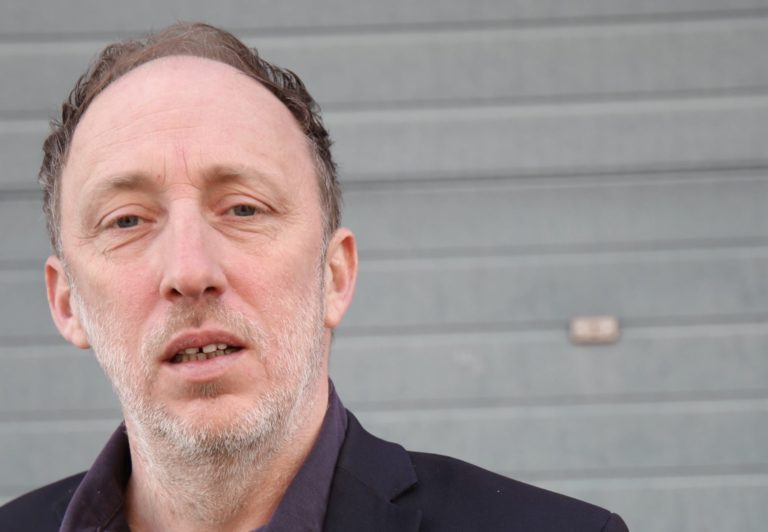
Jaha Koo, committed performer and creator of multimedia theater
Unpublished interview - Ivan Garcia
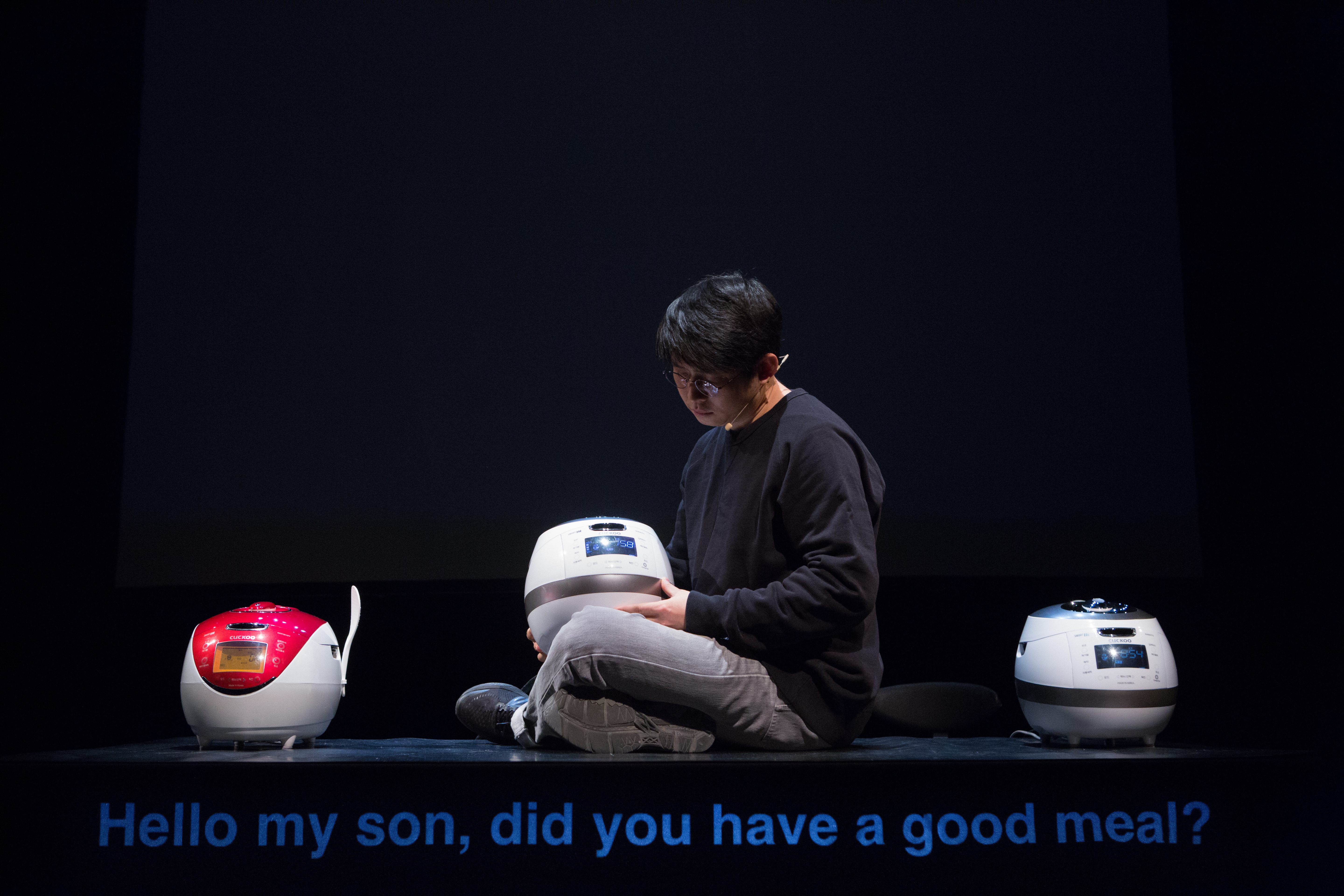
Swiss stages often open up to other actors and directors from all over the world. And here we find the rare pearls of today's and tomorrow's theater. The forty-third edition of Geneva's La Bâtie festival welcomed an intriguing personality in the person of Jaha Koo. Originally from South Korea, this artist presents a multimedia theater at the crossroads of his personal trajectory, history and socio-political issues. An actor-creator, performer, video artist and musical composer, Jaha Koo has arrived in Geneva with his creation Cuckoo. It features him, accompanied by three rice cooker [ed. note: rice cookers]. from the Cuckoo brand, widely used in South Korea. Gifted with words, the three cookers recount their problems and, interspersed with the artist and video, plunge us into South Korean history, that of the 1997 financial crisis which, even today, has left its mark on Korean society. With this interview, Le Regard Libre takes you to meet the man who will undoubtedly go down as one of this century's great theatre-makers.
Le Regard LibreHow would you introduce yourself to people who don't happen to know you or your work, and how would you describe yourself as an artist?
Jaha Koo: I'm basically a man of the theater, a video artist and a composer. I'm extremely interested in media as diverse as text, sound, music, video and installation, as well as their interactions. As a rule, I'm an artist-creator, dealing with each medium on my own. In the same vein, I'm interested in history, particularly political and social issues. My work focuses on how to combine media with each other and with content. I left South Korea when I was twenty-eight, about seven years ago.
You are currently working on a theatrical trilogy entitled The Hamartia Trilogy. The latter consists of three rooms: Lolling and Rolling (2015), Cuckoo (2017) and the last part The History of Korean Western Theater, to be presented in 2020. Could you tell us how you came up with the idea for this ambitious project?
When I was in my twenties, I was already creating plays. Of course, I didn't know exactly what I wanted to do, nor did I have a specific method for my theatrical approach. On the other hand, I was already very interested in social issues. Originally, I wasn't an actor-creator, but a composer and producer. I think it was this interest in social issues that made me turn to theater. My arrival in Europe was a turning point for me. It gave me the ability to see my native country from a different point of view, that of a foreigner. [ed: stranger]. I was able to see things from an external point of view, which gave me a lot of inspiration. It was only around 2014 that I came up with the idea of The Hamartia Trilogy. In this trilogy, I mainly try to see the problems linked to my person or to what surrounds me. These can be both socio-political and personal issues. I was wondering, for example, about the tragic reasons or the tragic starting points that led to these situations.
Hence the idea for this trilogy?
Exactly. Lolling and Rolling, Cuckoo and The History of Korea Western Theater are all based on personal elements, so that we can then see the problems that exist within our environment, as well as concerning myself. In performance, I try to go back to the tragic origins. For example, in Lolling & Rolling, I'm trying to go back to around 1905, to the Japanese colonial period in Korea, which has repercussions on English-language educational issues, as well as on the problems of cultural colonization in South Korea. These issues are linked to the United States, as well as to the Japanese Empire. [editor's note: circa 1868 - 1947].. Cuckoo covers some twenty years of South Korean history, from 1997, when the financial crisis hit the country, to the present day. As for The History of Korean Western Theater, Like the previous plays, this one will also be based on me. Currently, in South Korea, the theatrical world mainstream doesn't consider my work to be theater. This kind of problem, among others, is one of the reasons why I left my native country.
Earlier, you mentioned that you could now see your country through the eyes of a stranger. What do you mean by that?
First of all, I would say that I strongly reject South Korean nationalism. I have a deep respect for individuality. Korean society is strongly based on a group culture, such as familism, which leaves little room for the individual. When I left this culture and was able to observe it from the outside, I realized that I was unique and alone. I realized that I wasn't part of any society, for example. In my trilogy, I talk about my hometown, but it's not exclusively about it; although I do talk about it, it can be projected or mirrored to reflect on other lands. As a result, my work is mostly about South Korea, but viewers can see their own countries through my stagings.
About your show Cuckoo, It mixes all the media, and the viewer sees you with three talking rice cookers. Why did you choose rice cookers to talk about your history and that of South Korea?
My personal intention was, in a way, to transcribe the feeling of pressure that society exerts on me. It was also a trivial event that led me to make this decision. One day, I was cooking rice and, suddenly, my Cuckoo cooker said: «Cuckoo finished to cooking rice. Please sort the rice.» [editor's note: «Cuckooa finished cooking the rice. Please take out the rice.»] In a way, I was relieved by this intervention; it sounded familiar. This machine is not human, and yet I felt a strong sense of humanity emanating from it. As an individual, I felt a very strong relationship with this rice cooker, which seemed to possess its own individuality. At the time, I was also very interested in post-humanism, which gave me a lot to think about when it came to machines. Of course, during my research for my show, I had been thinking about voice assistants like Siri, but it wasn't the same as a Cuckoo. I'm more familiar with this one.
Read also: Laetitia Dosch: «My job is to put people in a place where they have something to think about».»»
In your show, you take a back seat to the rice cookers and videos. Do you think the use of various media and rice cookers has made your view of Korea more neutral, more objective?
Honestly, I don't know. I just don't think this story can be told in just one way. Personally, I think that by using different media, it's possible to hear and see different voices and to layer different stories, even if the content remains the same. The use of these media is more a question of art than politics. As an artist, I always try to think about what my stage language is. Historically, theater has developed several forms of scenic language that can be used: the body, the fourth wall, text and stage work. I think my stage language [ed: performance language] consists essentially of music and video. I try to understand specific subjects in my performance; Cuckoo was a specific metaphor. In a way, it raises the question of how to transform my political ideas into aesthetic works. To come back to your question, I can't say that my artistic choices make things more neutral or objective.
Finally, having seen your play and listened to you, can we say that you make a kind of political theater? And, if you subscribe to this idea, are you trying, through your work, to make the audience reflect on their daily lives?
As an artist, video-maker, composer and actor-creator, political issues are at the heart of my work. If my work can't create a political opinion, then I don't think it has any value. On the one hand, this means that as an artist, political activity is extremely important. On the other hand, I don't think my work can change other people or their lives. In fact, I don't want to change people or their opinions; I don't believe in it, since my work is the result of a single voice, which is mine, and therefore cannot speak for everyone. But, in a way, I want to create a moment of sharing so that people can exchange or think about a specific subject. The moment of sharing is extremely important in my work. Cuckoo, Geneva, Festival La Bâtie, September 2-6, 2019, then at the Festivale Internazionale del Teatro e della scena contemporaneade Lugano, October 5, 2019.
Write to the author: [email protected]
Photo credit: © Radovan Dranga

You'll also like
 French
  German
  English
Leave a comment