




The liberal international order and the return of power
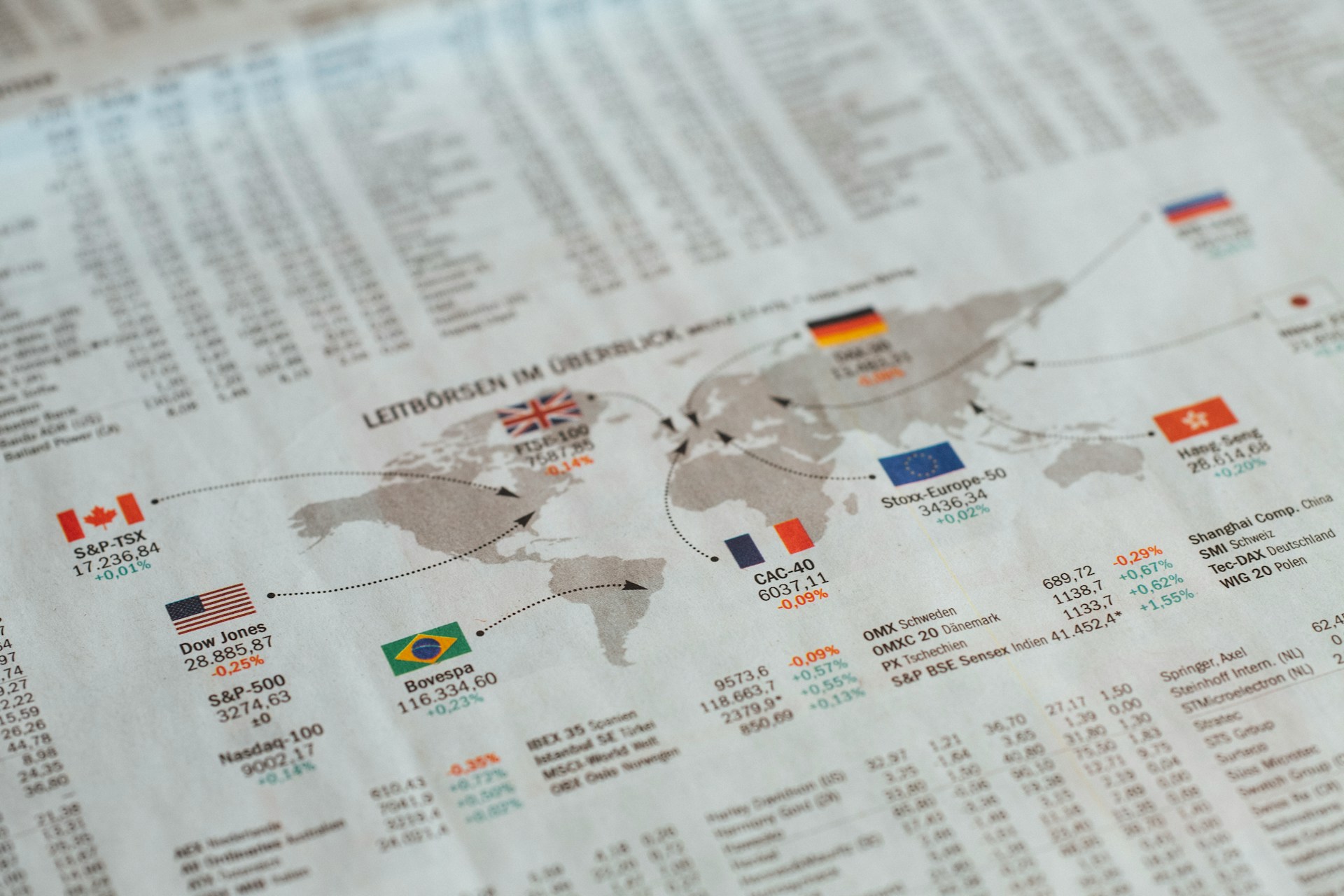
Photo: Markus Spiske (via Unsplash)
The intensification of trade after 1989 nurtured the idea of a world governed by cooperation. Today, geopolitical rivalries are overturning this belief and reshaping economic relations.
After the fall of the Berlin Wall, many believed in the «end of history» described by Francis Fukuyama: the advent of a liberal international order based on rules, economic openness and interdependence. Over the following decades, this vision seemed to materialize. Free trade agreements proliferated, international investment protection became widespread, and the World Trade Organization (WTO), created in 1994, became the pillar of a system designed to promote mutual gains.
This admittedly imperfect order was based on the idea that economic cooperation, framed by legal rules, could produce shared prosperity and reduce the risk of conflict. International trade and investment have indeed contributed to a sharp reduction in world poverty and an intensification of interdependence.
False unanimity from the outset
In reality, this liberal order has never been unanimously supported. As early as the 1990s, a number of criticisms emerged. First, neo-Marxist currents denounced a system that primarily benefited multinationals. Then, populist movements of both left and right highlighted the losers of globalization, particularly among the working classes in industrialized countries. More recently, geopolitical critics have pointed out that economic openness can be exploited by powerful states pursuing strategic objectives.
Today, these challenges are converging to fuel a shift towards what has become fashionable to call geo-economics. In this environment, the economy becomes an instrument of power: sanctions, investment control or industrial relocation serve political and security objectives. Economic interdependence, once seen as stabilizing, can also be «instrumentalized» as a means of pressure.
The rise of China has played a decisive role in this evolution. In the 1990s, many believed that its integration into world trade would gradually lead it to converge towards a more liberal model. However, China has combined trade openness and state strategy, using its economic power to strengthen its geopolitical position. This trajectory has fuelled doubts about the idea of a self-stabilizing liberal order.
Another factor in the decline of this idea is the asymmetries of interdependence. International economic relations are never perfectly balanced: some countries depend more on their partners than vice versa (also read Jean-Marc Daniel's analysis). When this vulnerability becomes apparent, whether in terms of energy, technology or raw materials, the temptation to reduce dependence grows, even at the cost of rolling back free trade.
Liberal dominance
This does not mean, however, that the liberal international order has disappeared. Institutions, trade agreements and legal rules continue to structure a large part of international trade. And while the number of new free-trade agreements introduced worldwide peaked in the mid-1990s, this does not mean that their cumulative growth has stagnated thereafter - quite the contrary. There have never been so many in force.
However, this framework is now being supplemented – or circumvented – by industrial policies, economic security measures or relocation strategies. Switzerland is a good illustration of this tension. Traditionally one of the staunchest advocates of free trade, it remains strongly committed to economic openness. But even in this context, pressures are multiplying: environmental requirements in trade agreements, debates on industrial policy - including on the right - or concerns linked to economic security.
Read also | Le Regard Libre in the United States
So the world is not abandoning liberalism, but evolving towards a hybrid system. The international economic order increasingly resembles a «millefeuille» where free-trade rules coexist with power politics and security concerns. In this context, the central question is not whether liberalism will survive, but in what form it can adapt.
In this respect, the joint declaration signed by Switzerland and the United States breaks totally with what the Confederation and the WTO stand for. Article 5 of the text, which speaks of «economic security», drastically restricts the Alpine Republic's ability to do business with third countries, i.e. China. Such a signal comes at a time when Berne is updating its free-trade agreement with Beijing.
Cédric Dupont is Professor of International Relations and Political Science at the Graduate Institute of International and Development Studies (IHEID). This text is a summarized version by Le Regard Libre from his February lecture at the Journée libérale romande in Lausanne.
You have just read an open-access article from our dossier «Quelles alliances pour les libéraux?», published in our print edition (THE FREE LOOK N°125). Debates, analyses, cultural news: subscribe to support us and access all our content.

You'll also like




 French
  German
  English
Leave a comment