



«The Grudge: what's the point of horror films?
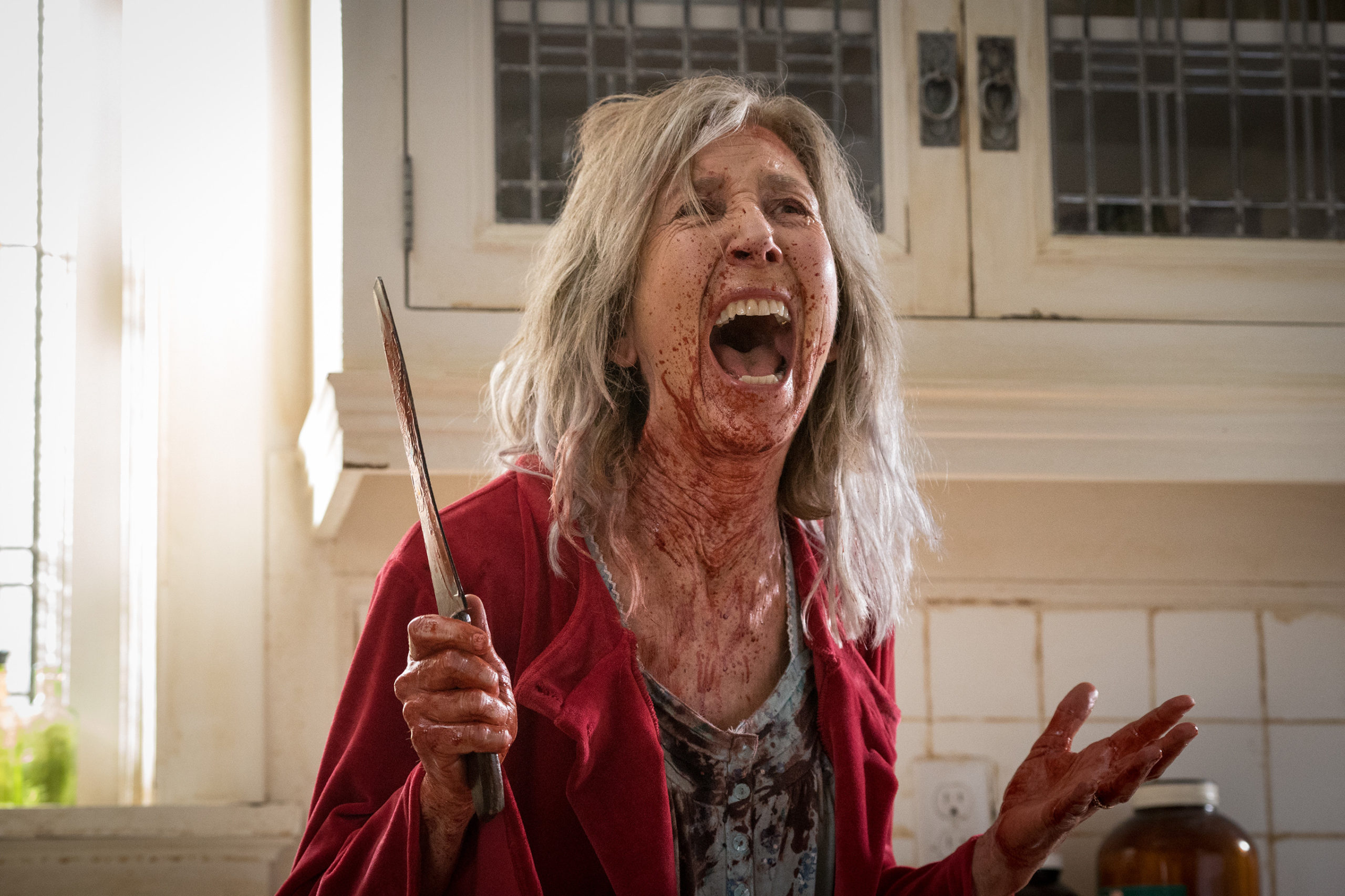
The Grudge © Sony Pictures Releasing Switzerland
Cinema Wednesdays - Loris S. Musumeci
«When someone dies with rage in their belly, a curse happens.»
Classic in its features, The Grudge is a true horror film that works like a horror film, with horror film codes. In fact, Nicolas Pesce's film is a follow-up to the mythical horror trilogy of the same title, which was itself taken from Grudge from Japan. This series of five films has now become a tradition. And it always works. Because it really is scary!
The genre may be familiar to the viewer, but one is never ready to see this film. The screams are no more shrill than in other films of the same genre; the special effects and monsters are very well constructed, but so are others; the plot is no more gruesome. After all, we've got a haunted house - we've all heard of it - and zombies who attack anyone who crosses the threshold - we've all heard of that too.
It lasts, it lasts, it lasts
A feature that may make the film more frightening, and therefore more enjoyable. efficient when it comes to horror: the length of the sequences. When the policewoman, Lieutenant Muldoon, is confronted with the various deaths in the house, everything seems interminable. She's afraid; we fear the worst with her. She steps forward; all we want is to run away. And then she comes face to face with the undead.
It goes on and on and on. There's no respite for the viewer, who just wants it to stop. A few minutes of transition, and off we go again. A typical horror film procedure, but one that limits its sequences of’horror which gives the audience time to prepare for the new confrontation.
Bravo Nicolas Pesce?
Conclusion: should we applaud Nicolas Pesce? Yes, he's succeeded. A horror film should be scary. So that's good. Thank you The Grudge. We got our money's worth. And it's all over. We go home and tell ourselves it doesn't exist. Because we need to tell ourselves. And if we need to tell ourselves, it's because we're afraid. Not that the undead exist, but that these images won't leave our minds. The images stay. Horror films have the same effect as pornography: they imprint images on us. Whether these images frighten us or excite us, it's all the same.
Horror films have consequences, and effects. What's the point of instilling fear for fear's sake? And beyond the point, is it good or bad? We won't go into too much detail here: The Grudge is a deeply unhealthy film. You can't say no to entertainment. You don't say no to a few thrills. But I say no to this kind of horrible spectacle. I'm not accusing the director, he did his job. But I do blame this film.
Horror can inspire courage
So we're blaming the whole horror genre? No, precisely not. In the effects it produces, it can lead to real reflection. It can lead to a vision of reality at its most unpleasant. Paradoxically, a horror film can call for courage. Such is the case with That 1 and 2. The images of terror also remain imprinted in the memory, but they are transcended by the film's message: the fight against fear, the fight against evil. Us by Jordan Peele is a worthy reflection on difference and discrimination. As for the masterpiece Shining Stanley Kubrick's classic film about alcoholism and madness. Psychosis by Alfred Hitchcock, another classic, tackles the problem of troubled identity.

Except that its terror sequences are too long, The Grudge is of no interest whatsoever, other than to leave him with no hope, no light, no way out. And yet, the film launches off in the right direction by tackling serious subjects that need to be discussed: abortion, assisted suicide, the meaning of a crime and mourning. Unfortunately, the screenplay launches these subjects without completing them in the construction of a thought. I wasn't asking for a two-bit moralizing that would have said «abortion is wrong», but I was expecting a major exploitation of the theme in its causes and consequences, since it's brought up so insistently.
Only faith is more or less preserved by a character who eventually disappears. He doesn't die; we just don't talk about him anymore. Detective Goodman is surrounded by holy images, wears rosary and scapular, and is effectively preserved from the haunting of his colleague. There may be something to be said for this, but the character is too absent from the plot. And problem: his faith preserves him, yet he does nothing to help the other victims. It's a contradiction.

Darkness alone
Goodman and his faith, oust! To make way for darkness alone. And if only there were only darkness! In the light of the cameras, The Grudge shows some horrible shots. Harsh, too harsh. Even in suggestion, the horror is too great. A husband killing his pregnant wife. Yes, it's happened in real life. But when the film talks about this murder, even if it doesn't show the murder itself, it leaves the viewer alone in the face of this misery. No message, no opening, no reflection. Nothing.
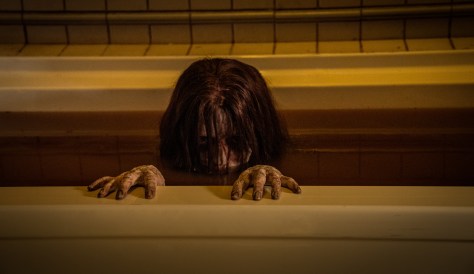
Et quand on voit une mère en train d’étouffer sa fille dans la baignoire, qu’elle lui tape la tête et que le sang… Stop, je n’en dis pas plus. J’en ai les frissons; j’ai envie de vomir, de pleurer. Et cette séquence-là, on la voit. Ou quand une épouse déchiquette son mari. Pourquoi? Parce qu’elle est envahie par la malédiction. D’accord, merci. Ou quand un officier de police qui avait tâché de résoudre l’énigme de la maison hantée se crève les yeux pour cesser de voir ces morts qui le hantent. D’accord, et qu’est-ce que j’en fais de cette horreur? Rien. Parce que le film nous lance ces images à la figure sans assumer ce qu’il fait, sans intérêt.
No hard feelings
«Grudge» means «grudge». That's what's left at the end of the film. Terrifying images and the grudge of the dead. They died with rage in their bellies, casting a curse. So we dwell on the hatred, the eternal grudge. The curse. The inability to escape. Evil has won. - Thank you, goodbye, I hope you enjoyed the film. - Yes, it was wonderful! What a beautiful message, what enthusiasm, what hope! - We'll say goodbye then, no hard feelings?
No, no hard feelings. The film isn't worth it. Leave the dead in peace. Leave us in peace.
Write to the author: [email protected]
Photo credit: © Sony Pictures Releasing Switzerland

You'll also like


 French
  German
  English
Leave a comment