




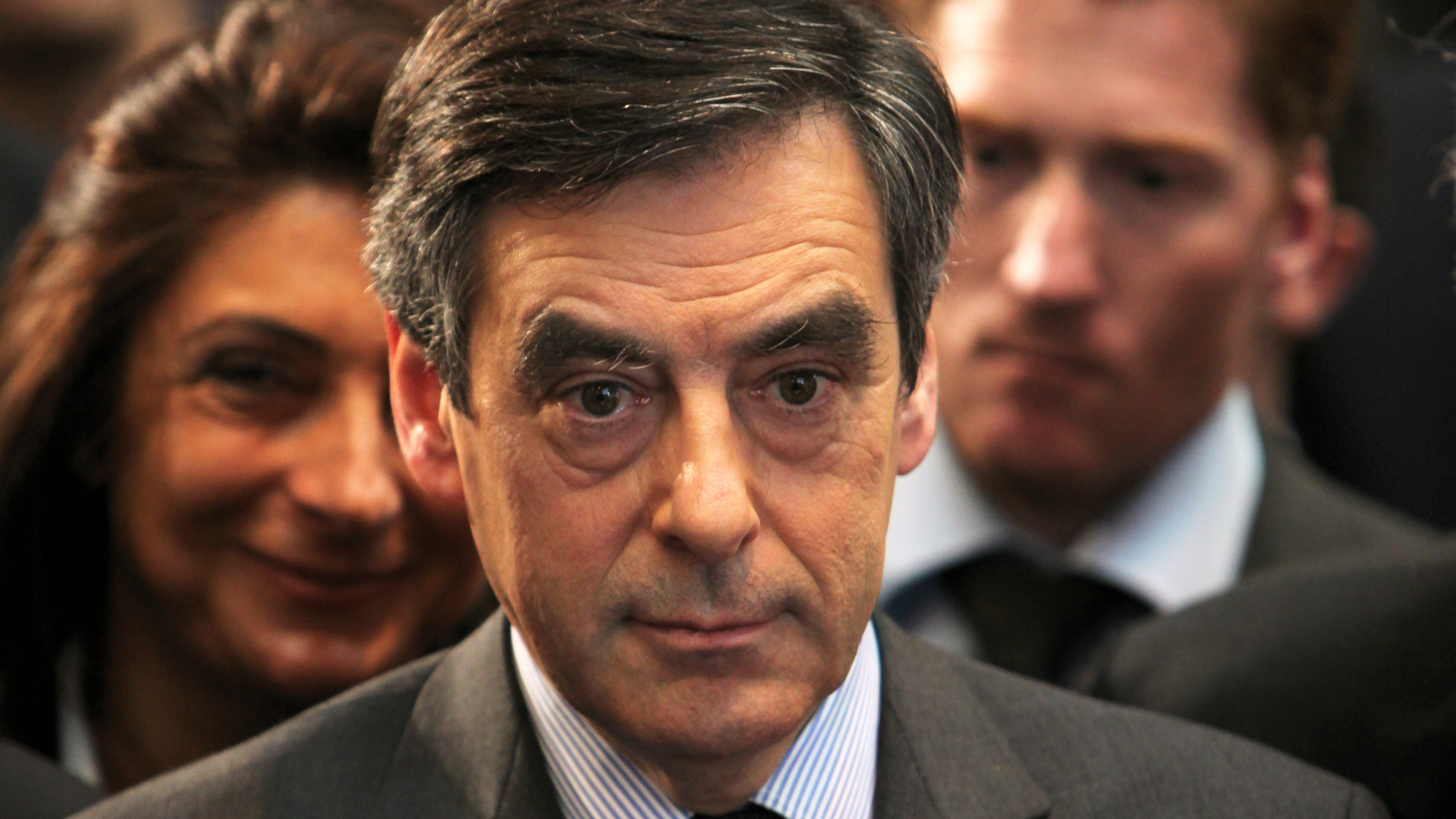
Fillon is the best of the candidates in the primary for the right and center
Jonas Follonier and Nicolas Jutzet
The primary for the right and center has begun. Everyone is putting forward their book, their platform, and their ideas «for France.» Everyone believes they are the chosen one. Unfortunately, upon closer inspection, despite the wide range of candidates, the proposals are more or less the same, with only a few minor differences. The candidates agree on the main issues: abolishing the 35-hour workweek, making unemployment benefits means-tested, and aligning private and public pension systems. Apart from Nathalie Kosciusko-Morizet (and even then), no one has the courage to propose a real revolution. The debates will focus on details, not on deep-seated convictions.
For example, there’s very little discussion of the candidates« vision for Europe; they sidestep the issue. They promise—or don’t promise—to hold a referendum, but above all, they avoid this slippery topic. The same goes for the explosive issue of labor unions—let’s not forget that in France, they survive on public subsidies and yet still feel free to bring the country to a standstill, even though they no longer represent anyone. There is more courage, however, when it comes to addressing the issue of the veil and Islam as a whole. But we quickly come to regret the security-driven one-upmanship that leads to escalation. Sarkozy even goes so far as to propose deportations based on »suspicion.” The demagoguery is so extreme that one ends up applauding the response from Bruno Le Maire and Nathalie Kosciusko-Morizet, who refuse to ban the wearing of the veil at universities, as they rightly believe that university students are capable of deciding for themselves what clothing suits them.
Let's take a closer look at what the various primary candidates are proposing by comparing their platforms by topic:
Civil Service
- Nicolas Sarkozy Supprimer 300’000 postes de fonctionnaires sur la durée du quinquennat.
- François Fillon: Reduce the number of civil servants by 10% (currently 5.2 million full-time equivalents).
- Bruno Le Maire: Réduire 100’000 postes de fonctionnaires par année.
- Alain Juppé: Eliminate between 250,000 and 300,000 civil service positions by strategically not replacing retiring employees.
- Nathalie Kosciusko-Morizet: Abolish civil service status.
- Jean-François Copé: Repeal the civil service regulations and switch to a 39-hour workweek.
- Jean-Frédéric Poisson: Limit the role of the state to its sovereign functions.
Budget
- Nicolas Sarkozy: Save 100 billion over the course of the five-year term.
- François Fillon: Save 110 billion over the course of the five-year term.
- Bruno Le Maire: Reduce spending by 85 billion over the course of the five-year term.
- Alain Juppé: Save 85 to 100 billion over the course of the five-year term.
- Nathalie Kosciusko-Morizet: Save 100 billion over the course of the five-year term.
- Jean-François Copé: Save 20 billion per year.
- Jean-Frédéric Poisson: Add 1 billion to the Justice Department's budget.
Security
- Nicolas Sarkozy: L’armement de la police municipale doit devenir la règle.
- François Fillon: No national service (in the 21stth (In the 21st century, the military is a matter for professionals.).
- Bruno Le Maire: Deport radicalized foreign nationals on the "S" watchlist.
- Alain Juppé: Mettre en œuvre tous les outils de l’état d’urgence: perquisitions, arrestation des Français de retour du djihad, assignation à résidence des fichés S jugés dangereux.
- Nathalie Kosciusko-Morizet: Ban Salafism.
- Jean-François Copé: Créer 50’000 postes dans la sécurité et 20’000 places de prison.
- Jean-Frédéric Poisson: Reinstate the national service.
Immigration
- Nicolas Sarkozy: Mettre en place un délai de cinq ans avant qu’un étranger puisse bénéficier d’une allocation sociale non contributive.
- François Fillon: Do not pay any social assistance benefits, family allowances, or housing assistance to those who have been legally residing in France for less than two years.
- Bruno Le Maire: Durcir drastiquement les conditions du regroupement familial; contrôler le casier judiciaire des demandeurs en amont; accroître le niveau du «revenu de référence» et y inclure uniquement les revenus du travail; mettre en place un système de cautionnement bancaire de 5’000 euros pour permettre aux étrangers de s’installer de manière digne sur le territoire français; délivrer automatiquement une «obligation de quitter le territoire Français» (OQTF) aux étrangers installés en France qui ne respecteraient plus les critères d’éligibilité.
- Alain Juppé: Conditionner le regroupement familial à une situation d’emploi générant des revenus d’activité.
- Nathalie Kosciusko-Morizet: Restore the essence of the right to asylum.
- Jean-François Copé: Eliminate government-funded medical care and cut the number of new immigrants per year in half.
- Jean-Frédéric Poisson: Replace the principle of jus soli with the principle of jus sanguinis.
The Specialty
- Nicolas Sarkozy: Require all troubled youth to perform mandatory military service.
- François Fillon: Implement the single mandate.
- Bruno Le Maire: Abolish the ENA.
- Alain Juppé: Monitor places of worship to shut down radical mosques.
- Nathalie Kosciusko-Morizet: Introduce a flat tax (the same tax rate for everyone).
- Jean-François Copé: Governing by executive order to move things along more quickly.
- Jean-Frédéric Poisson: Repeal «marriage for all» and fight against abortion.
Of course, there remains the disappointment that the Fourth Industrial Revolution was absent from the debate, as well as the scant attention given to digital technology, the decentralization of power, globalization, a fundamental reform of the welfare state, and an end to social clientelism. Among this generally homogeneous group of candidates, only one stands out somewhat. François Fillon is the only contender who, in our view, seems capable of following through on what he proposes. Far from being revolutionary, his platform nevertheless suggests a significant shift from the current model—a change that will be very difficult to implement, given how entrenched his opponents are in their dogmas. A president who strictly adheres to his mandate, while remaining mindful of his time constraints (he states he will seek only a single term), will possess a legitimacy that is difficult to challenge, even by the public. Despite his age, his interviews reveal a man who is well aware of the new reality and the world to come. Who would have thought that the austere former prime minister was a «real geek,» as he claims?
Furthermore, his intention to continue revitalizing the apprenticeship system is commendable, as it could save a portion of France’s youth from long-term precariousness. His desire to refocus the state’s responsibilities on its core functions—while attempting, to some extent, to return the remaining tasks to the market—is also commendable. Another interesting point is his desire to remove the precautionary principle from the constitution, calling it «a misguided and arbitrary principle.» Let us remember that this precautionary principle—quite contrary to what environmentalists tell us—leads us straight to ruin, as it turns Europe into a continent of cowards, unlike Asia or America. And, who would have thought it, fear drives away entrepreneurs eager for… risk. We should also note his reasonable desire to reverse the closure of the Fessenheim nuclear power plant decreed by François Hollande.
Let’s quickly temper our enthusiasm, though: this candidate is far from perfect, as he seems quite conservative on social issues and on matters related to the justice system, the police, and the military. He will be able to steer the country on an upward trajectory, but for major social initiatives, we’ll have to wait until 2022—or even longer.
Overall, this primary feels like a rehash and sets the stage perfectly for a race for the presidency that risks being, above all, a race to avoid the worst-case scenario. Within the traditional parties, no candidate is emerging or winning over the crowds. The Socialist Party’s predicted rout and the near certainty that Marine Le Pen will make it to the second round have led many experts to say that this primary on the right and center will determine the future president of the Republic. As a result, we may soon learn the identity of the eighth president of the Fifth Republic.th *La République* on November 27, even before we knew more about the intentions of the current occupant of the Élysée Palace, who has promised to announce his decision regarding a potential re-election bid sometime in December. Seriously…

You'll also like

 French
  German
  English
Leave a comment