




Covid-19 vaccine is called «Petite»
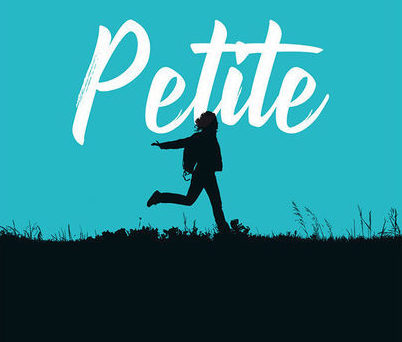
If you thought you were reading a medical-pharmaceutical article about a potential Covid-19 vaccine, think again. This is a review of Sarah Gysler's travelogue, Small. And if we thought we'd find the theme of childhood or that famous «inner child» as a major theme of this journey, we've more or less missed it, except for the first half of the book.
So, in fact, she talks about it a lot, but not in the way you'd expect... So this is a travel story, which is ultimately more a story of life, with travel taking a secondary, therapeutic role. A young woman from Lausanne, out of her element, a little lost in her life, who decides to go where her finger on a map of the world indicates. All backpacked and penniless. The whole thing seems banal, even boring, so much so that it resembles every burn-out story of our century. You leave everything behind, hitchhike and come back empty and rich at the same time. In fact, let me tell you: it's exactly that, nothing new. Except perhaps this booster shot, this vaccine that has helped me a lot in this «post-confinement» period in this «so beautiful-all-joyful-and-wonderful-after-world».
«Algerian in Switzerland, Swiss in Algeria, eternal foreigner. I feel that a part of me escapes me. That I don't have a complete identity. So I've learned to believe in fraternization in the broadest sense: it's become more essential for me to share an era than a nation. It's undoubtedly thanks to my crossbreeding that, later on, I chose the road.»
So yes, indeed, Sarah - I'll call her by her first name, she seems such a good friend after three lines - tells us all about her «little» self. About her origins, her family conflicts, her feeling of being different, her hypersensitivity, her love affairs and her start in life as a completely «failed» adult, as society would have it. We quickly become attached to her (especially when the theme of being a stranger to this world resonates so strongly with us), we love her critical, fair-minded views on the school system and guidance counselors, and we laugh at some of her self-deprecating remarks, all the way through half the story. But then, we're left a little hungry... When's the damn trip going to start?
«It's a great opportunity to be educated. So I wonder where it all went wrong. At what point did this place, which is supposed to produce culture, turn into a slaughterhouse for the soul, a reaper of spontaneity? Probably ever since we started seeing children as future employees, instead of as beings to be guided.»
Then comes «the accident», as she calls it. A special experience for a special relationship, and an equally special realization. It's then that we realize that Sarah's life has been turned upside down. And forever.
«One day it just overflowed for me. Nothing in particular happened, it was just too much. I reached saturation point, the point of no return. I gave my notice without telling anyone. In a flash, just like that. It was August 28, 2012, I was eighteen years and five days old, and for the first time in my life, I was making a decision on my own. [...] I turned on my heels, I left. It was either that or die. To this day, I don't know where I got this final impulse, this survival instinct. I only know that I've never done anything so extraordinary.»
Funnily enough, I've never been a big fan of travelogues, and it was as a challenge that I put Sarah Gysler's book on my bookshop shelf recently. I enjoyed being part of the baggage of this young Swiss woman, who is ultimately very close to us. In fact, she very often addresses the reader, which creates a striking closeness and familiarity. But to this day, I don't know whether I like these interactions or not. I think what I like in travel writing is to travel in the world of its author, to travel in a country, but above all in the words, emotions and feelings that this traveler has written for himself, in memory. Here, it's clear that the writing was done after the fact, and that the feelings are less important than the simple exposition of facts and milestones. So we find ourselves faced with the account of a journey, with its facts and moralizing aspects. It's a shame...
«Needing help forced me to reach out to others. As someone who usually vacillates between shyness and wildness, I had to approach strangers, give them my trust and take care of theirs. At first, this seemed insurmountable. Then I tamed these feelings and made them my second nature. [...] Most people enjoy meeting people, giving and sharing, and these are often the ones who are the most fulfilled. We forget behind our screens that human beings are above all social animals. The mission of vagabonds is to remind us of this.»
But then, in this post-confinement period, when many people had us believe that «the world after» would be more respectful of nature and mankind, that it would be more serene and that a return to basics would be inevitable, and - let's face it - we're not there at all, not at all, Small seemed to me like a «little» gem of faith in humanity. This humanity in which I had lost all hope upon seeing how it reacted to the lifting of lockdown restrictions (and I’m not excluding myself from that group), this humanity that seemed to think only of itself and its own interests, this humanity that had disappointed me so many times… well, it was this fleeting friend—some 170 pages long—that opened my eyes to a reality.
By being so wary of it, we close the door on it and deprive it of any possibility of proving its benevolence and generosity to us. Humanity is beautiful, provided we open up to it and communicate with it.
«Gratitude and generosity make you happy.»

Sarah Gysler
Small
Editions des Equateurs
2018
182 pages
You'll also like




 French
  German
  English
Leave a comment