



AI, the new betrayal of cinema
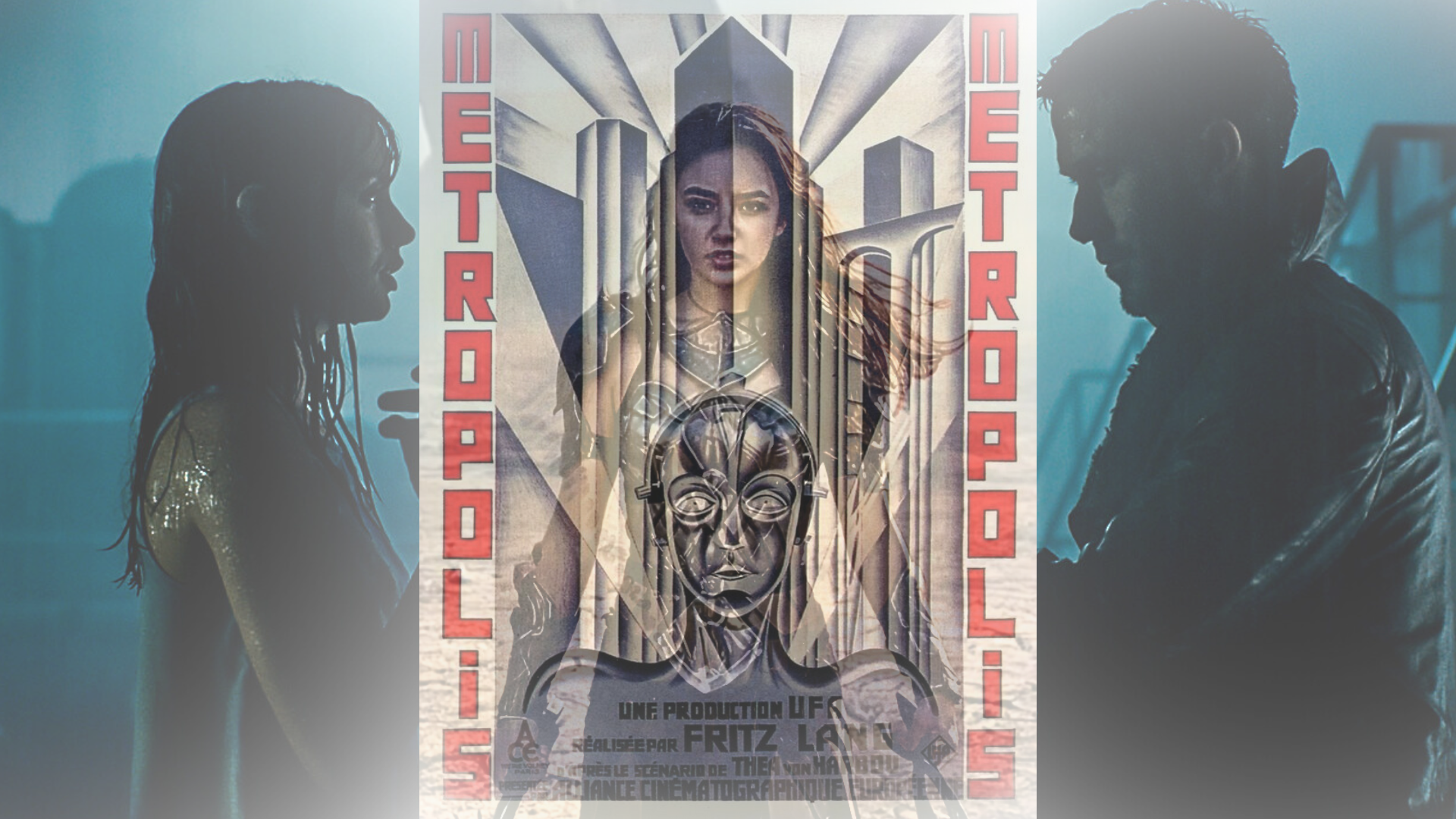
In Fritz Lang's «Metropolis» (1927), an android led the revolution. In «Blade Runner» 2049, Replicants and AI question the very identity of humanity. Virtual actress Tilly Norwood propels these questions into the real world. Photos: UFA Studios, Columbia pictures and Tilly norwood's Instagram page Editing by Jocelyn Daloz for «Le Regard Libre».»
On the menu this month is a fictional and unlikely encounter: that between my former film history teacher and virtual actress Tilly Norwood. He mourns the silent films of the '20s, she embodies the AI ready to supplant flesh-and-blood actresses.
Her eyelids lift with surgical precision, her micro-expressions betray calculated emotion, her smile disarming. Tilly Norwood seems to be under the spell of her interlocutor, a friendly fifty-something, the perfect stereotype of a Parisian professor, with a well-fitting jacket, a little cashmere scarf and big glasses. Except that she can't really be charmed, since she doesn't exist, and therefore couldn't really have met my former film history professor on a Parisian terrace to discuss the links between technology and the 7.th art. Tilly Norwood is a virtual «actress», presented at the Zurich Film Festival as the new technological revolution in this field.
Talking movies, the gravedigger of the 7th art?
And even if such a meeting were possible, chances are it wouldn't go well. I doubt my teacher, a Jean Renoir and Fritz Lang enthusiast, would give him a warm welcome.
I remember lively discussions in seminar rooms about the advent of talking pictures in the 1920s. For him, cinema had already ceased to be cinema when actors exchanged gesture and mime for speech. Color, too, had hijacked the primitive aesthetics of the 7th art, which until then had been content to play with light, shadows and shades of grey. Color, a vulgar innovation, let alone the ultra-realism of today's films, and the excessive use of steadicams, which have largely replaced rail-mounted cameras, have made the frame wobbly, turning film from a work of art into immersive entertainment. I think he was provoking us a little, playing the Luddite opposed to technology, to get us thinking about the transformations implied by each new technological means.
Tilly Norwood is not just another tool
More optimistic than him, I believe that cinema has always survived these «betrayals» through innovation. New forms of expression have sometimes supplanted old ones, sometimes added to them: today, we still shoot black-and-white films, like the Roma by Alfonso Cuaron, the Good Night and Good Luck George Clooney or Schindler's List by Steven Spielberg.
We could be delighted to see the range of palettes expanding, find a use for steadicams when they're used on purpose and not because it's cheaper than filming travellings on rails, appreciate the artistic horizons opened up by digital cameras, special effects, drones and so on. And to hope that artificial intelligence (AI) is just another tool, as stated by the creator of Tilly Norwood, who felt obliged to retract some provocative remarks after the outcry provoked by Norwood's presentation in Zurich. Eline Van der Velden had expressed the wish that Tilly would become the next Scarlett Johansson. After the backlash She was more measured, arguing that virtual «actresses» would never replace real actors, but would just be another tool.
Read also | AI is an opportunity for journalism
Artificial intelligence is already widely used to generate scripts, sets, scores and voice-overs. Disembodied virtual avatars like Tilly Norwood may well join 3D in the dustbin of spectacular but useless and overpriced gadgets. On the other hand, AI poses a direct threat to voice actors, designers, scriptwriters and composers, as soon as it is used to reduce production costs. AI isn't just going to change the aesthetics of a film, like color or steadicam - it's going to turn the whole creative process upside down, and further contribute to the standardization and lenification of our culture, with power multiplied tenfold by servers that accumulate data and model their algorithms on the creations of real humans.
So I have to join the camp of my history teacher and the Luddites nostalgic for good old cinema on this one - and too bad if it makes me an old fart....
Every month, our film review Jocelyn Daloz explores the seventh art in its socio-historical context.
You have just read an open-access column from our print edition (Le Regard Libre N°121). Debates, analyses, cultural news: subscribe to support us and access all our content.
You'll also like

 French
  German
  English
Leave a comment