




«Ad Astra»: in search of the stars, in search of the father
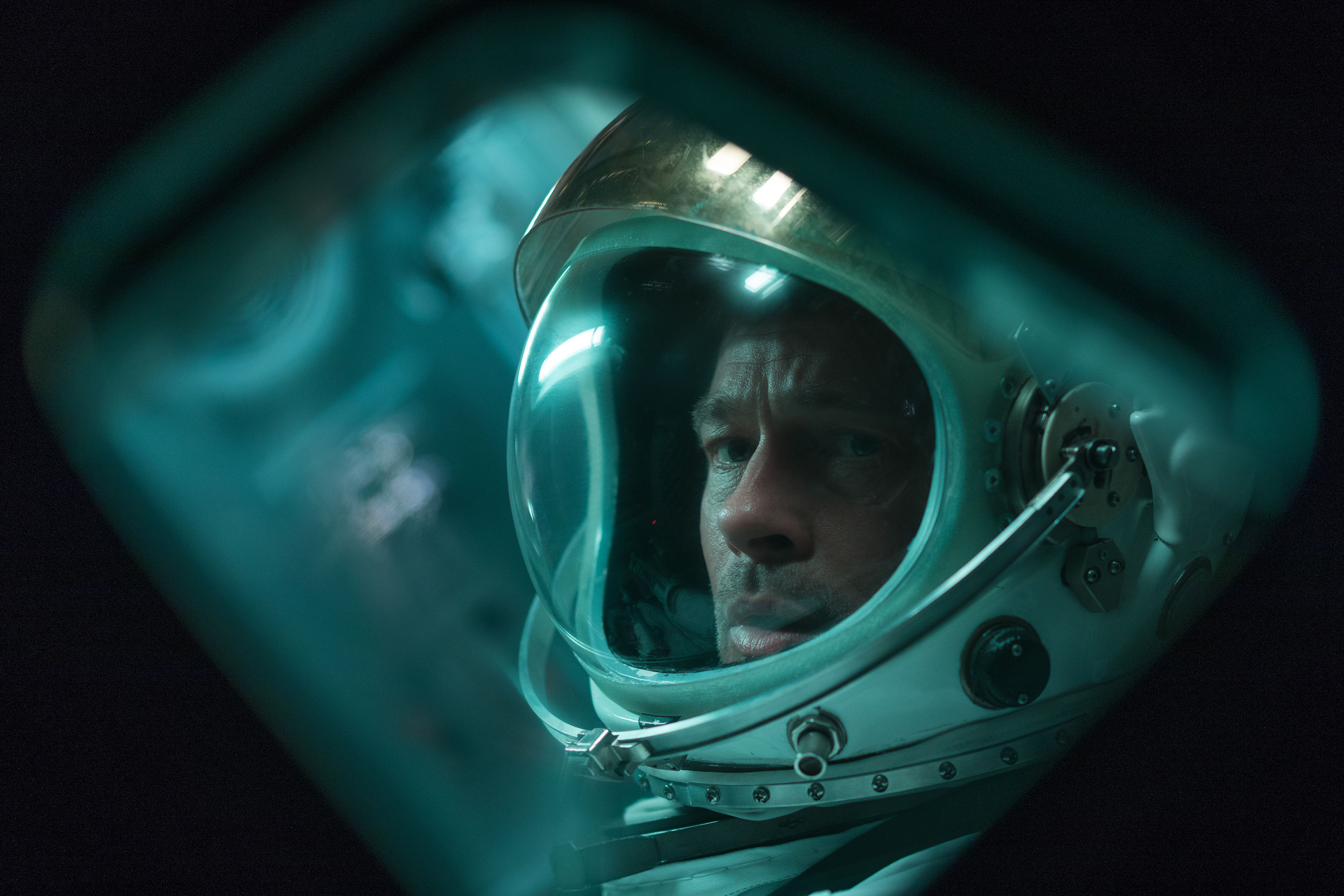
DF_02887FD.psd
Cinema Wednesdays - Loris S. Musumeci
«We think your father is alive, near Neptune.»
Passion is passed down from one generation to the next. So do injuries and mistakes. Clifford McBride (Tommy Lee Jones) was a hero. He achieved great things in astronomy. Unfortunately, he and his crew never returned from their last expedition, the LIMA project. This prompted his son, Roy McBride (Brad Pitt), to follow in his father's footsteps. Astronaut in his turn, hero in his turn.
We're in the near future, full of hope but worrying, according to the film's prologue. Trips to the Moon are now commercial, even tourist-oriented. Mars is no longer out of reach. Humans have even set up a station there. Austere. While access to the moon and Mars is now relatively easy, it's not all good news. Earth's chaos has been imported as well.
Turn of events: the chaos caused by mankind in space turns against them. So-called «surges» from Neptune are causing havoc throughout the solar system, all the way to Earth. Death and danger. We need to put a stop to this as soon as possible. Specialists realize that the disturbances are coming from a satellite on the edge of Neptune, the one that the crew of the LIMA mission, led by Clifford McBride, travelled to. The hero was thought to be dead, but the signals suggest he's still alive. The son is sent to find his father.
A journey into psychological space
A rich, complex storyline that goes far beyond the simple story of a space expedition. From the exploration of the universe, we move on to the exploration of the human soul. In this, Ad Astra is remarkable. Homelessness is more psychological than spatial.
Roy McBride, from the height of his rank as a major, seems to resist everything, and reveals himself to be suffering from the absence of a lost father, whose affection he has never felt. He also suffers from his own loneliness, unable to maintain his love affair; unable, in turn, to pass on life. He suffers from a lack of meaning. What's the point of always going further and higher? Why sacrifice the lives of men and women? For the sake of progress «and all that...»? What's the point of going to the Moon, if it's only to let all the vices and edifices that are already suffocating the Earth take root there?
With Ad Astra, we travel all the way to Neptune, and into Major McBride's deepest doubts. Right up to the philosophical questioning of the famous never-ending quest for space. The screenplay is therefore to be commended, but so is the acting. Particularly that of Brad Pitt. His eyes express a fascinating mix of fear and courage, determination and hesitation, hope and resilience, enthusiasm and weariness. This is without doubt one of the Hollywood star's most remarkable performances.
Man is a traveler
And since James Grey's direction is successful right to the end (of the world! allow me a little levity), we shouldn't forget that the content is supported by an excellent form. The cinematography masters both the lighting and the shots. The latter are twisted and turned according to the sudden movements of the ships. But it's not these shots that carry the most power. The first shots of Brad Pitt's face, playing with the stability that creates anguish and the reflections of his helmet that provoke confusion, are art.
The color tones also speak for themselves. From the cold blue-white of the moon, we move on to the heat of a dizzying orange on Mars, to evoke just one thing: the feeling of being a stranger. The world man must inhabit is Earth. In other places, the atmosphere is hostile. Man is a traveler, but his landmarks are always and still to be found in the ordinary but essential proximity of the people around us, the people who care about us. Those who love us.
«The son suffers for the sins of the father.»
Write to the author: loris.musumeci@leregardlibre.com
Photo credit: © The Walt Disney Company
You'll also like






 French
  German
  English
Leave a comment