



«Aline»: The trompe-l'œil biopic
Cinema Wednesdays - Fanny Agostino
We knew she was an unconditional fan, but we weren't expecting such a tribute. For her sixth feature film, Valérie Lemercier directs and writes the screenplay (co-written with Brigitte Buc) for a film dedicated to the life of Céline Dion. A departure from the expected «biopic-oscar» structure, Aline is a skilful blend of truth and fantasy. Offbeat and unexpected... but is it enough?
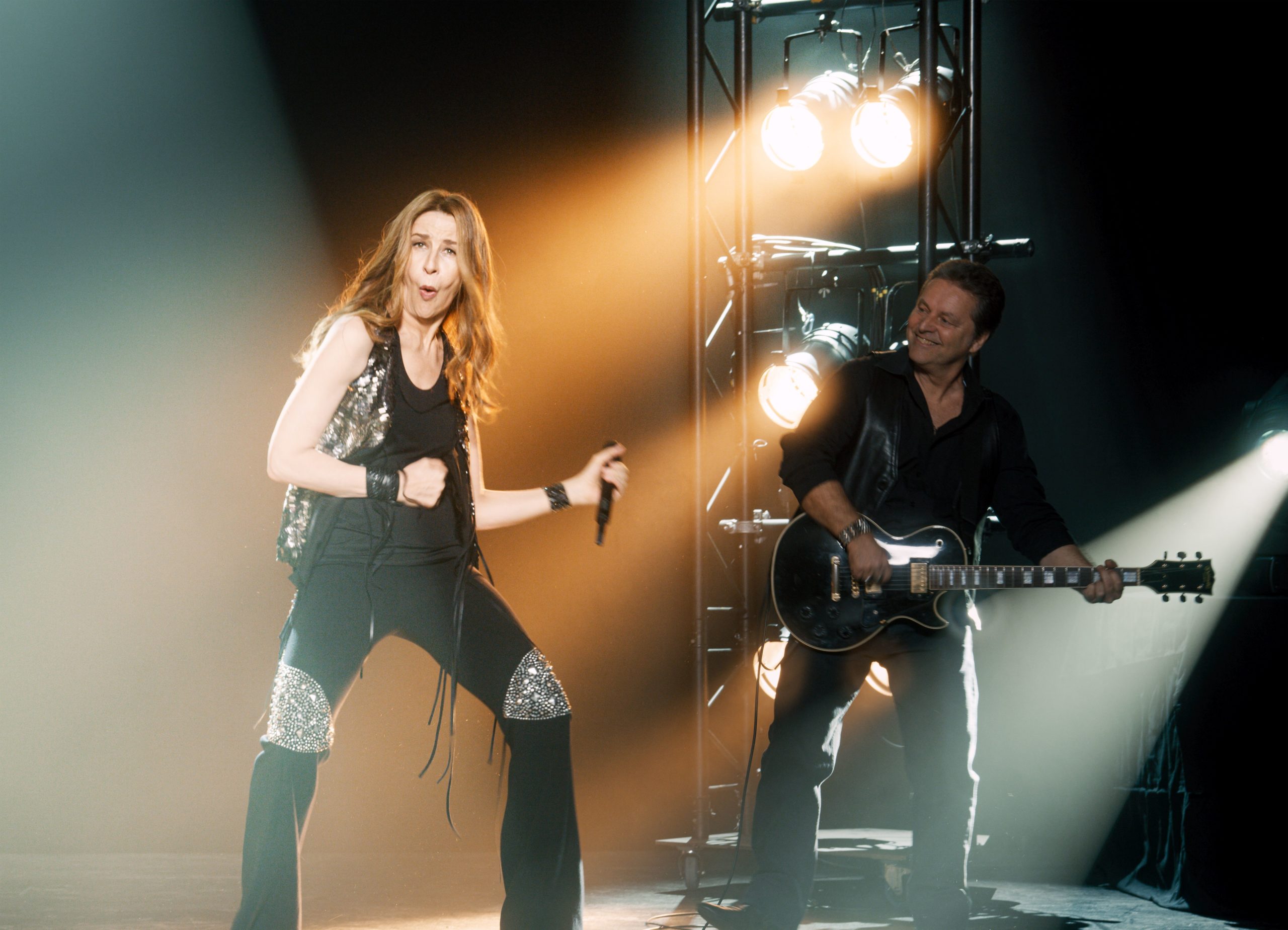
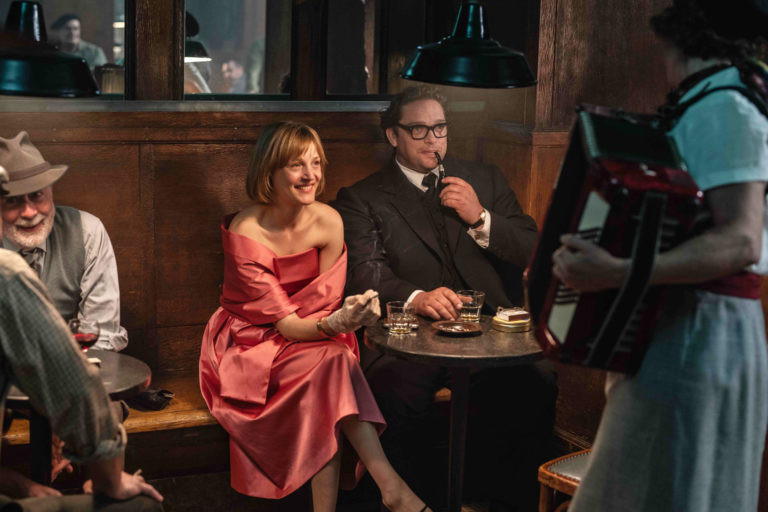
The «God» couple raise their thirteen children in a small town a few kilometers from Montreal. On the hot seat comes a fourteenth child named Aline. Christophe's song replaces the true story of Hugues Aufray's «Céline», an anachronism since the song was released in 1966 when Céline was actually 11 years old. It didn't take long for Céline's vocal skills to catch on. On weekends, the little girl performed in the family bistro. Customers flocked to hear the golden voice of this kid who dreamed of becoming a star, and who wallpapered her room with posters of her idols. Aline has a voice she never works on: a diamond in the rough, a gift from «God». Aline's family are very supportive of her, but they don't want to turn her into a circus freak who covers the hits. In unison, they decided to write her her own song. On a whim, her older brother sent a demo to a certain Guy-Claude (Sylvain Marcel), a Montreal producer who had just been dropped by Ginette Reno, his star at the time. The rest is history....
A welcome change of pace
In terms of structure, nothing very innovative. The film opens with a sequence in which the star becomes a muse. A mise en abîme of the star at the top, protected by a pair of tinted glasses, headphones on, lying with her twins in a bed draped in white. Calm after the storm. The story then shifts to the meeting of Aline's parents.
Lemercier's proposal breaks codes in the section devoted to the Quebec star's childhood. Rather than reinforcing the fictional illusion, Valérie Lemercier's face is superimposed on little Aline's childlike body. It's a funny, well-crafted shift that avoids plunging the story into a mawkish, conventional score of «pure» childhood, as if to remind viewers that the film doesn't take the exercise too seriously. In fact, there's an insert at the very beginning of the film: this is not the story of Céline Dion's life, but a fictional account based on it. While this may seem derisory to some, it does have the merit of demonstrating the discrepancy. A tribute film with certain liberties, rather than a biopic you'd have to scan with a lie detector.
An emotional film... but repetitive
However, we mustn't overlook the work undertaken by the performers. The film offers a plethora of sequences dedicated to the singer's television appearances and concerts. For example, her second appearance in France was on the TV show «Champs Elysées». Inducted by Michel Drucker, she wears an identically reproduced costume, as do the words spoken by the presenter. Or the anecdote told in 1998 about René Angélil's cardiac arrest on a Canadian talk-show.
Read also | Music of my life, one musical biopic too many
These mimetic moments are the film's Achilles' heel. Anecdotal and often superfluous, they are inserted into the film as if they were sketches, and make us forget the distance and freedom Lemercier claimed for her subject. Nevertheless, these sequences are a mise en abyme of the Quebec star's daily life from the 2000s onwards. An outsider to the world, she metamorphoses into a literal stage beast, signing a contract at Caesars Palace, where she performs thousands of times at breakneck speed.
Despite these few repetitions, the screenplay, centered on the forbidden love affair between the singer and the producer more than twenty years her senior, is far from melting into that. Without trampling on the artist's private life, Lemercier evokes the behind-the-scenes story with finesse and kindness. His protective mother is firmly opposed. Guy-Claude distances himself from his protégée and even disappears from her life... until the two lovers secretly reunite in Dublin, during the Eurovision Song Contest that marks the start of the artist's international career.
Aline«»s distancing itself from the biopic is a bold move. However, it would have been worth taking a few more risks. If Céline Dion has not yet come forward despite letters and calls from Valérie Lemercier regarding this film, she can only be grateful that her career has been rewarded by the consecration and devotion of her fans.
Write to the author: fanny.agostino@leregardlibre.com

Photo credits: © Jean Marie Leroy Ascot Elite Entertainment Group

You'll also like


 French
  German
  English
Leave a comment