


Cinema Wednesdays - Jordi Gabioud
For several years now, critics have loved to hate Michael Bay's proposals, seeing them as mind-numbing films, with a hammy imagery and futile scenarios. Ambulance is no exception to the director's style. And yet, it's possible that this time, critics will let themselves be carried away by this intense two-hour-long madcap ride.
When a robbery goes wrong, two brothers (Jake Gyllenhaal and Yahya Abdul-Mateen II) have no choice but to flee the police in an ambulance. The film stops at this simple premise, but it's enough to justify its two-hour adrenaline-fueled chase.
The turbulent rhythm of entertainment
Michael Bay's reputation is well established: the director of action blockbusters such as Armageddon, Bad Boys I and II and the saga of the Transformers represents the industrial cinema of pure entertainment. Each new production is thus an opportunity for critics to expose their visceral rejection of these films, in order to better defend the values of auteur cinema and independent production. However, with Ambulance, this time, the filmmaker sets aside crude humor and sexualization to focus exclusively on action. In the direct heritage of Mad Max: Fury Road, It's two hours of non-stop chases, with no fat and no downtime.
Ambulance linearity on the model of SpeedEach problem solved gives way to a new challenge to overcome, and so on. The tension is constantly present, and manages to build the characters’ personalities and relationships right into the action. This is perhaps’Ambulance, In this case, it surpasses most action blockbusters, which carefully separate entertaining moments from more sedate, developmental ones. The film fully embraces its commitment to the extreme, offering effective, well-thought-out entertainment.
The film leaves no room for symbolism, downtime or contemplation, and is not encumbered by subtlety. On the contrary, it proudly displays the genre's most well-worn tricks, with a hero forced to turn to crime to cure his wife's cancer, bathed in intense twilight and heavy violin notes - always in minor key, of course. The film has everything it takes to once again provoke the repulsion of critics, a regular occurrence in Michael Bay's filmography. But this time, it may be different.
Criticism versus spectacle
Critics have always taken advantage of Michael Bay's cinema to contrast it with his auteurist values. They like to turn images into words; it's always interesting to see these images as symbols intended for certain initiates, waiting to be decoded in order to instruct the layman. If this code requires a broader knowledge of the author's filmography, all the better! Michael Bay's cinema has no symbols. It doesn't require knowledge. But that doesn't mean it's empty: it focuses on spectacle. Ambulance expresses this quest for efficiency. The camera is always in motion and refuses to let us look away. The movements, the cutting, the action - it's all very fast. Even when the ambulance is only supposed to be going 30 km/h, we get the impression that it's going over 100.
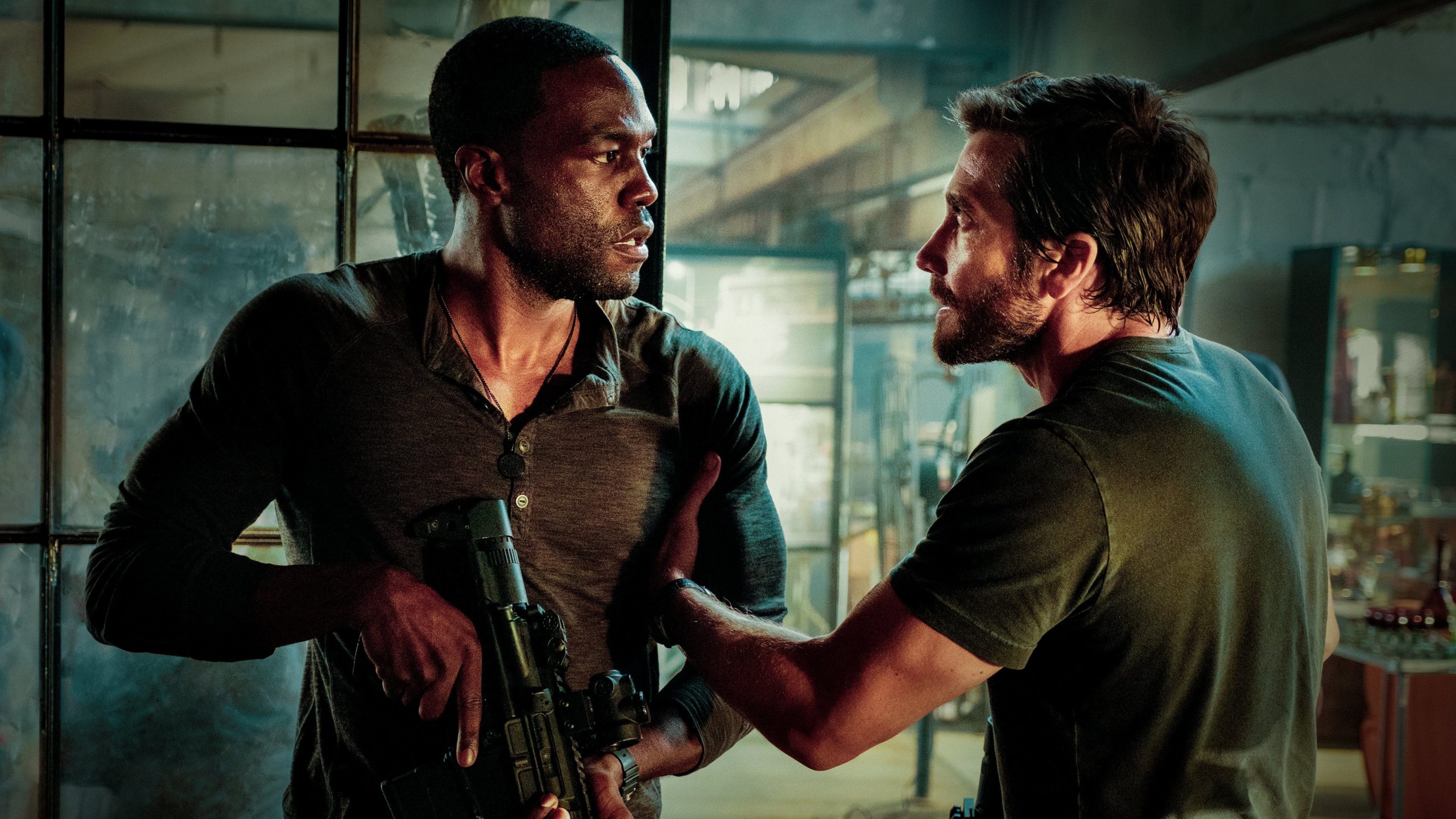
This makes it harder for critics to put images into words when they want to stand on their own. But it would be simplistic to sum up this disenchantment in terms of a few unappreciated tropes and a lack of substance. Michael Bay's cinema is also the prototype of the American consumer product imposing its culture on the rest of the world. Critics are duty-bound to denounce this hegemony, which they see as a threat to independent cinema. However, in 2022, this sociology - a little stereotypical, admittedly - may have evolved.
Indeed, as the first reviews of Ambulance are arriving, we see a trend towards nuance that began timidly with No Pain No Gain (2013) continued with «I don't like Michael Bay's cinema, but...». Then we see that, with his years of experience, the man has mastered his aesthetic better and better, while continuing to seek innovation.
With Ambulance, The film's highly-calculated drone shots - already legion on the Internet, but rarely seen in cinema - will be hailed for their pace and for the new capabilities that technology offers the seventh art. More than that, it's surely the low use of digital effects that will be credited to the film's director's quest for more organic action. Michael Bay reminds us that the spectacular in cinema comes not from its ability to imitate the real on a green screen to divert it, but from pushing it beyond its limits without intermediaries.
Opposition to another kind of blockbuster
This choice will be hailed by critics, because on this point, Michael Bay's cinema is opposed to a cinema that is even worse in his eyes: the serial blockbuster of Marvel and DC, which has phagocytized cinemas for over a decade. This hegemonic American cinema, produced by filmmakers often devoid of personality and who no longer even bother with reality, assumes itself to be an entirely artificial and cynical product that no film journalist can forgive. To the artificial symbol, the critic still prefers the absence of symbol when it is at least at the service of what makes cinema spectacular: effective technical knowledge.
Ambulance certainly benefits from this opposition. Yet it is not without its flaws, even in its technique. The shots, which remain systematically in motion, often give the impression of assembled scraps. The few quieter moments borrow from the same grammar of movement at all costs, making them original, but also artificial. The drone shots always cut off too soon. Etc. etc.... The difficult production conditions (Covid period obliged) are felt on screen, offering effective, inventive action that is sometimes a little too confused. But it's perhaps these imperfections that remind us that this is an action blockbuster with its own personality.
Write to the author: jordi.gabioud@leregardlibre.com
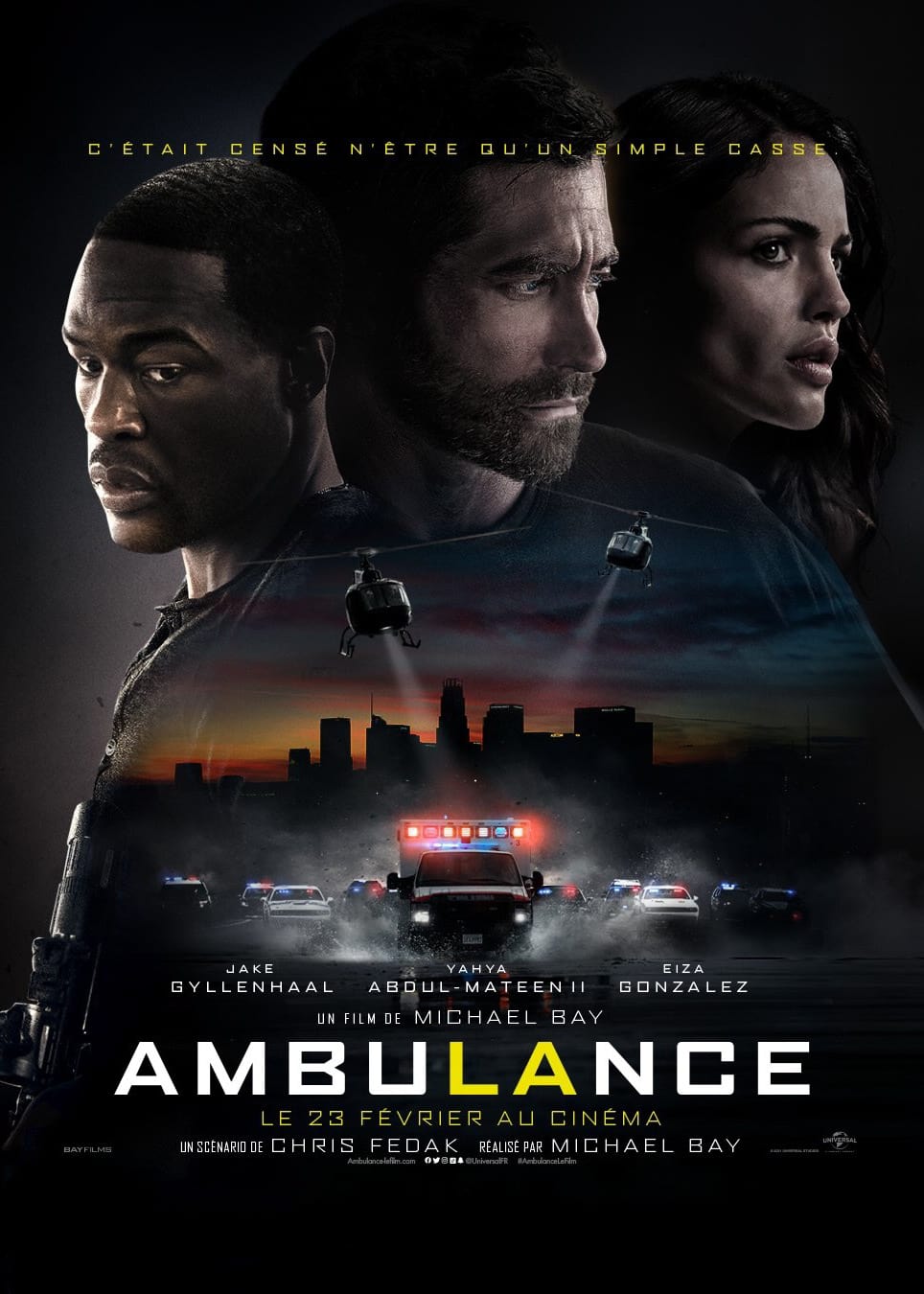
Photo credits: © Universal Studios. All Rights Reserved
 French
  German
  English