




«Burning», when cinema leaves a desire

Cinema Wednesdays - Loris S. Musumeci
«- Aren't you going to ask what the problem is?
- Problems happen all the time.»
A white van filmed from behind, a young delivery boy smoking a cigarette. He picks up his packets on his shoulder and brings them into a store. At the entrance, two girls are in charge of promoting the products. Dressed in sexy, They dance in front of the door, offering customers a tombola. The delivery man comes out and is called by his first name. «Jongsu!» He approaches the advertising dancer. Apparently, they know each other. Jongsu has no memory of it. In any case, a silent, strange friendship develops between the two. Without much ado, the said reunion ends in bed for a sexual adventure. The young girl leaves on a trip. On her return, she asks Jongsu to pick her up at the airport. But she is accompanied by a «Korean Gatsby». The new duo becomes a trio, and the general nightmare begins.
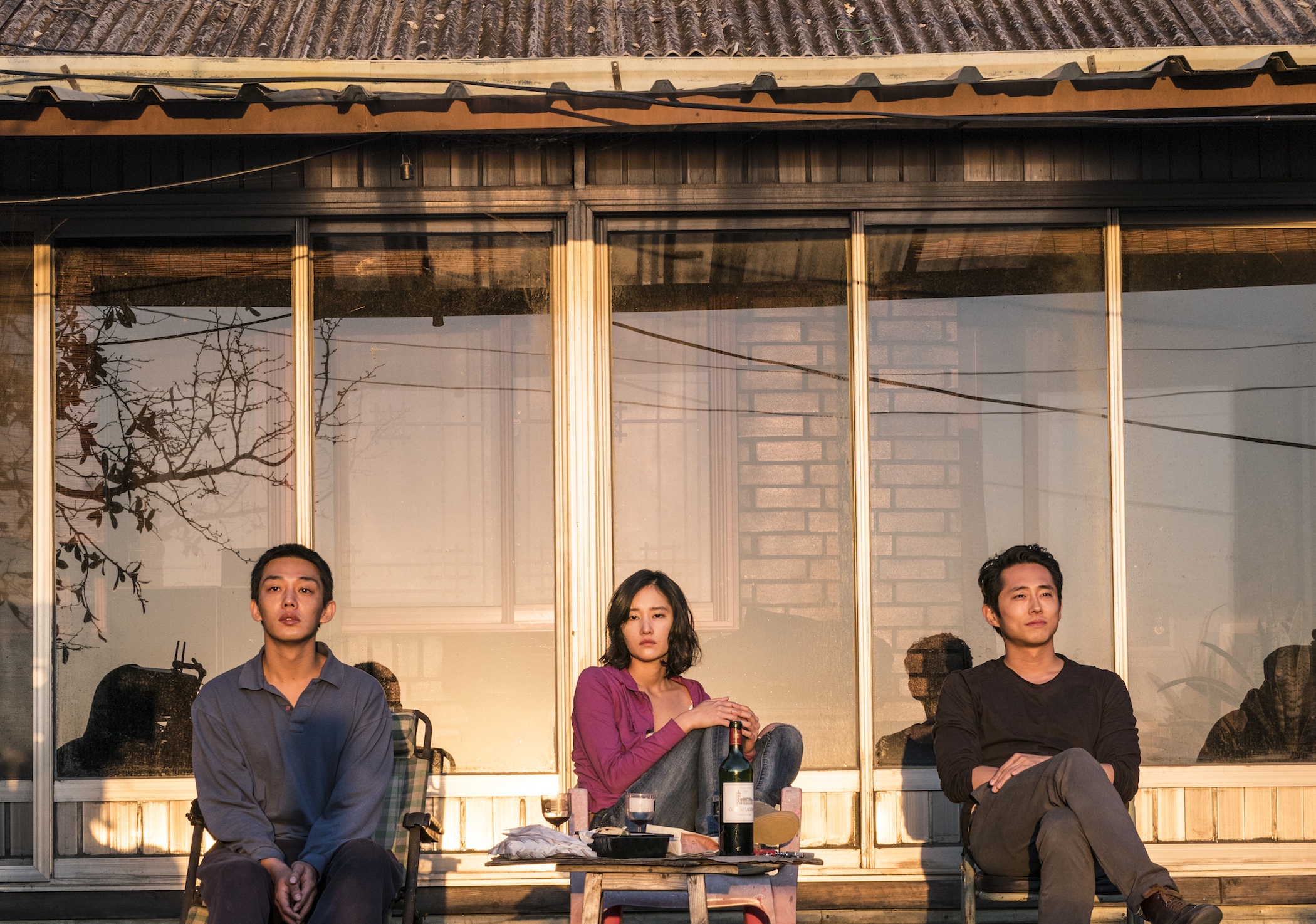
The love triangle in Burning.
Burning stands out above all for its photography. Director Lee Chang-dong wanted to deal with very serious and precise themes, while leaving the privilege of the spoken word to the image. The setting is the banality of everyday life, both in the city and the countryside. Store entrances are adorned with a kitsch Asian and capitalist. The countryside, meanwhile, is punctuated by garbage and greenhouses that dull the image, making it more stripped-down, melancholy and disquieting. Yet it is not lacking in grace: the camera seizes on the mutating colors of the sun to offer the screen a breathtaking spectacle. The characters themselves reveal a part of their inner selves under the orange glow of a setting sun.
If the screenplay is, on the whole, rather successful, it owes much to the actors - especially the three main protagonists - who engage in some surprising acting. Each member of the trio has his or her own acting characteristics. The characters move forward with an attitude that follows them through to the end of who they really are. Thematically, the South Korean film doesn't aim for originality: love triangle, class struggle, fantasy and reality. No matter, because the language through which these themes are conveyed is indeed original.
Particular praise for phantasm, especially sexual phantasm, which spurts an even more vertiginous seed to Burning. The only downside is that it's a bit confusing. The abstract and the imaginative are pushed to such an extreme that the viewer leaves the darkened cinema in an even denser darkness. This kind of experience can work, but it can also leave something to be desired. And we're not just talking about fantasies.
«It's pantomime.»
Write to the author : loris.musumeci@leregardlibre.com
Photo credit: Xenix Films
You'll also like





 French
  German
  English
Leave a comment