



«Butterfly: the body as narrator

Cinema Wednesdays - Loris S. Musumeci
«I can't believe you took perpetuity’. »
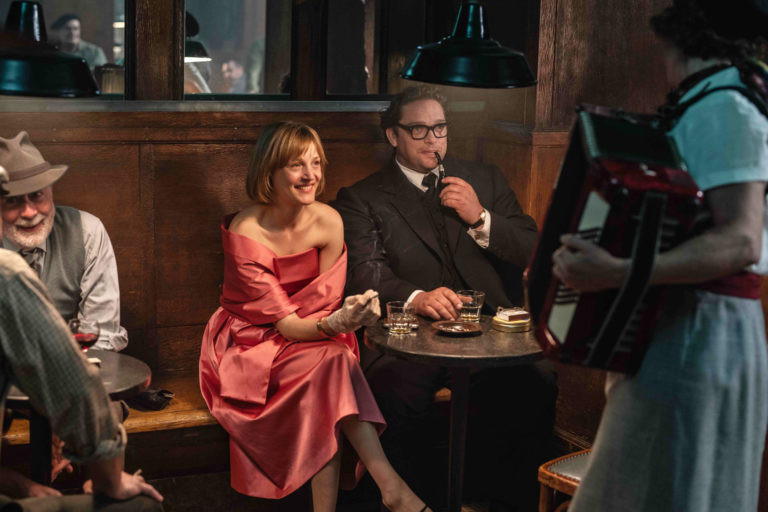
Paris, 1931. The atmosphere is swing, The atmosphere is crazy, the mood is hot. Henri Charrière, nicknamed Papillon, works as a burglar for a criminal organization. His boss, an old devil with rotten teeth, seems to admire the young employee, even though he knows he's discreetly keeping a share of the racket. When the job is done, Papillon returns home with his girlfriend, a dancer working for the same boss as him, and they spend a night of love.
The next morning: arrest. False accusation of murder. Framed. Everything goes very fast. Life sentence. In Guyana. The worst. A prison ship, a gloomy atmosphere and a meeting with Louis Delga, a rich forger. Papillon offers him protection in exchange for the money he needs to escape. And so begins a complicated but strong relationship between the men.
From the color of warm nights of love to that of icy prisons
Butterfly is a gripping film with a poignant subject and talented acting and directing. But above all, it's a work that succeeds in its photography. For a feature-length film about violence and prison life, the aesthetics have a right to be pampered and pampered. Two of the most obvious effects show that young Danish director Michael Noer is preparing for a successful cinematic future.
The main one is the excellent play of colors. They form a whole and unite to reveal the film's situation without a single tone hitting the wrong note. At the outset, the viewer is treated to a colorful ambience. dark Then it's on to the bright red of Parisian nights, leading to the aggressive yellow overexposure of cabaret dressing rooms, where chefs take the opportunity to settle the score with those who deserve it. Back to the bright, exciting red of Paris. And then a light orange sprinkled with a brownish red that brings out both the lighter and darker shades of the night's sex. And all in just five minutes.
After a joyful introduction, the icy blue of the prison heralds the tragic event. From this cold blue, we move on to a more cobalt blue as the sun guides the prisoners to the boat, and so on. From the most graceful light to the most agonizing darkness, Butterfly will travel through the vast expanse of color play in cinema.
Not to be overlooked: the role of the camera. It accompanies the fear, the challenges, the adrenalin that rises when following actors head-on. It also trembles when the worst feelings surface. And, of course, it doesn't fail to underscore the crushing, overzealous superiority of the colonial prison authorities.
Bodies as narrators
Between the purely aesthetic aspect of the film and the more practical choices at the service of the plot, there's the place given to the body, particularly that of Papillon. Without question, this man, embodied by British actor Charlie Hunnam, is very handsome, both in his natural disposition and in the way his image is enhanced. In his suffering and in his courage, in his cadaverous positions and in his moments of struggle, Papillon's body tells not only an emotion, but also a part of history and a part of the history of Guyana's prisons. The tattoos on his torso also speak volumes, especially that of the butterfly. Delga's body, in the skin of Rami Malek, plays an equivalent role in its weakness and smallness. The two characters are complementary, and one of the ways they complement each other is through their bodies. Bodies are narrators.
There are other aspects of Butterfly to be analyzed carefully, because this is a great film. However, I wouldn't call it a masterpiece, as the story lacks a certain je-ne-sais-quoi of life and complexity. The atmosphere of the colonial prison, although quite good, is in my opinion somewhat caricatured. Nonetheless, the true story of Henri Charrière and his comrade is gripping, and leaves the tattoo of a butterfly that stays for friendship, then flies off for freedom.
«I have to stay for the same reason you're leaving.»
Write to the author : loris.musumeci@leregardlibre.com
Photo credit: © Pathé Films
Vous aimerez aussi

 French
  German
  English
Laisser un commentaire