



Comment vivre la disparition et le deuil, by Emmanuel Carrère
Cinema Wednesdays - Ivan Garcia
As part of the 52th edition of the Visions du Réel festival in Nyon is screening Emmanuel Carrère's first documentary film, entitled Back to Kotelnitch. A feature-length film that blends the story of a small Russian town called Kotelnitch with the novelist's family history and, more specifically, the story of a disappearance. A thought-provoking moment of cinema.
The 2021 edition of Visions du Réel has awarded its honorary prize to French novelist, screenwriter and journalist Emmanuel Carrère. Carrère, published by Editions P.O.L., has become famous for his staging of the self in his writing. These writings, all based on real-life experiences such as in The Adversary (P.O.L, 2000), in which the author recounts the Jean-Claude Romand affair, meets Romand and attends his trial, or more recently one of the bestsellers of last September's back-to-school literary season, Yoga. In his latest book, Emmanuel Carrère recounts - among other things - his depression, his experience of the Charlie Hebdo attacks... In short, the author of Back to Kotelnitch uses the real as material, he talks about things he has experienced or that have really existed, he meets real - not fictional - people, it's a kind of «literature of the real» («narrative non-fiction», as we would say in English). But where a documentalist or a writer would try to be objective, to avoid putting himself on stage in order to tell a universal story, Emmanuel Carrère writes about himself and talks about himself, while tackling a broader, wider subject. It's the same device the spectator admires in Back to Kotelnitch.
«Whether in his books, or in his approach to images and cinema, even fiction, Carrère is essentially interested in fragments of life, extracts of “reality”, which emerge in hollows, which he seizes upon, claiming a position of subjective witness.» (Festival press release Visions du Réel)
Back to the land of memories
Released in 2003, Back to Kotelnitch retraces the three trips made by Emmanuel Carrère and his team to the small town of Kotelnitch, 800 km east of Moscow, and combines several filming sequences taken during the various journeys. These sequences are not necessarily arranged in chronological order, as the film opens with the most recent trip. In the first sequence, three stalwarts - Emmanuel Carrère, his Russian interpreter Sacha and cinematographer Philippe - drink vodka and chat on a train - at first glance, the Trans-Siberian. As they drink and smoke, they make obscure remarks about the murder of a young woman called Ania, their meeting with a certain Sacha Kamorkine...
See also: Emmanuel Carrère's Masterclass
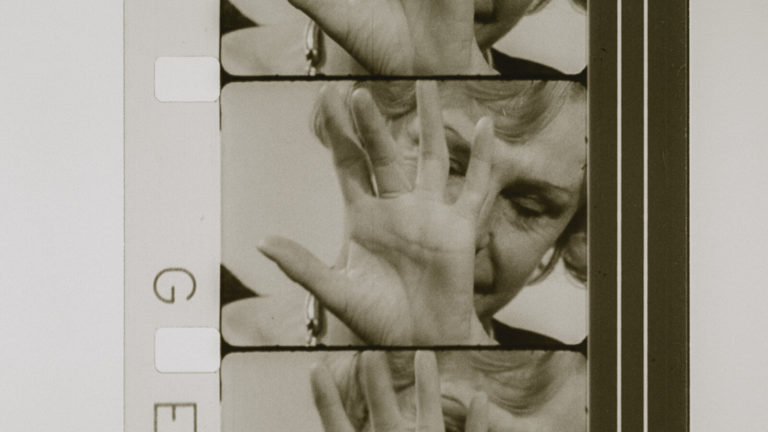
A transition reveals their arrival at the home of an old lady, Galina Sergueivena, the mother of Ania, a young woman the trio had met on their two previous trips and who had intrigued Carrère. Ania, the wife of an FSB - formerly KGB - officer also named Sasha, like Carrère's interpreter, had been hacked to death with an axe, along with her baby, by a madman. On their «return to Kotelnitch», the team meet her mother to bring back photographs and VHS tapes of one of their film shoots, in which Ania appears with her son. They are thus invited to the «ceremony of remembrance», which takes the form of a commemoration followed by a family meal, and is the climax of the documentary.
While this first story helps to create a narrative thread that runs throughout the entire film, it is not the only track covered by the documentary, as Emmanuel Carrère takes advantage of this Russian journey to reconnect with Pushkin's language - his mother's language - and set out, as it were, in the footsteps of his family, in particular his maternal grandfather, a Georgian émigré in France who collaborated during the Occupation and mysteriously disappeared at the Liberation. A family secret, preciously preserved by the author's mother, with which he wishes to reconnect and, in his own way, mourn. Emmanuel Carrère first visited Kotelnitch as a reporter for Special Envoy, to report on a Hungarian soldier who disappeared during the Second World War and has been interned in a Russian hospital for fifty-six years. Two strongly linked stories, which are completed by Ania's sudden disappearance.
«I understood why the story of the Hungarian had upset me so much. He, too, disappeared in September »44; he, too, was lost where those who are neither alive nor dead are lost. But he, fifty-six years later, has returned. He came back from a place called Kotelnitch, where I wanted to go too. For me, Kotelnitch is where you go when you've disappeared."
A Russian voyage
Emmanuel Carrère soon assumes the leading role in the documentary, directing himself - the camera follows him and often embraces his point of view - and his voice-over takes over the film's narration, recounting events subjectively. As mentioned above, the sequence of shots and sequences in the feature film is not necessarily chronological, and older filming sequences are often interposed, as if to give an image to a memory such as Ania and Emmanuel Carrère's meeting in the «Troika», a seedy bar in Kotelnitch. Twenty years on, we can see that considerable technical progress has been made in the field of images, given the aesthetics of certain sequences which, in 2021, seem very dated.
«I celebrated my forty-third birthday during the editing process. On that day, December 9, 2000, my mother said to me: you know, it makes me feel funny, you've reached my father's age - as they say Christ's age, implying the age of his death.» (Emmanuel Carrère in his book «Un roman russe»)
Like a return to his origins, the filmmaker's final journey to Kotelnitch seems to be a form of mourning process for his lost grandfather. In the film's final sequences, the camera focuses on a wall in the protagonist's hotel room, revealing a series of pinned-up photographs, including notes on the shoot with Galina. These include the image of the author's grandfather, like a ghost haunting the screenwriter.
In his story A Russian novel (2007), the author quotes almost verbatim from Back to Kotelnitch, The book is in fact partly devoted to the events described in the film. But Carrère is not alone in this mourning process, as he accompanies and films Ania's mother on her journey towards the «ceremony of remembrance». In so doing, the film crew experience Ania's daily life at her side, helping her, for example, to carry a table borrowed from the neighbors, filming her cooking, chatting with her friends and filming the family meal...
Working with grief and loss
At the heart of their exchanges, of course, is Ania's memory, which the film crew's shots help to «bring back to life», as Galina Sergueievna puts it. In the film, a sequence from the first trip shows Ania playing guitar and singing a patriotic Russian song to the film crew, as if to bring her ghost back to life after her death. By linking his personal story to other stories, the director anchors his film and gives - in our opinion - greater depth to his subject and the images he has retained.
Back to Kotelnitch takes us on a journey to a town little known to the world, where, as elsewhere, life goes on in the midst of daily tragedies. By drawing parallels between his own story and that of the people of Kotelnitch, the author not only expresses the misfortune of others, but also his own. To put it bluntly, he lays himself bare. Perhaps this is one of the main assets of this work? Talking about others while talking about oneself. Artists are often criticized for being too «voyeuristic», often criticizing or portraying others «without getting wet». Far from the declared objectivity of the documentary genre, Back to Kotelnitch embraces a person's subjectivity and, in so doing, puts us in touch with others who are going through the same thing. It's a unique way of respecting others and grieving.
«When the editing was finished, I went back to Kotelnitch to show the film to those who had become its actors, Sasha in the lead. I was apprehensive about his reaction. Together we watched the VHS tape I'd brought with me on his TV, so old that I was amazed to see the images in color. At the end, Sacha stared at me for a long time, in silence, and finally said this: “That's good. You didn't just come to take our misfortune: you brought your own.”» (Emmanuel Carrère in his latest book «Yoga»)
Write to the author: ivan.garcia@leregardlibre.com
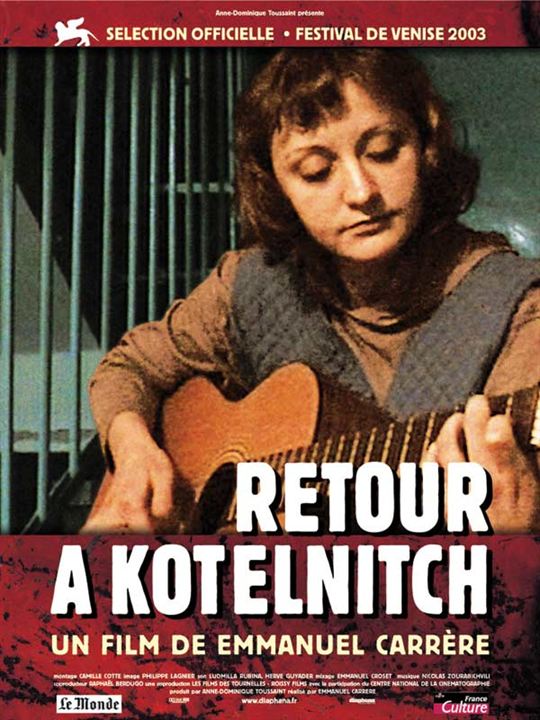
Photo credits: © Diaphana Films

Vous aimerez aussi

 French
  German
  English
Laisser un commentaire