


Cinema Wednesdays - Loris S. Musumeci
What a movie! What a film! I left the screening totally revolted, outraged and indignant. And admiring. Not only is the subject of Dark Waters is compelling not only because it tells the story of a reality that concerns us all and is still very much with us today, but also because of its brilliant direction, photography and acting.
The dark atmosphere
There's plenty to sparkle in the black waters of Parkersburg, the small West Virginia town where it all began. The opening scene plays with the reflections of these waters. We're immersed. We're immersed in the dark, horror-movie atmosphere. Without losing any of its finesse. From the very first scene, Todd Haynes announces the anguish that will never leave the film. And he's taken care to load his photography with powerful ammunition. He's going to tell us about horror. Real, present-day horror. Not just facts. He's going to place the sad spectacle before our eyes, reaching out to our guts.
As a result, color tones remain in the dark, oscillating between black and grayish. The soundtrack, too, uses the same codes as the horror genre, peppering the feature with plucked violins, percussion beating a gentle chronometric rhythm, alternating door creaks, opaque noises, animal cries in pain, industrial rumblings. The camera further penetrates the gloomy atmosphere with its sequence shots, morbid slow-motion sequences and close-ups of suspicious objects and chilling details.

Thinking further, deeper
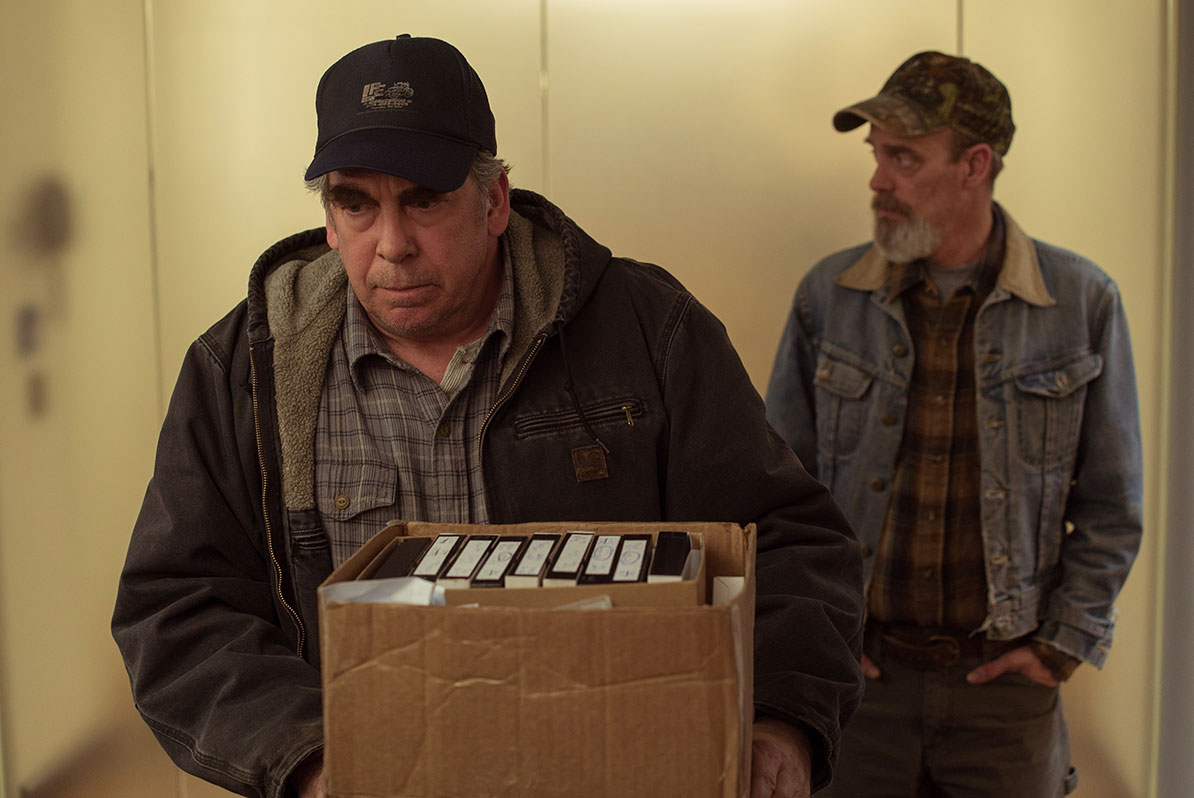
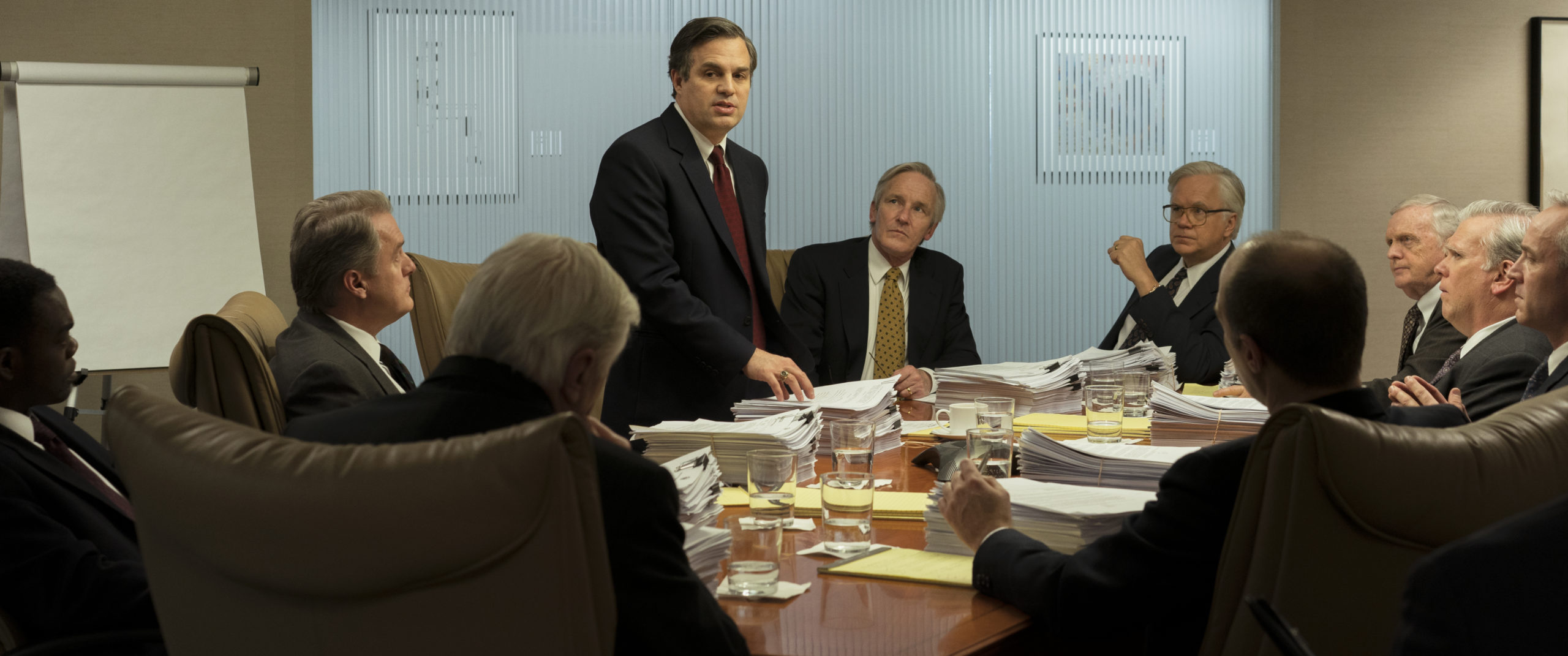
Dark Waters, a real-life thriller. A trial. On the one hand, it traces the struggle of lawyer Robert Bilott and farmer Wilbur Tennant against global chemical giant DuPont from 1999 to 2012, and on the other, it continues the fight, parallel to Bilott today, against DuPont. Good films have a power of their own; they broaden the echo of a case to the general public, they go beyond mere knowledge of the facts by giving them flesh, by giving them a louder, punchier voice. The voice of the seventh art, speaking in script, image and sound.
As if in documentary bursts, the film clearly sets out the figures and the progress of the case. Until we come to understand that this is not just an American problem. The people of Parkersburg are accumulating cancers, malformations and atypical diseases because they are directly affected. But DuPont's actions have health repercussions all over the world, since their products are sold everywhere. But it's not all about DuPont, or even about toxic or non-toxic products. After all, today we're entering an extreme that finds toxicity everywhere. It's better to stop breathing. No, Dark Waters pushes us to think further, deeper.
The real problem, beyond the economic interests of the big industries, is the permanent and unbearable attack by the big companies on the small ones. To whom they lie constantly. Who they shamelessly take advantage of. Whom they laugh at. Whom they manipulate. Whom they use. Whom they despise. Whom they kill. The little one is the middle-class father who kills himself to buy more and more things, and more and more frivolous things, for his children, squeezed by the neck by the impulses of advertising. The little one is the mother who cries alone, because she can't stand working full-time while trying to keep a more or less orderly home, where people live well, sleep well and eat well. The little one is the one who always pays for everything. He's the one who gets ripped off. The one who is constantly made to feel guilty for everything. He's the one who's used for calculated ends by cynics. Unhappy assholes.
I'm talking about...
I'm talking about certain insurers who, after making a customer pay double what he should for his insurance, pull a coke. I'm talking about some business leaders who humiliate their employees to feel like they exist. I'm talking about certain members of the cultural and academic elite who spend their time launching fads, concepts, whatever other buffoonery, and expressions that people don't understand but have to admire at all costs because «ah, it's great intellectuals who say so!»; at the same time, this elite always manages to make people believe that they are morons and backward. The same hypocrites who howl about the liberation of I-don't-know-what, democracy and equality all day long.
I'm talking about some doctors who play with their power of life and death over their patients; they want us to kiss their feet, to crawl on the floor like dogs, barking «woof! oh! thank you doctor!» I'm talking about some mean-spirited, disgusting husbands who hit their wives. I'm talking about some parents who look at their children with the same consideration as if they'd shit them out. I'm talking about some sons who disown their family because’attention they're better than that now. I'm talking about the big guy who eats the little guy, and laughs about it, drooling the blood of his still-fresh victim.
I'm talking about me, I'm talking about you, I'm talking about us, when we take advantage of the weakness of the less powerful, the less wealthy, the less fortunate. So, what's left to do? Civil war? Hunt the rich? Communism? The struggle goes on, of course, but it only succeeds in true solidarity. Only in the union of people of good will. Like lawyer Robert Bilott, like so many others. Who make these waters a little less murky.
Write to the author: loris.musumeci@leregardlibre.com
Photo credit: © Ascot Elite Entertainment
 French
  German
  English