




«At the same time»: political utopia through the absurd

At the same time © Chloe Carbonel
Cinema Wednesdays - Jordi Gabioud
The duo formed by Gustave Kervern and Benoît Delépine offer us a new adaptation of their universe on the big screen. Against the backdrop of the French presidential election, which is characterized by the inability of each of the candidates to bring people together, the duo of right-wing-eco-characters destined to walk together make for an all the more sympathetic spectacle.
The mayor of Extreme Center party (Jonathan Cohen) meets with the eco-mayor (Vincent Macaigne) of a neighboring village to negotiate the construction of an amusement park in a forest. During a drunken evening, the two men find themselves stuck together by a feminist activist (India Hair). On this basis, the film develops a series of more or less successful sketches linked by the talent of the main duo.
The post-yellow vests era
The duo is no stranger to offbeat comedies and the sociology they portray on screen. After I Feel Good (2018) and Clear history (2020), we find once again this attachment to the working classes in all their diversity. The misadventure of our two mayors is an opportunity to explore a village and find students becoming hostesses to pay the rent, or an aromatherapist collecting essential oils. Feminist activists - the «colles-girls», in reference to the messages they post on the street - debate the grammar of inclusive language alongside a nostalgic Trump-era man, feeling disempowered since his defeat.
We laugh at these characters while loving them. The duo's writing finds the formula to always provoke without ever insulting. In this way, everyone gets a piece of the action, with the aim not so much of denouncing the dysfunctions of the various individuals as of reminding the viewer of their existence. A salutary reminder of the diversity of people united by neglect, abandoned by both their government and their intellectuals of all stripes.
However, we can only regret that this gallery of characters is not exploited beyond the simple visibility they are given. As a result, some of the sketches come across as unfinished, and the overall pace inevitably suffers. Worse still, the story falls into a rather shaky pattern: go somewhere, talk to a character who won't offer any solutions, then repeat the maneuver as often as you want to introduce a new social body to the screen.

Accepting caricature
Fortunately, the Cohen-Macaigne duo provide an excellent dynamic, and the two men undoubtedly deliver some of the funniest and most touching moments in this dramatic comedy. They embody their roles with undisguised pleasure, proving once again that, since the Depardieu-Poelvoorde collaboration of Saint Amour, Delépine and Kervern create some of the best duos in French cinema today.
Read also | Poelvoorde in a To the station! totally absurd and brilliant
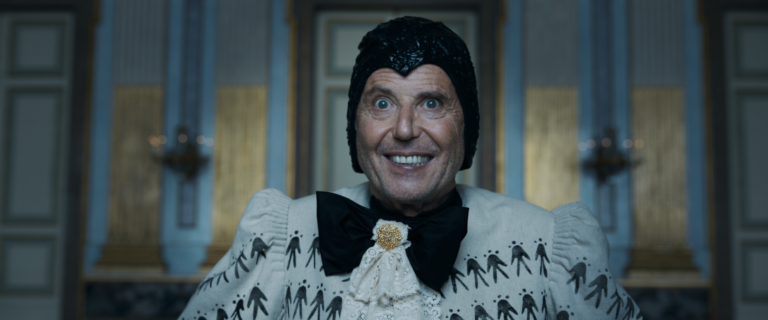
At the same time remains true to the duo's trademark, offering a very Franco-French universe, loading its characters with national clichés and regularly flirting with the absurd. Here, the best gag takes place in a police station, where our two men discover that the forces of law and order are, in fact, left-wing ecologist intellectuals. From then on, the men in blue prefer prevention to punishment, singing a choreographed song about the obligations of citizens. The film offers a few absurd moments like this, all the more precious as they are part of a very down-to-earth «at the same time» universe.
The caricature is part of this marginal universe, neither completely real nor completely surreal. This dimension is underpinned by a style of directing that oscillates between original framing - sometimes filming the action from a distance, when it doesn't simply leave it in a blurred background, preferring to focus on some object - and stills reminiscent of the work of Swedish director Roy Andersson. The filmmaking, like its characters, seeks its own identity in a world that is often too standardized.
A cinema of the margins
That's why it's so important to perceive and accept Delépine and Kervern's cinematic universe. It's a cinema that doesn't stand in opposition to traditional comedy, but nestles on its margins. To ignore this position is to confuse caricature with a mere collection of crude clichés, surrealistic situations with disturbing oddities, and original direction with unwelcome eccentricity.
And yet, it's because this cinema is situated on the margins that it manages to speak with honesty about this post-gilets-jaunes France, where nothing seems to have really moved, and where some sink ever deeper into melancholy while others continue the fight. Being on the margins is the best way for a film to represent the place of its characters. And, in the midst of it all, our two mayors, who manage to overcome the social divide to come together, walk together and consider forming a common front. A somewhat cynical utopia offered through the vision of a left that would so much like to get everyone to agree... Provided it's behind its proposals.
Write to the author: jordi.gabioud@leregardlibre.com

You'll also like

 French
  German
  English
Leave a comment