

Cinema Wednesdays - Alice Bruxelle
While more and more filmmakers are succumbing to the allure of the big platforms and their efficient, if somewhat repetitive, aesthetic, American director Kelly Reichardt draws her strength from her independence. Each of her minimalist, low-budget films is a tesserae that, laid end to end, forms a mosaic of seamed, modest American history. Her seventh feature film, First Cow released in Swiss cinemas on June 9, takes place at the beginning of the Conquest of the West.
Kelly Reichardt's work is like contemplating a fire: comforting, familiar, timeless. We're fascinated without really knowing why. Just wood and a match. But fire carries with it a contradictory power: that of sustaining or destroying. Wood and a match, and the lungs of the planet die. Wood and a match, and the first humans managed to survive. This tipping point from knowledge to destruction, in the image of the myth of Prometheus, shapes First Cow.
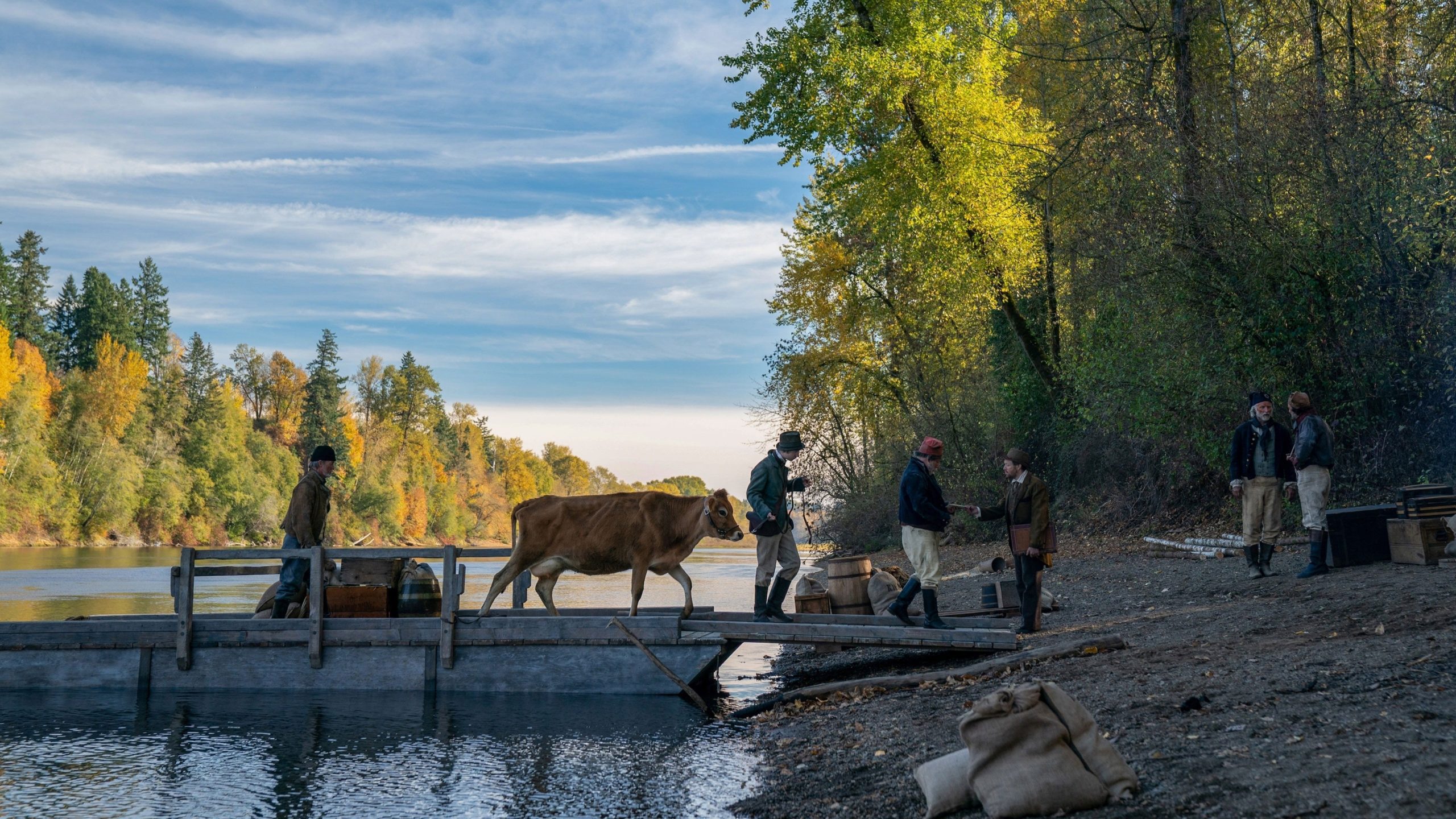
While his first western The Last Track (2011) was set in 1845, here we're in 1820, a pivotal period when the conquest of the West is not yet at its peak, but is hurtling towards its destiny. Two lonely travelers, Cookie Figowitz (John Magaro) and King-Lu (Orion Lee) befriend each other and set up a small business selling doughnuts by stealing milk from the only cow in the area, belonging to a wealthy landowner with a grudge. Upon learning of their misdeed, the rich landowner sets out to track them down. By capturing the four essential chords - nature, people, friendship and solitude - Reichardt pulls the story together and captures in the act how the score went haywire.
Going back in time
River of Grass (1994) was Reichardt's first feature film, but also the starting point for her look at America. From that point on, the filmmaker made a dice-of American history until, at the beginning of the 19th centuryth century, at the time of the first trappers and a capitalism still in its infancy. Twenty-seven years before the release of First Cow, River of Grass already heralded its beginnings: one of the film's first scenes shows the character of Cozy, a young American torn between her real-life condition and her dream of elsewhere, filling her child's bottle with Coca-Cola accompanied by this voice-over: «I've heard it said that the mother-child bond begins at birth». Soda replaces the milk of mother earth. At what point did the break take place? When did we cut the cord?
The story of this rupture is Reichardt's cinema. Its genesis can be found in First Cow, literally meaning the first cow that, like Prometheus, feeds mankind, but also makes him destroy himself. The two characters find their happiness in the milk they steal from a cosmopolitan notable, the ingredient they need to cook doughnuts and sell them in a sort of primitive market. Inevitably, their business expands beyond their grasp. The notable soon becomes aware of the situation, and sees in them the opportunity to turn their «earthy-ass» market into a profitable one. business in San Francisco.
That's the break. The human scale has become inhuman. 180 years later, we find Cozy and Lee, in River of Grass, two lonely souls encircled by Florida's spidery highways. Nature, mutual aid and friendship have been replaced by industrialization, mistrust and individualism. An individualism that comes back strongly in Wendy and Lucy (2008), her third feature film, in which Wendy, financially forced into vagrancy, tries to find work in Alaska. Played by Michelle Williams, who has an elastic artistic background ranging from Marilyn Monroe to a near-homeless woman, Wendy confronts systemic indifference, which is hardly denounced by gargling with miserabilism, as a certain type of Loachian cinema is so good at doing. On the contrary, the characters always seem to be acting according to a system that's beyond them. Here, everyone has problems, and hoping for a helping hand is pure madness.
Murder weapon: doughnuts
About us River of Grass, In an interview with Todd Haynes, her producer, the director commented: «We asked ourselves whether the lone rebel character typical of the road movies could still exist in the 1990s, when even Burger King had the slogan ‘Break the rules’». Cozy and Lee are the anti-heroes of a road movie that isn't one: fleeing a crime they didn't commit, they don't even make it past the first tollbooth; 25 cents was all they needed. Just as Cookie and King-Lu are the anti-heroes of a Western that isn't one. While long tracking shots across the wide-open spaces of the American West are most often favored by this genre, First Cow is striking for its square aspect ratio (4:3), which confines what little action there is to a narrow space, that of the forest. There are no wild valleys or stretches of desert, synonymous with the grandeur of the other side of the Atlantic. The camera stays within reach of the two men and nature, as if it didn't want to betray the inseparable link between the two entities. Nature and man form a whole. The narrative is not a linear, headlong rush, but is punctuated by a repetition of simple, rudimentary gestures: milking the cow, cooking the doughnuts in the wood-burning stove, selling them at the market.
Far from being a story of conquest, First Cow depicts the birth of a friendship between two lonely men who meet by chance and agree to help each other, whose only crime is to steal milk and turn it into doughnuts. The film opens with a quotation from William Blake: «The bird a nest, the spider a web, man friendship». Friendship, like nature, is the very essence of being human. While the settlers are busy building, exploiting and killing, friendship is seen as a touching enclave that will endure to the end. With a minimalist narrative, sparse dialogue, discreet but masterful music and a slow pace, Reichardt refuses to make mainstream, expected cinema.
By turning the codes of various genres on their head, she invites us to enter the interiority of cinema. She transforms America's great history into the stories of little people. She also teaches us that greatness can only be achieved on one scale: the human scale.
Write to the author: alice.bruxelle@leregardlibre.com
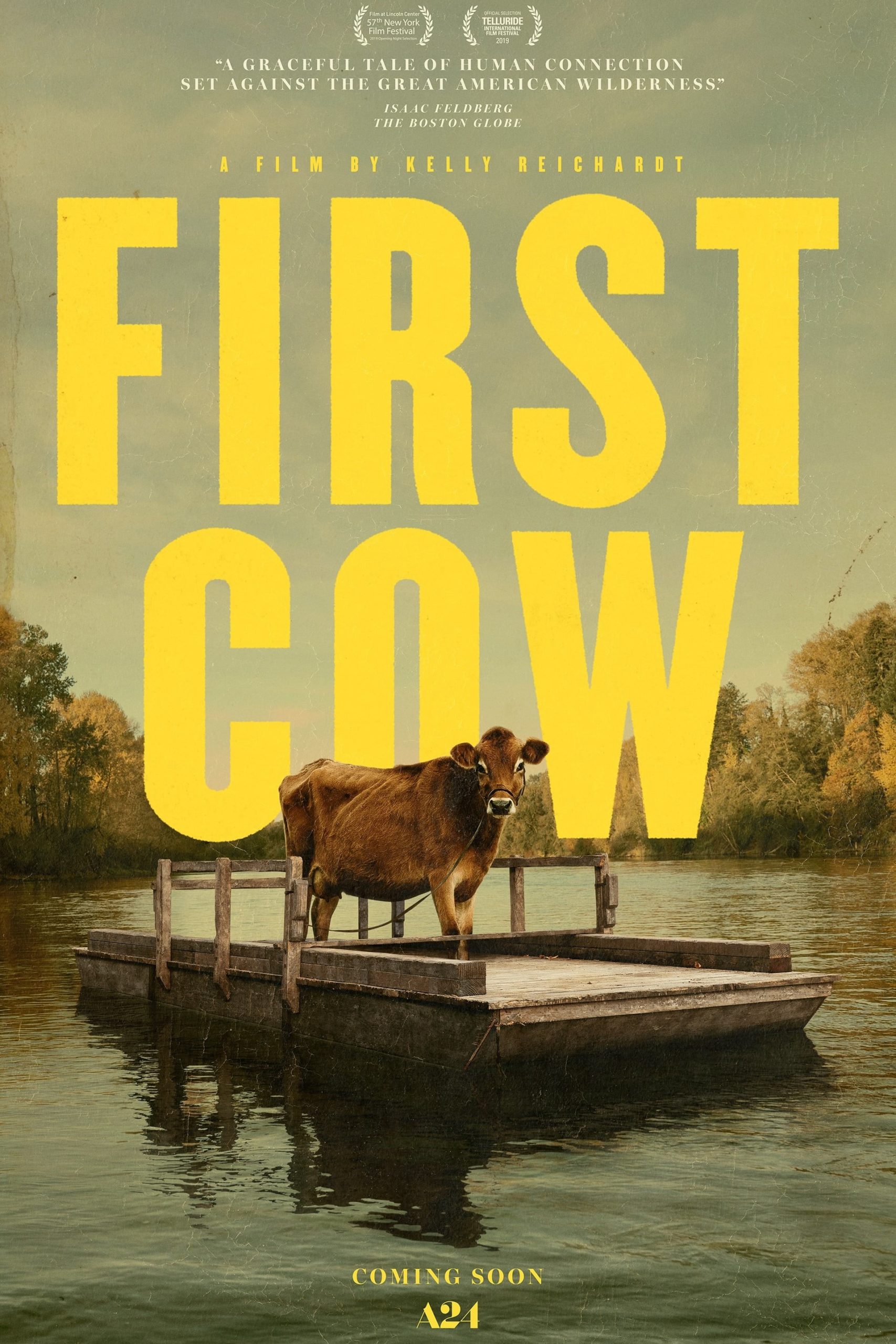
Photo credits: © Allyson Riggs
 French
  German
  English