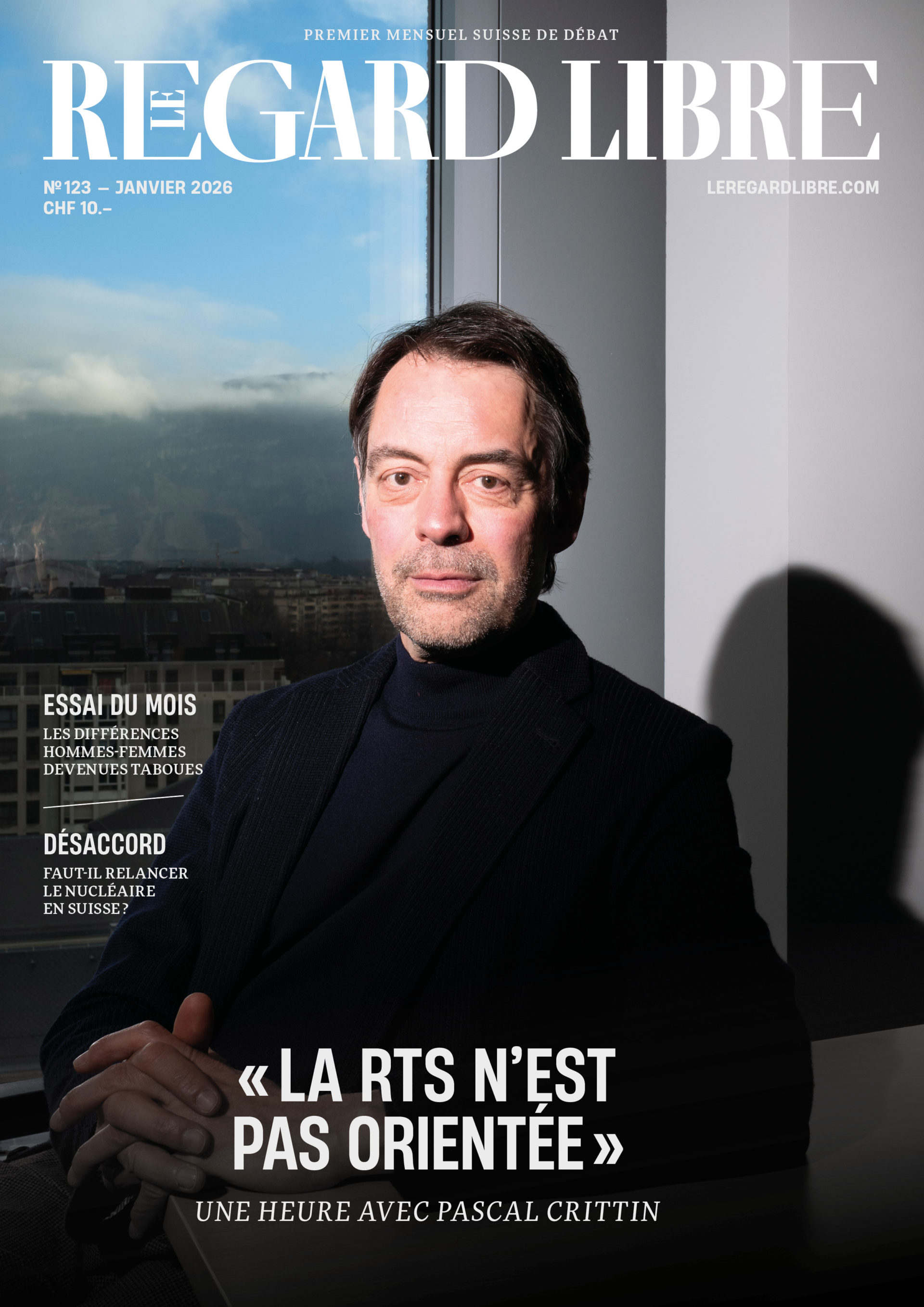




In «Play», Max Boublil is nostalgic for the present

Cinema Wednesdays - Jonas Follonier
It's the story of a boy, Max, who receives a camcorder for his thirteenth birthday, an object he will never leave. Like Charles Aznavour, whose film The look in Charles' eyes has been analyzed here by Loris S. Musumeci and me, Max films his life, never missing an opportunity to immortalize important and trivial moments with his camera. Twenty years later, in 2019, Max will unveil the «film of his life», seeing his life flash before his eyes. And ours.
In 1989, on the excellent album Sarbacane, Francis Cabrel sublimated the omnipresence of love in our lives and minds:
«It's on everyone's mind
Men, angels and vultures
There's no more distance
Nobody's arms are too short
Everyone hopes
Even in backyards
Everyone wants a return ticket
D'amour, d'amour, d'amour, d'amour»
It's not the film Play by Anthony Marciano, which contradicts this ancestral wisdom relayed by the singer with the Gascon accent. Love is indeed at the heart of this feature-length film, in which we see the main protagonist, Max (Max Boublil), miss out on the love of his life, through his own fault, and venture into a marriage with no real meaning. A banal, almost boring story. Happily so, Play is much more than that. Not only does the screenplay, co-written by Anthony Marciano and Max Boublil, extend the theme of love to include the fascinating nostalgia of the present. But the form - what a form! - captivates with its originality and serves the purpose.
An amateur camera, seriously?
You had to dare to base this film on the idea of a montage of videos that were amateurish, so to speak. And it's the «so to speak» that interests me in my sentence: small, professionally edited films shown in public are in fact not amateur at all. It's all there. What can be described as a «mise en abîme» has the merit of questioning the boundary between amateur and professional, of questioning the characteristics that a simple status - that of film, of feature film - offers to a material.
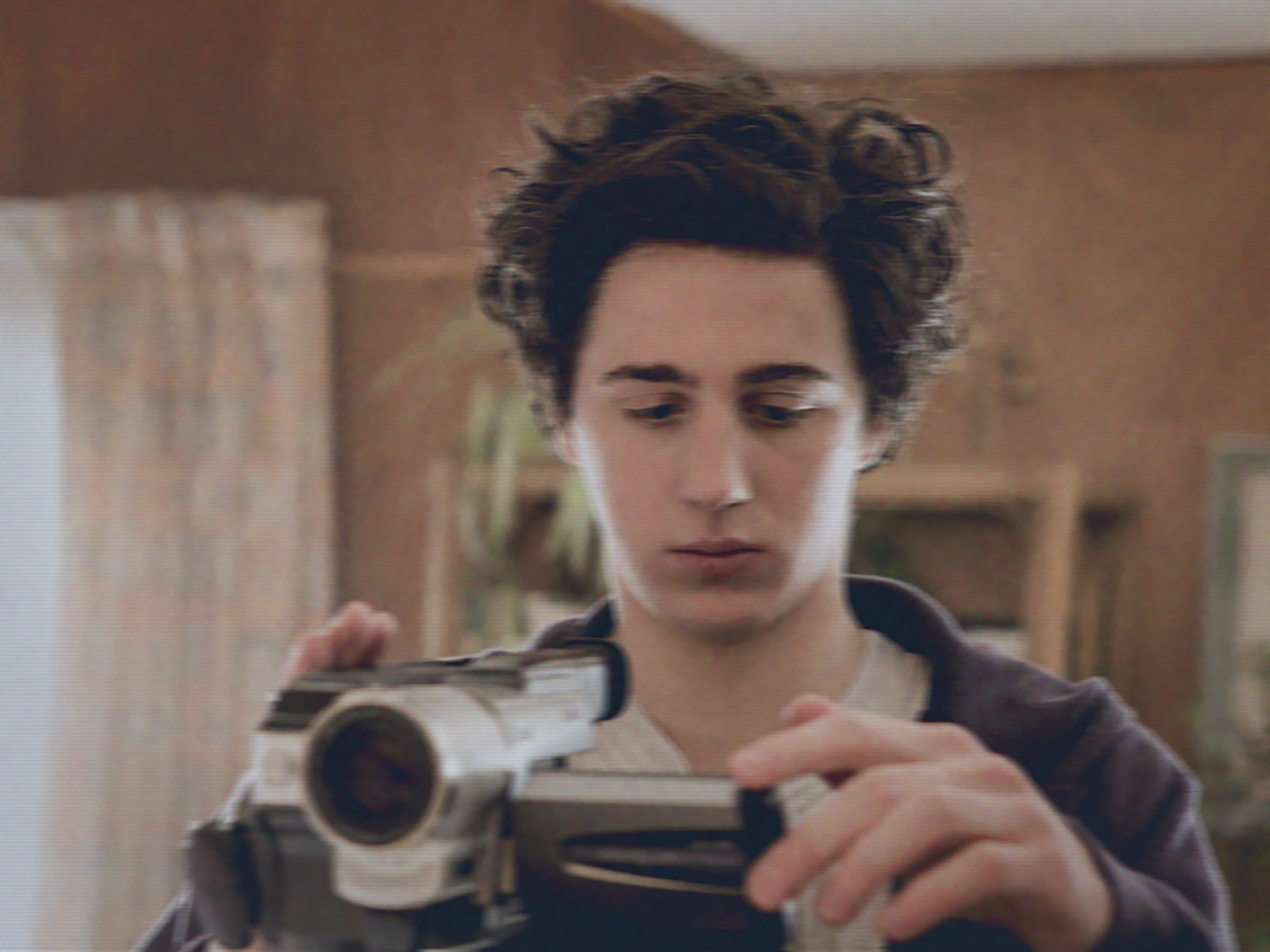
Also, the semblance of what's this shit? is ideally suited to what I'll call «shitty lives». In short, the equivalent in existence of what the extreme center is in politics. There's no desire here to denigrate this middle-class component of contemporary society; it's a question of highlighting what, in all our lives, falls under the umbrella of this namby-pamby fundamentalism. This," exclaims Max at one point, referring to a friend of his child's, "is a friend of Dad's who has children, a house in the country, a dog and who has understood everything about life." This line is all the more apt because the character who says it hasn't understood everything about life himself. He knows it, so he takes it out on others to avoid taking it out on himself... at least not yet.
A nostalgia for the present
In fact, Max is nostalgic for the present. As he himself says: «I've always been nostalgic for the present, nostalgic for what I'm living.» What does this mean? Quite simply that the present is elusive. That time - and therefore life itself - is incomprehensible. What is the past, if not something that no longer exists? The future, if not something yet to come? And the present, if not an instant that is already gone as soon as we think about it? Live and don't think about it, that's the basic but essential remedy we're given in this film. Live to embrace the love that awaits us. Live to create your work, create your existence, create yourself.
Write to the author: jonas.follonier@leregardlibre.com
Photo credit: © Praesens-Film

Vous aimerez aussi

 French
  German
  English
Laisser un commentaire