



The coronary with Louis de Funès
Cinema Wednesdays - Special edition: Les coronarétrospectives du cinéma - Loris S. Musumeci
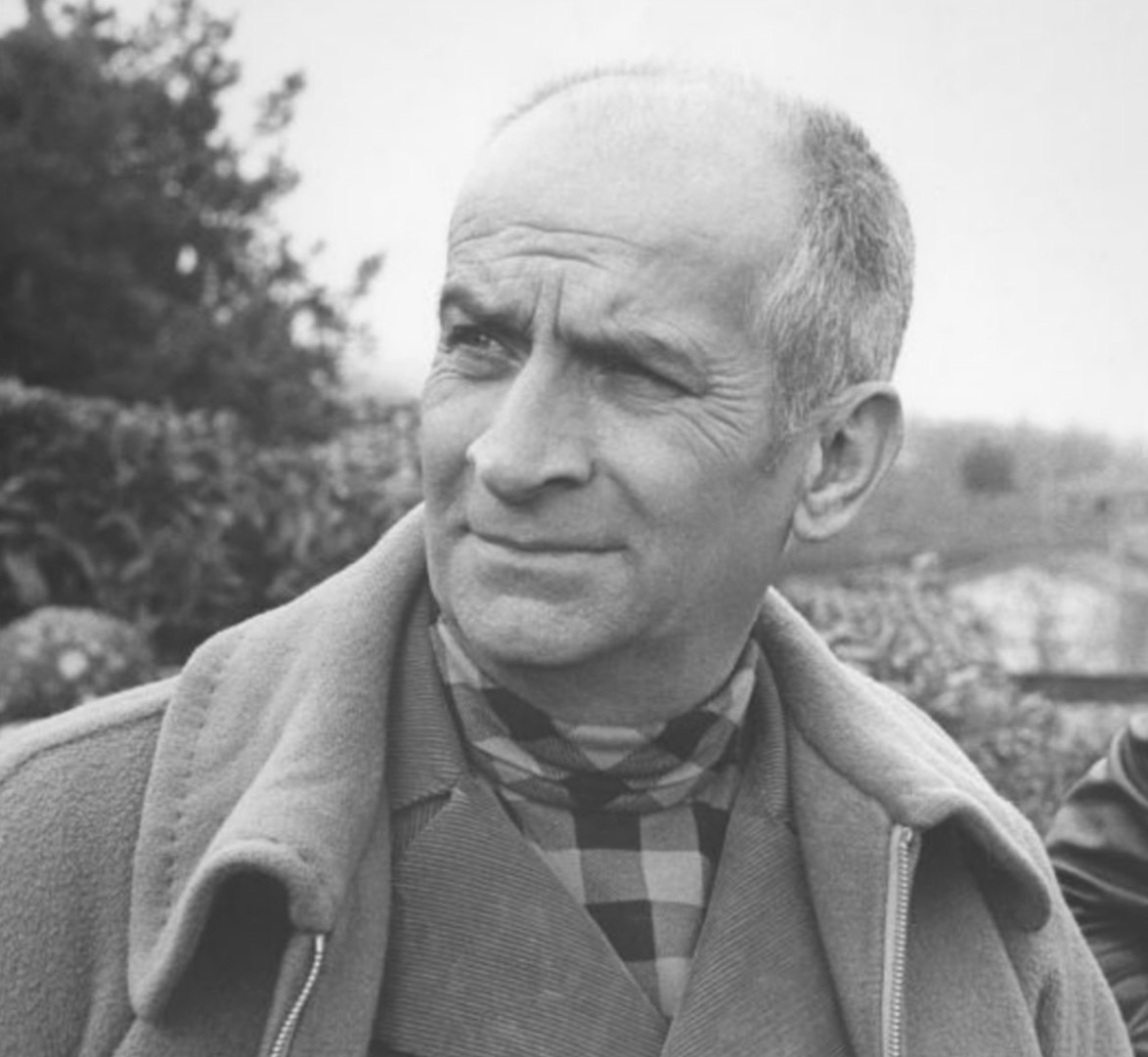
When it comes to French comedy, there are many fine characters to choose from. But one stands out above the rest: Louis de Funès. Firstly, because he stands out for his acting, which is stuffed with grimaces and angry outbursts. Secondly, because the cult films in which he plays, under the guise of buffoonery, tell the story of an era. Thirdly, because Monsieur de Funès, in his life, inspires the simple, deserved success of an honest man.
Talking to the people
Louis de Funès is endearing. And he has every reason to be, but in the eyes of the people. Most critics, at least those of the time, didn't see him as a great cinema figure. On the contrary, this uninteresting clown soiled the French cinematic tradition. At home, Louis de Funès was, and still is, part of the family. Because he toiled to achieve success. And once he'd made it, he never stopped speaking to the people, either by impersonating his tormentor, the mean-spirited, hot-tempered little boss. Or, more rarely, by playing a common man, the smallest of them all, an elderly peasant in a small village. La Soupe aux choux (1981), two years before his death.
What probably also appealed to the public was that de Funès was anything but charismatic. Uncomfortable in interviews, shy in life, rather ugly and a good Christian. All in all, he was an average Frenchman among average people, and despite his means. He may have lived in a château with his family, but in between film shoots, he was only interested in his roses and vegetable garden. Not to mention his family, with whom he always tried to make up for the mess of his own childhood.
Now it's just the two of us
Born into the fallen nobility of Castile, the de Funès family was unstable. He was born in 1914, on the eve of war. What's more, his parents hated each other. In fact, his mother's temper tantrums against his father's light-hearted lifestyle were to be de Funès« greatest inspiration as an actor. When it wasn't shouting in the home, it was absence. His father pretended to be dead when he fled to Venezuela; when his mother forced him back to France, he died. The year was 1934. War and crisis have left the country in a fragile and difficult state. Louis is only twenty; like Eugène de Rastignac, he declares war on his grief, to find peace and happiness. »Now it's just the two of us!»
And one odd job after another to survive. Without ever losing sight of the main objective: to live for good, and even to live well. He found his vocation: acting. Memories of a youth when he made his classmates laugh with his grimaces, which earned him the wrath of his teachers. But then war broke out again. France was stabbed like the rest of Europe. But France resists, using the war as an opportunity to rise up and take its destiny into its own hands.
Like Louis de Funès. Already an artist at heart, he earns his living in a piano bar in Occupation-era Paris. And now, a charming young girl he'd already seen and liked is being courted by a heavy-handed Nazi soldier. He puts his fingers to the keyboard, pauses, stands up, and interposes: he warns the Nazi that it's his fiancée he's bothering, and that he'd better stop. Little Louis has made his mark with an act of bravery. He seduced a woman. Who will become his beloved wife.
The success
And he believes in it, he believes in happiness, despite his torments. Unimportant roles pile up. Without consideration, he gets as many opportunities as he can. Whether on stage or in front of the camera. Louis de Funès was still nothing. He would be nothing for the first twenty years of his career. But this «nothing» is not to be despised, as each performance was a step on the road to success. In 1956, when the actor was already forty-two, the public and the press began to notice him with La Traversée de Paris. The ascent will be straightforward and uninterrupted.
From the early sixties, his career took off. Successes piled up, and de Funès's character paradoxically became more daring and grotesque. In 1965, it was the moment of consecration. He shared the bill with Bourvil, already at the top of his game, in Le Corniaud - and if he literally shares the poster with Bourvil, it's because Bourvil himself asked to appear on the poster with de Funès, to whom he became attached, and with whom he quickly built up a sincere friendship.
The coronary with Louis de Funès
You know the rest. You know the films. A heritage of French popular culture, of course, but also a heritage of popular culture in its own right. Louis de Funès, a French star, of course French-speaking, but also Italian, Spanish, German, English, Russian, Czech - now there's a Gaullist the Communists loved! Over one hundred and forty films in all, of very uneven value. With good old Louis, a man, a friend, a loving father, a faithful husband, a devout Catholic who created for himself the balance between family, faith and work that he had previously lacked.
Visit de Funès, As they say, these are not all the films in which de Funès played, but only his cult films. And there are many of them. Nevertheless, we've selected just five emblematic ones that best represent the character, his acting, his evolution, his career, the entertainment he offered the people, the laughter he provoked, the consolation he embodied in the existence of people for whom everything isn't always easy. His message: the tragedy of this world requires comedy for everyone.
On the program: The Gendarme of Saint-Tropez (1964), La Soupe aux choux (1981), La Grande Vadrouille (1966), La Folie des grandeurs (1971) and Le Corniaud (1965). Productions by Jean Girault and Gérard Oury will be honored throughout the day. So that the ubiquitous epidemic can be transformed for a comedy into a coronary. With Louis de Funès.
Write to the author: loris.musumeci@leregardlibre.com
Photo credit: © Wikipedia
You'll also like


 French
  German
  English
Leave a comment