




Who says an action movie can't have depth?
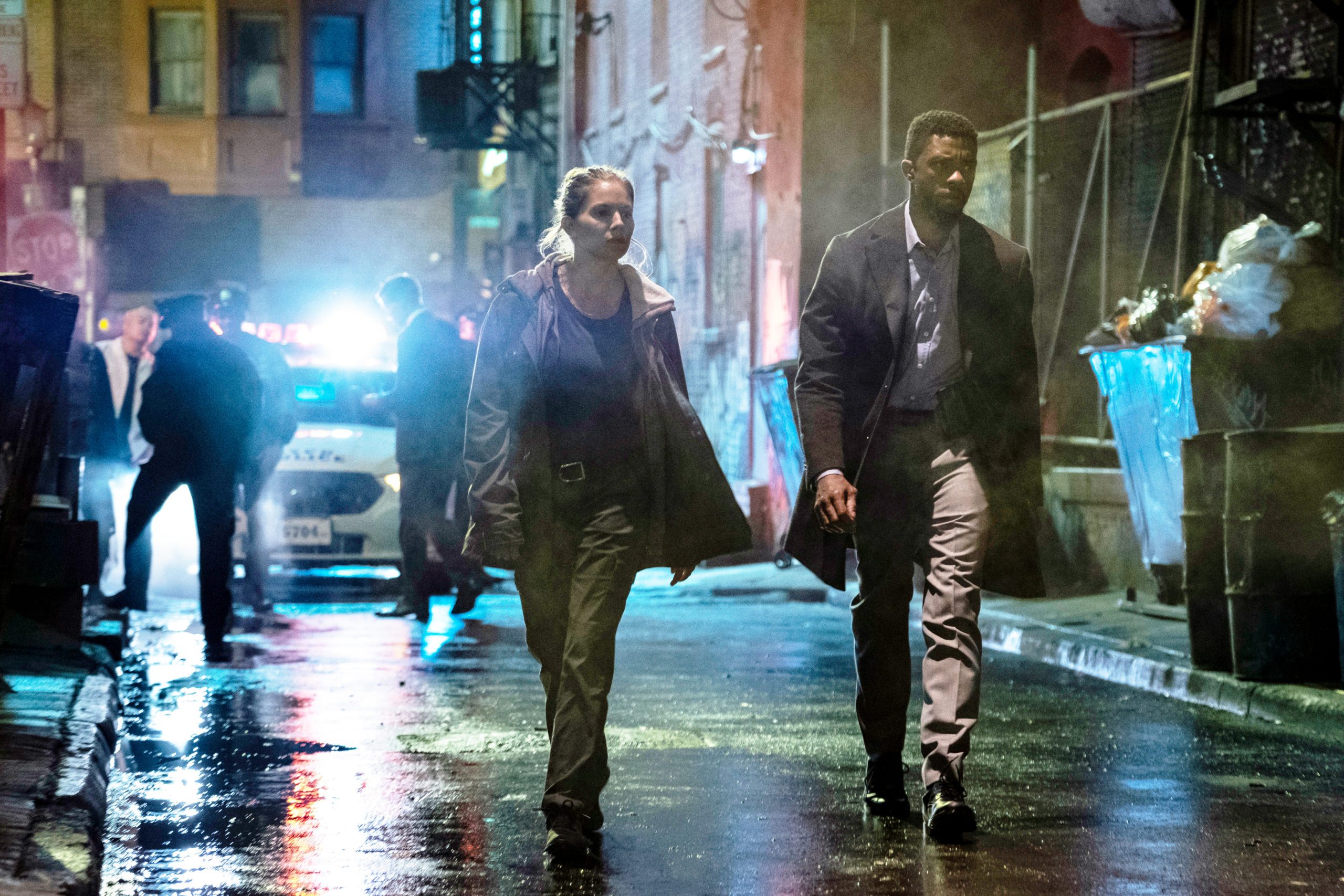
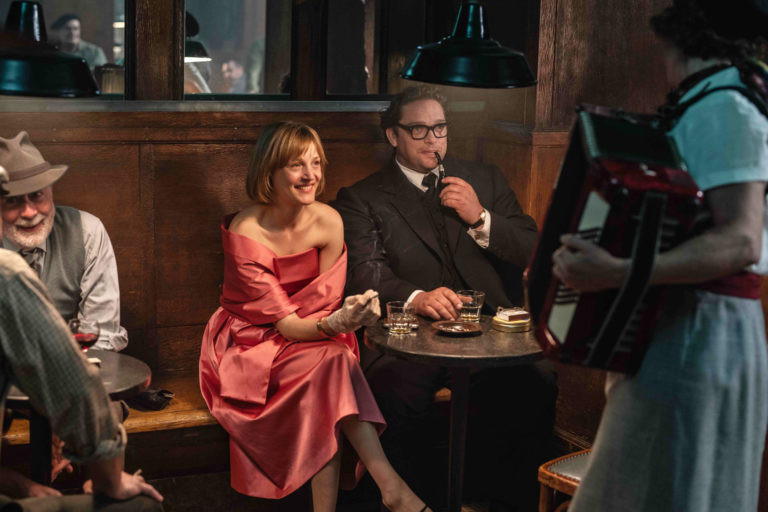
Sienna Miller and Chadwick Boseman star in 21 Bridges
Cinema Wednesdays - Jonas Follonier
Who says an action movie can't have depth? No one did. And thankfully so. The proof is in Manhattan Lockdown, an American film too mainstream as entertaining as it is philosophical. This sensational, action-packed thriller manages to make viewers think about evil, and places the search for truth at the heart of the story. Without being clichéd or too subtle. A great success.
Night falls on New York. Two thugs break into a wine shop. They're looking for cocaine, which they know is hidden in the store. But things turn out differently than expected. There are not thirty thousand, but three hundred thousand grams of coke. That's a hell of a lot of white. The likes of which you'd never find. Curious. And, as luck would have it, police arrive on the scene at the same time. A massacre ensues. Seven cops die.
A pleasant surprise
But who believes in coincidence? «There's nothing stranger than coincidence,» as a fictional philosopher recalls the character from’Hercule Poirot in one of the episodes of the TV series. The truth must be told. Above all, the two murderers must be found. Renowned detective Andre Davis (Chadwick Boseman) is called in. He decides to close Manhattan. The twenty-one bridges leading off the island are blocked by police roadblocks. The investigator has only a few hours to find the murderers before daybreak. And to get to the bottom of the case.
The story is told by director Brian Kirk - and it's his first film. And it's a pleasant surprise! Where we might have expected a blockbuster without innovation or depth, the filmmaker offers just the opposite. Here, simultaneous sequences follow the investigation live and sometimes symbolically; there, wide shots of the city asleep but lit up, as if to show that people are going about their simple lives while the worst is going on unbeknownst to them. A film with style and class. And as effective as a Netflix series.
So, despite a few shortcomings that don't ruin the whole, such as an excessively long chase or a socio-economism that justifies crime too much, Manhattan Lockdown delivers a genuine philosophical reflection, spanning several themes. All of which are embodied in a great action film, rather than in some silly auteur abstraction.
Curiosity, truth
First of all, the theme of curiosity. A quality of both detective and journalist. If the pre-Socratics and many others are to be believed, the philosopher's quest for truth begins with wonder at the world. A characteristic that can also be attributed to the journalist, except that he or she must also be guided by a thirst to dig for information, to shed light on shadowy areas. And here, too, we find the investigator. More dedicated to doing good than to seeing the world. Motivated more by his hatred of the evil in society than by its riches.

And so, at the start of the film, we see that the task facing the detective in his father's lineage is «not to believe what they say about right and wrong, to find a sense of justice in an often cruel world.» Harsh, but true. This reflection, which is not only mine but also the film's, will be found in all the following scenes, explicitly or implicitly. Always with Andre Davis« main character at the center of the camera. »You've got to look the devil in the face", says his mother, who doesn't have much memory left, but still has plenty of common sense and lucidity.
Freedom to do evil is not freedom
Then, the theme of freedom. Is it really freedom to enjoy pleasures of all kinds in who knows where - far away, anyway - with a guilty conscience on your back? Committing crimes and then taking it easy seems absurd and, above all, dishonest. And yet, those who choose this criminal path must believe that they can obtain something desirable from it. That feeling of freedom, no doubt. The psychological condition is that they must be up against the idea of any kind of justice, since for them, society is fundamentally unjust. Anything goes. Right up to the murder of a dozen police officers, all men of valor, a priori innocent.
«This is totally stupid, let's go!» says one of the gangsters during the heist. «But no, it's freedom!» replies the other. Except that freedom has to be oriented towards the good. Freedom isn't about doing what you want. wants, is to do what you've always wanted to do. must. It only makes sense if what we want is chosen with reason, i.e. with the good in mind. So who says that action films can't be used to teach philosophical lessons? I'd go even further: what could be better than a good detective story, if possible with strong emotions and effective photography, for a profound cinema experience? The purpose of art in general is to make us sleep less stupid and more human.
Write to the author: jonas.follonier@leregardlibre.com
Photo credit: © Ascot Elite Entertainment

You'll also like

 French
  German
  English
Leave a comment