




Cinema has found its translators

Cinema Wednesdays - Jonas Follonier
Featuring an international cast, The translators is a thriller that's not so much about today's publishing world as it is about cinema. Here's a review of a film that's sure to be a landmark, as well as a box-office hit.
It's the story of a best-seller whose novelistic stakes are nothing compared to the consequences it will unleash in the real world. Dedalus is a series of best-selling novels, including the latest volume, The man who didn't want to die, is about to hit bookstores everywhere. An exceptional release calls for exceptional measures. The publisher, Eric Angstrom (Lambert Wilson), has set up an ultra-secure system for the occasion. The nine translators are locked together in a bunker, unable to have any contact with the outside world. Their cell phones are taken away. They are provided with a library specially fitted out for the occasion, as well as all the necessary translation equipment. The publisher's aim? To ensure that the text never leaks.
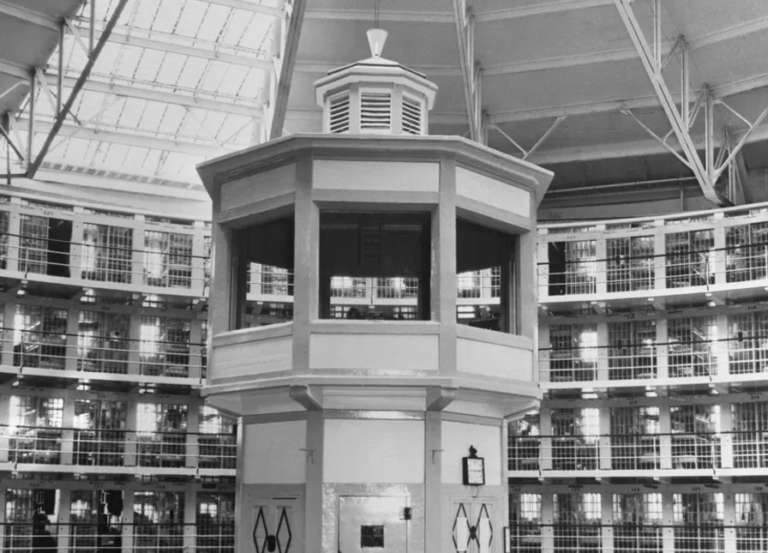
This workspace, watched over by Russian guards, is more like a cell than a studio.’open space, Although it's set in a luxurious manor house, and the guest translators are generously provided for. It's the perfect setting for a chilling in camera thriller centered around a kind of tomb, the likes of which we've seen in the cinema in works as diverse as Eight bastards to Saw 1 including the most recent Greta. This setting is accompanied by masterful photography and staging, in the service of a spine-chilling story. And one that quickly blurs the lines.
The suspense never fails to arrive - bless this film, which has no unnecessary introductions. Everything comes to a head in the cool calm of this literary mission when, against all odds, Angstrom receives a message telling him that the first pages of the book have been hacked, and that if he doesn't pay a ransom, the whole book will be published on the Internet as a preview. It's time to find the culprit. The film brilliantly builds up the tension. The questions add up. But it's in its mise en abyme that The translators displays all its cinematic power.
Depths
And for good reason: if the abyss is already present geographically with the underground huis-clos and metaphorically with the abyss into which the situation sinks, and if the cell in which the translators work echoes the prison cell we see several times in another temporality, the true meaning of the film is revealed in what it says about its nature as a film. Yes, because the revelations that will be made to the viewer - and that won't be made here - all highlight the theme of acting. This is coupled with a general aesthetic of play, which can be read in the rules dictated at the outset, in the delimited space of the translation area, in the game of tracks that the film becomes for the viewer, and culminating in the role of the master of the game.

The game master himself echoes the author of Dedalus and thus to every novelist, just as to the director of the Translators and therefore to every filmmaker. This is the great stroke of genius of this feature-length film: everything is coherent, and everything can be interpreted on at least three levels. Leaving the cellar where the first meaning is hidden - that of the novel itself, written on its pages - to reach the upper floors of the film's interpretation - let's not forget that every book translation is first and foremost an interpretation, and therefore a creation. The reflections offered by this film give me the shivers. There's no doubt about it: this is a masterpiece.
Write to the author: jonas.follonier@leregardlibre.com
Photo credit: © Pathé Films

Vous aimerez aussi





 French
  German
  English
Laisser un commentaire