




«Le Menu»: a satirical behind-closed-doors film with a twist
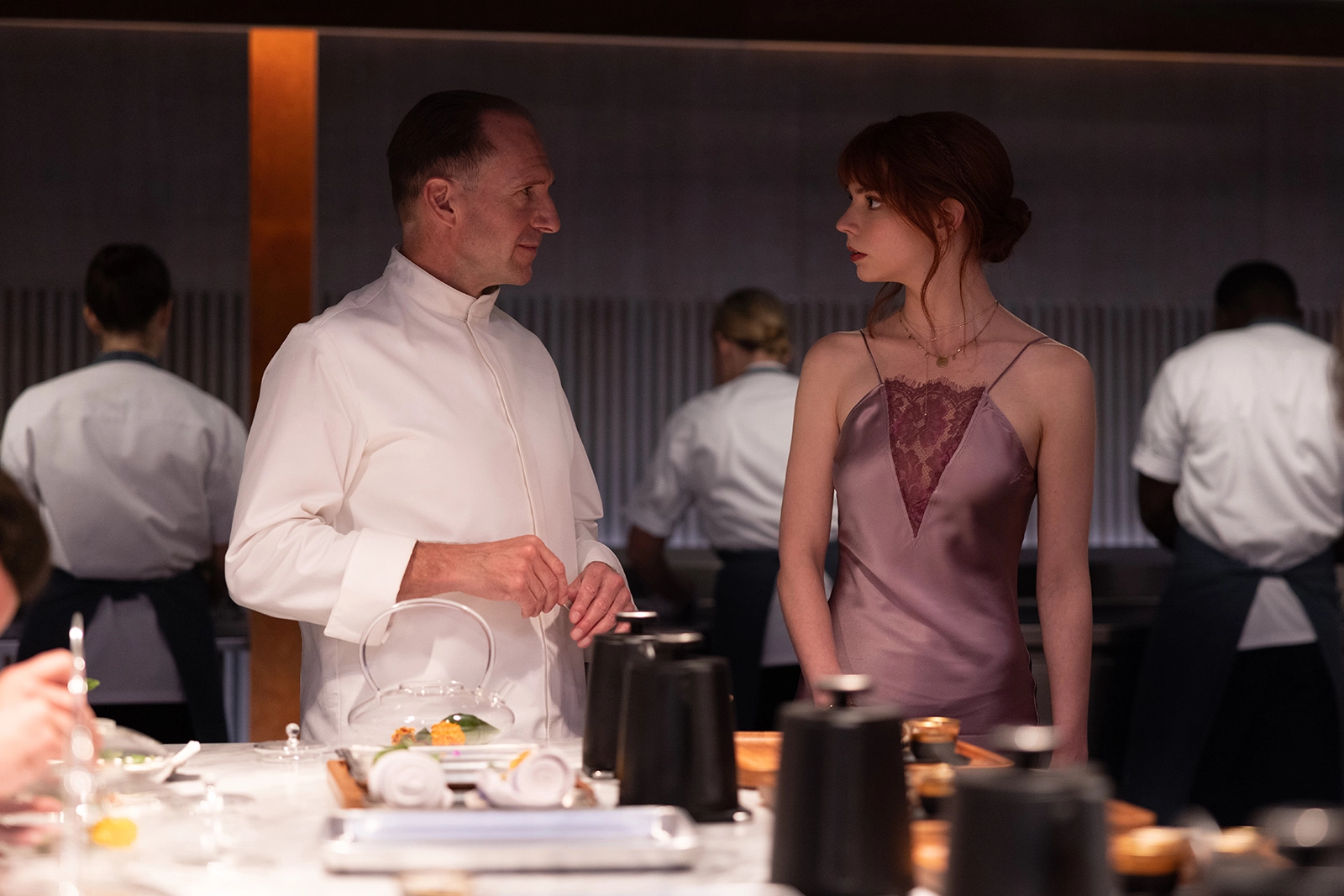
Le Menu © 20th Century Studios All Rights Reserved
Mark Mylod ventures into the realm of the horror thriller, offering a filmic experience packed with dark humor and tension. A satire that calls into question a certain capitalist vision of the gastronomy industry. Menu, a prodigious lead role.
For one night, Margot (Anya Taylor Joy) and Taylor (Nicholas Hoult) will experience an extraordinary culinary demonstration on the island of the famous and enigmatic chef Slowik (Ralph Fiennes). Arriving at the restaurant, the budding couple, accompanied by a handful of wealthy and motley guests, have no idea how their evening will turn out.
The noose tightens
Setting the plot in a single restaurant room is a stroke of genius. In addition to heightening the sense of anxiety as the story unfolds, the management of the space focuses on each group, table by table, giving us the impression of watching a real sketch film. The focus is on the voices and the camera moves between the tables, The Menu presents fragments of the lives of vicious guests. The characters are perhaps too stereotypically defined, and while this may serve the discourse of the gentrification of the culinary arts, it's still very tired.
If Mylod's treatment of space is remarkable, his treatment of time surpasses it. While our appetite for movement and tension is unquenched at the beginning of the story, the film takes hold of us once and for all with the presentation of the fourth course, a real turning point. The shots and movements reflect Margot's distress and the growing discovery of the chef's monstrosity. The editing, oscillating between brutality and transparency, and the treatment of sounds - such as the chef's dry, annoying clapping of hands - successively convey the incomprehension, irritation and, finally, anguish that the audience feels in the same way as the customers.

The nods to other film genres are nonetheless greeted with reserve. Margot's escape attempt, for example, has the feel of a survival, the film's main weakness, considerably hampers the plot. However, the care taken with the scene in which the characters are introduced, and the guests' anticipation of the mystery created by the master of the house, is reminiscent of an investigative film, and arouses the viewer's curiosity.
When the public gets involved
One of the strengths of The Menu lies in its ability to include its audience in the experience of chef Slowik and his brigade. The film is divided into ten chapters, from appetizer to dessert, which punctuate the plot. These introductions are accompanied by intertitles and detailed shots of the dish that explain the recipe. These close-ups, akin to the framing of a TV program, break the fourth wall in an original way, allowing the audience to visually revel in Slowik's cooking. In fact, when Slowik explains the origins of his work, Ralph Fiennes is placed in the center of the picture.
It would be impossible to talk about Menu without mentioning Fiennes' performance. Alone or surrounded by the other protagonists, his expressions, tone and diction (no doubt inherited from his long career on the stage) command attention. The revelation of his madness, born of his frustration with the hypocrisy of the restaurant industry, is brilliantly interpreted.
Mark Mylod and his screenwriters propose a discourse on our propensity to over-consume. This critique is quickly revealed, and doesn't really stand out from previous films on consumerism. A second, but no less explicit, reading of the film, occurring in the latter part of the plot, evokes a return to simplicity and the very essence of things. In the end, it's not a bad resolution to follow.
Write to the author: leila.favre@leregardlibre.com
You've just read an open-access article. Debates, analysis, cultural news: subscribe to support us and get access to all our content!
Cover illustration: The Menu 20th Century Studios All Rights Reserved
You'll also like

 French
  German
  English
Leave a comment