




«Into the light»: between loss and oblivion
Cinema Wednesdays - Hélène Lavoyer
«Nothing is more beautiful than what we have before our eyes, and which is about to disappear.»
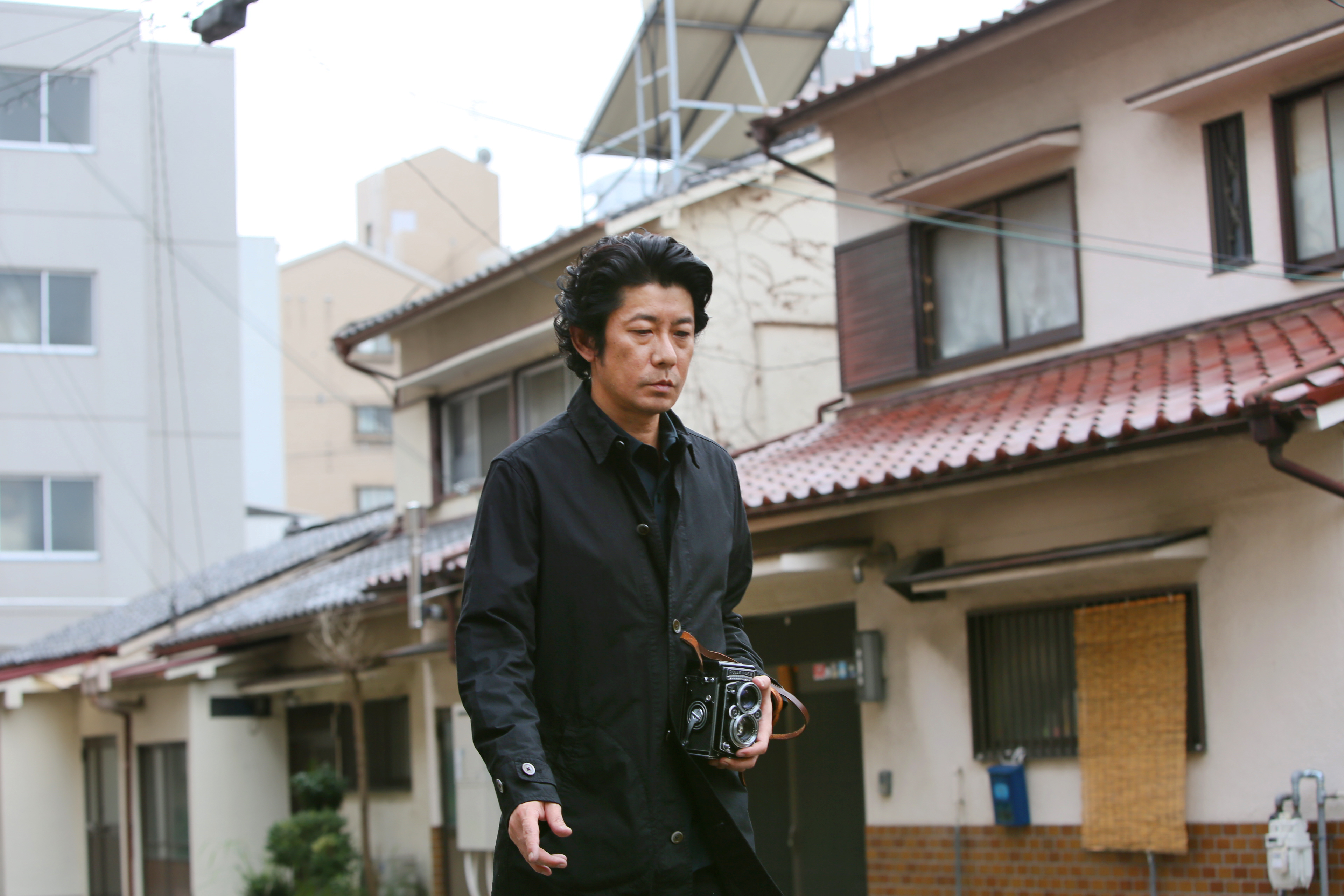
A man enters a cinema. He places headphones in his ears. «Testo, testo», says the voice emanating from the headphones, in Japanese. Silence and darkness. The field opens onto a Japanese street. Misako Ozaki (Ayame Misaki) inwardly describes the events taking place and the people who are currently populating it. One by one, they pass under the young woman's gaze. And then only the voice. In a small office room, we meet Misako again and understand her descriptive frenzy: she's in charge of creating the text for a film's audio description.
The judges in his show are all blind or visually impaired. In the auditorium, Masaya Nakamori (Masatoshi Nagase) makes a nasty comment once the debate begins. This is the man followed into the cinema at the start of the screening. Rough, distant and tough, this angry former photographer hides another, buried in the shadows by increasing blindness. For both of them, the search for light and meaning, for deliverance and peace, begins, for one by accepting his situation and for the other by letting go of his fears.
Presented on different levels - family, professional and individual - Misako's story is delivered in tandem with Nakamori's in the simplest possible way, before coalescing into a relationship between the two characters. «Calm»: this could be the motto of the plot. Although discussing difficult themes such as blindness, abandonment, madness, love and rejection, the weaving takes shape without abruptness.
Opening up to Japan
Bathed in a diversity of landscapes and light, the viewer is drawn into the life of young Misako. Abandoned by her father, she watches her mother sink in anticipation of an unlikely return. Yet her attentive eye captures and marvels at every landscape, and her ear takes in every sound like the most beautiful of melodies.
On screen, we also discover the mythical Japan of our dreams, with its streets and alleys not so different from our own, clean and bathed in a world in a hurry, just as it is here. In the mountains, nature is vivid and sonorous, tinged orange or yellow depending on the state of the sun's path, with a thick mass of green foliage.
Aesthetics first
In this work by Naomi Kawase, image counts for more than surprise, more than speech, as much as sound. On several occasions, the camera trembles. These jolts are matched by a typically Japanese modesty, through which it is still possible to detect the fragility of the characters.
The interplay of light and blurs, more or less opaque, allows us to enter for a moment into that feeling of instability and the unknown that some visually impaired people may feel at first. The interweaving of images and stories unites to form an enchanting whole, thanks to a simplicity offered without counting the cost, touching with truth our eyes that are so accustomed to the grand spectacle.
Not a tear shed
If there's one thing we regret, it's not having had the opportunity to shed a tear, or to feel our hearts truly clench. The opportunity to let emotion take over from the luminous work of aesthetics is never once seized, and even the fiery kiss between Misako and Nakamori delivers more artistic impressions than human emotions. Or is it, perhaps, the all-Western observation of a film that has made the world of’Hikari.
Write to the author : lavoyer.helene@gmail.com
Photo credit: © Filmcoopi
You'll also like

 French
  German
  English
Leave a comment