




«Virgin Suicides, or the Lisbon spleen

Cinema Wednesdays - Special edition: Sofia Coppola - Kelly Lambiel
Being the «son of» is a double-edged calling card. Doors open, but either you make your own name, or you stick a label on yourself. To be the «daughter of», in Hollywood, when your father is none other than the great Francis Ford Coppola, and to want to adapt, for your first feature film, a novel about the suicide of five teenage girls, is a kamikaze mission. Yet it's a successful entry, explosive with sweetness and melancholy, that gives Sofia Coppola a well-deserved place in the world of cinema.
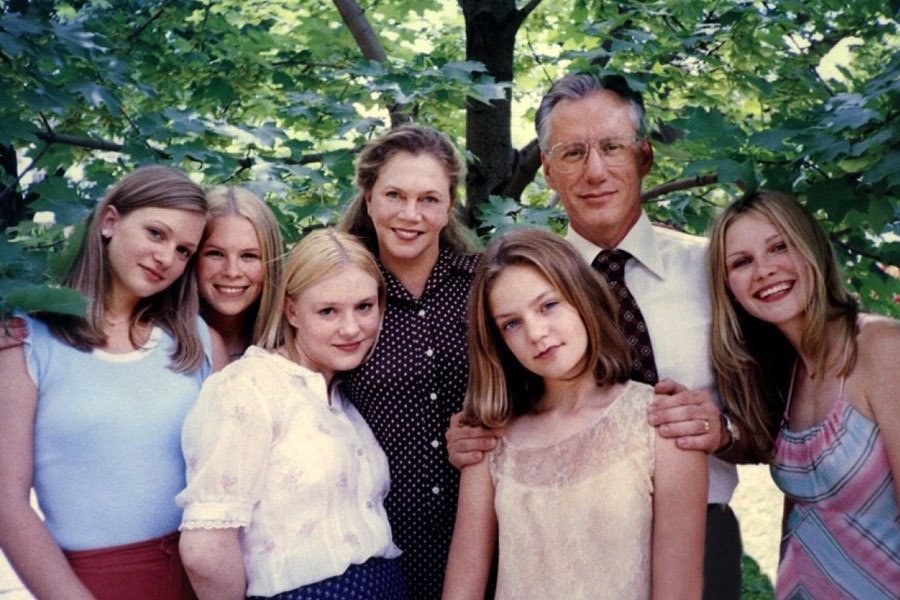
Although the film looks back at the final days leading up to the Lisbon sisters' suicide, the plot is not told from their point of view. As an outsider, the narrator is none other than a young man who dated the girls from afar twenty-five years ago. After a failed first attempt, Cécilia, the youngest, impaled herself on the garden gate, condemning her sisters to reclusion. Following this episode, the narrator, obsessed with Therese, Mary, Bonnie and especially Lux (Kirsten Dunst), begins to spy on them, along with his friends.
Through their eyes and reflections, we observe the lifestyles of these young women in search of freedom and identity. Deliberately denying the viewer the possibility of getting inside the heads of those we follow is a bias that has earned Coppola much criticism, as she herself wrote the screenplay based on the novel of the same name by Jeffrey Eugénides. First and foremost is the fact of approaching a theme as serious and complex as suicide without addressing the motivations, reasoning and causes that led the protagonists to this point.
Frustrations welcome
The cinephile, who is told the outcome of the story from the outset, imagines that he or she can piece together the sequence of events to understand the reasons for this extreme gesture. But this is not the case. A feeling of disappointment. So, yes, fiction can offer the possibility of going back in time, but in reality, once the deed has been done, there's little chance of getting answers to the questions that arise. Certainties are shattered, leaving only incomprehension, supposition and remorse. In this sense, it could be said that Coppola's cinema imitates life.
But the frustration of external focus isn't the only reason why Virgin Suicides seems to me to be a success. The director also demonstrates a real ability to marry contradictions and paradoxes. Thus, her protagonists often find themselves in a tipping point during which they are no longer but not yet becoming. Such is the case with the enigmatic Lux, who, despite her childlike face, plays with her femininity and multiplies her sexual experiences. Is she a teasing, perfidious teenager, or a young woman who sees sex as a way of drowning her malaise and finally feeling something?
Luminous contrasts
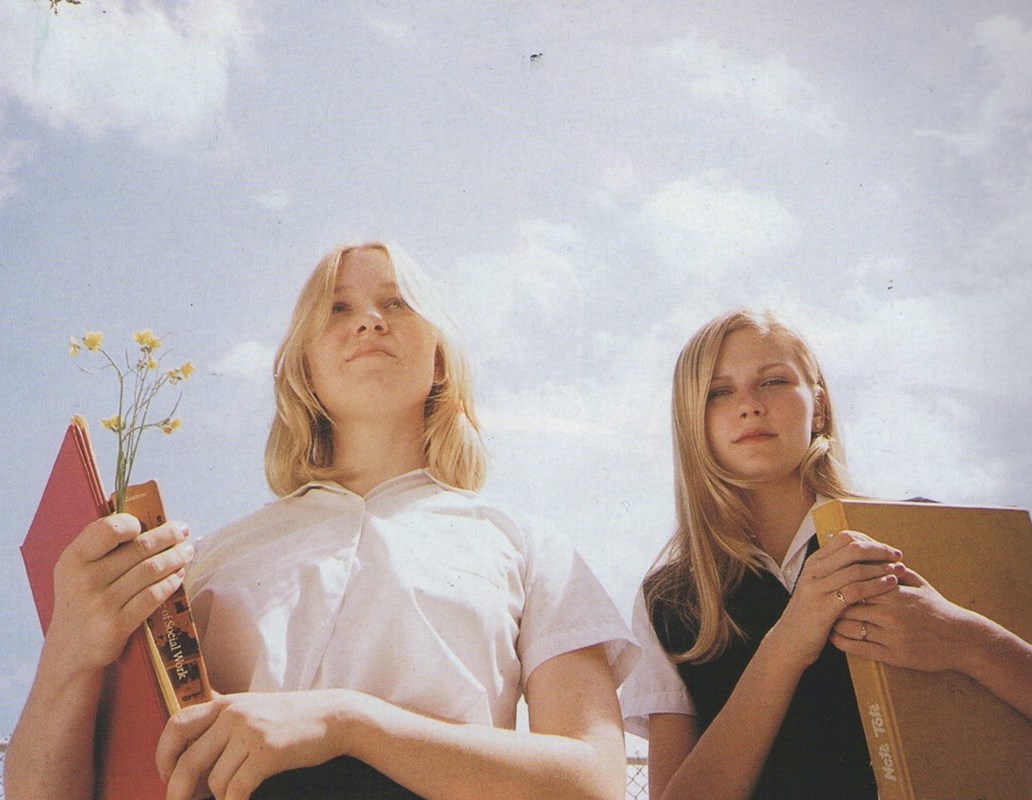
The screenplay and character psychology are therefore of the highest quality, but the direction is equally meticulous. Everything is shot in natural light, creating a soft, dreamy atmosphere in the exterior shots. By contrast, indoor scenes are colder, with a heavier, more austere atmosphere. These contrasts - accompanied by tracks from the French band Air - although they are highly symbolic, are very much in line with our perception of life.
Sometimes, what we aspire to seems endowed with a blinding, warm halo of light, while what we actually possess appears gray and insipid. We are thus caught in the infernal spiral of spleen, torn between our dreams and reality. Most of us manage to cope with it and are even stimulated by it, while for others it becomes an insurmountable obstacle. And what if our desires were never to be fulfilled, and our existence turned into perpetual boredom?
An age-old taboo
It's natural to want to understand why some people take their own lives. But can we really? Family or professional circumstances may explain things, grief or trauma may be at the root of a desperate act. These external elements are also evoked by Coppola, although she ultimately gives no answers. We can express our mal de vivre, but can we explain what melancholy is? The director seems to have understood this, and perhaps that's why suicide has always been a taboo subject, and why the film was so divisive on its release.
When the causes are not obvious, we're left completely helpless, alone with our doubts. Suicide is often accompanied by a feeling of guilt: we're angry at ourselves for not having detected the clues, we'd like to find reasons, we'd like there to be a reason. has reasons. But perhaps there are beings who are simply not made for this world... or maybe it's this world that's not made for them.
Write to the author: kelly.lambiel@leregardlibre.com
Photo credit: © Pathé

You'll also like

 French
  German
  English
Leave a comment