





«My Lady», when a young Jehovah's Witness refuses a blood transfusion
Cinema Wednesdays - Loris S. Musumeci
«This court judges based on law, not morality.»
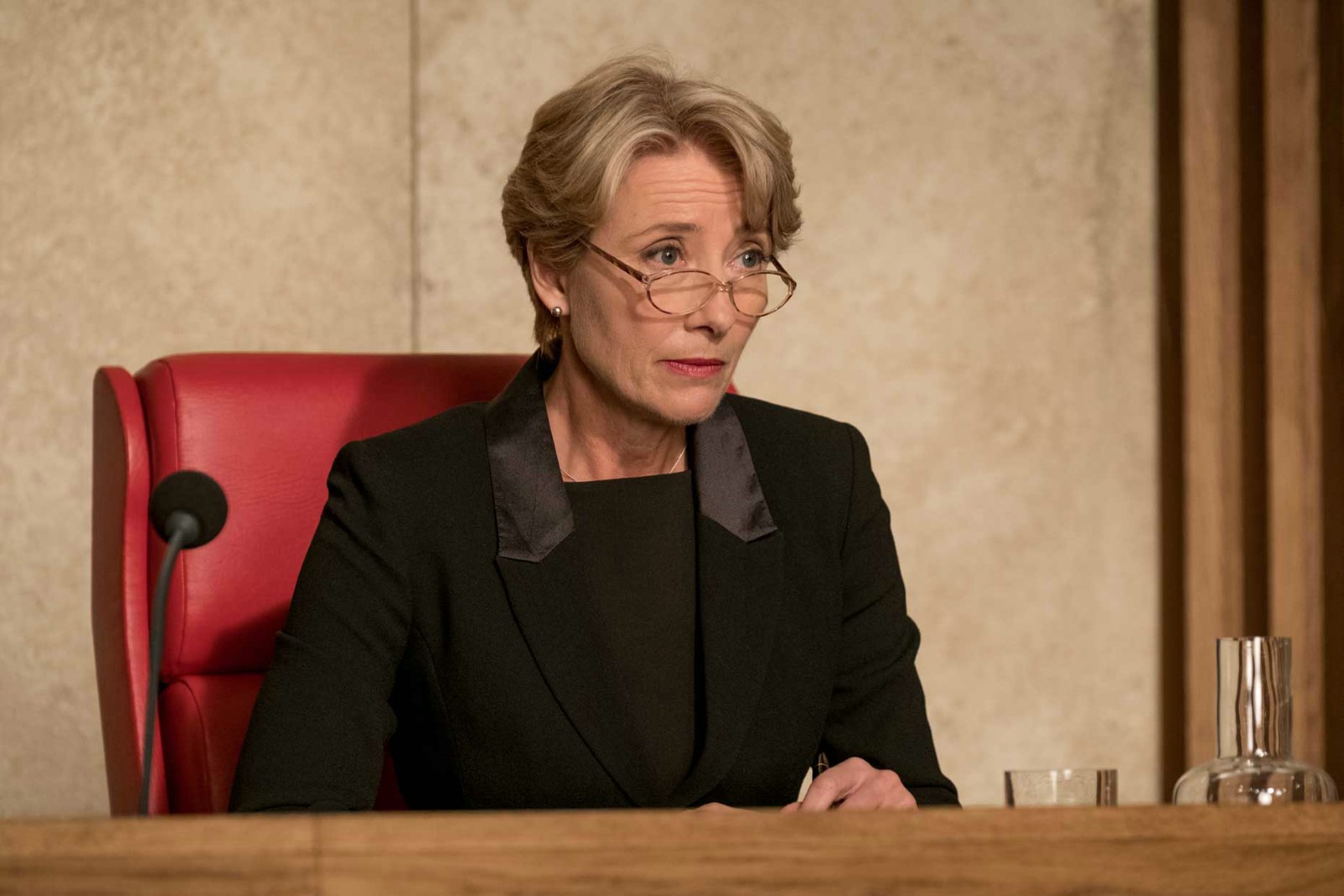
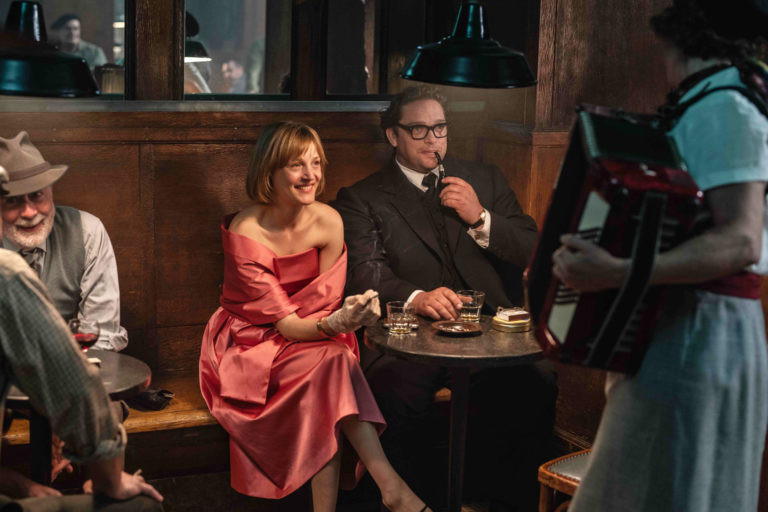
Fiona Maye (Emma Thompson), a woman of integrity, divided between two lives. One is that of My Lady, a judge at London's High Court; the other is that of Fi, as her husband, Jack (Stanley Tucci), a university professor of ancient literature, affectionately calls her. Fiona Maye's first case is not really a legal one, as she has to balance the time she devotes to her professional life with the time she devotes to her private life, particularly her husband.
Fi disappears more and more into My Lady's shadow. Jack feels deeply abandoned, especially as the fifty-something couple have no children of their own. Yet it's hard for him to pretend too much, because My Lady makes judgments on which lives depend. The lives of Siamese twins, then that of Adam Henry (Fionn Whitehead), a young Jehovah's Witness with leukemia who refuses all blood transfusions and therefore risks death. Faced with this boy, My Lady becomes Fi again for a moment, during a visit to the hospital, and this is the turning point. For both of them.
Grey skies and red bricks
The subject is a delicate one, and obviously open to debate. The fact remains that such a plot must first be carried off properly on a technical level. The cinematography doesn't achieve any particular feats, nor is it endowed with any particular beauty. Nevertheless, the camera is guided by fairly sober, classic processes that suit it well. In particular, the shots of London highlight the city's characteristics without turning into a marketing film. The coldness of the streets stands out in contrast to the warmth of the homes; the gray sky marries the redness of the bricks; the Gothic style of the courthouse accentuates the seriousness of the cases.
The shots of the actors continue in this vein: safe and sober. The on-screen separation of husband and wife aptly illustrates the reality of the plot, and serves it well to boot. The presence of the ever-talented Emma Thompson in her judge's robes is supported by unoriginal, predictable, calculated but effective front zooms. They elevate My Lady's noble stature by approaching her from low angle, ending up in a fixed shot at face height, giving way to her speech, which takes on even greater weight.
Olala, well thought out!
There are, however, a few problems with this sentimental legal drama. The most important of these are to be found in the screenplay. Ian McEwan may have succeeded with his novel, The Children Act, on which the film is based, but he failed to make his adaptation fluid and poignant enough for the cinema. The little anecdotes told at once, just because they were meant to be, or the great sentences of judgment, too heavy and imposing, partly spoil the script. And the few sentences we hear of Jack giving his lecture could not be more caricatured and phoned-in. Evidently enthralling in front of impassioned students, he declaims that religion is opposed to human freedom. Oh, what a happy coincidence! The film is about just that: religion and men deprived of their freedom. Olala, It's really quite clever!
Irony aside, it's worth reassuring the film's future viewers that the script is certainly not to be discarded. It also has its qualities, albeit few. The lines of the young Jehovah's Witness's parents, for example, are excellent. The intonations and chiseled responses suggested by the organization's published manuals and Kingdom Hall preaching courses are conveyed with almost documentary-like realism. Kevin Henry, Adam's father, answers the judge and the lawyers in exactly the same way as the Jehovah's Witnesses recommend talking to «people of the world».
The director's fault
Then there's the problem of length and the constant twists and turns. Here, the fault lies not only with the screenplay, but with the direction as a whole. Richard Eyre shot his film, with rather mediocre results, as if he'd set out to make a big Oscar-winning film that would make the world cry, be shown in schools and prisons, and quoted ad nauseam in the blogs of emotional film buffs. We can also imagine the director and actors weeping at the presentation of a prestigious award, saying that the work was hard but the cause was worthwhile, and uttering other pointless nonsense.
In fact, Emma Thompson and Fionn Whitehead could be accused of overplaying their hand. melo ; Even if there's a little of that in young Fionn, who's still experimenting - and experimenting more and more successfully - it has to be said that the fault lies mainly with the director. He seems to have traded honest emotion from a simple story for dishonest emotion doped up with popcorn tears for the general public. The move has only partially worked to his advantage, My Lady is making enough noise and is undoubtedly cashing in satisfactorily, but at the cost of audience fatigue.
Not just ridiculous
In fact, there's plenty to laugh at, or to be annoyed by, the ridiculousness of certain scenes. When My Lady begins to question her status and is in crisis, and especially when handsome Adam needs to see the judge again and sends her poems in supplication, we want to laugh. The worst, however, remains in the play of despair with rain: when Fiona and Adam weep or despair, their locks still dripping with rain, which mingles in rivulets with the bitter tears.
However, we must be careful to point out the film's shortcomings without overdoing it. My Lady can boast of being a good box-office success. And, frankly, apart from the unbearable moments mentioned and a few other clumsinesses, the film is pleasant to watch, moving at times, occasionally humorous and, all the same, a fine reflection on the value of life and dignity.
«My Lady, my choice.»
Write to the author : loris.musumeci@leregardlibre.com
Photo credit: © Ascot Elite Entertainment
Vous aimerez aussi

 French
  German
  English
2 commentaires
[...] Read also: «My Lady, when a young Jehovah's Witness refuses a blood transfusion» [...] [...]
Très bon article ! Je n'ai pas vu le film et n'irai pas le voir car j'ai adoré le roman de McEwan. Et ce même si j'adore Emma Thompson.
Laisser un commentaire