




«Nuremberg, or how to deal with Nazi horrors with dignity
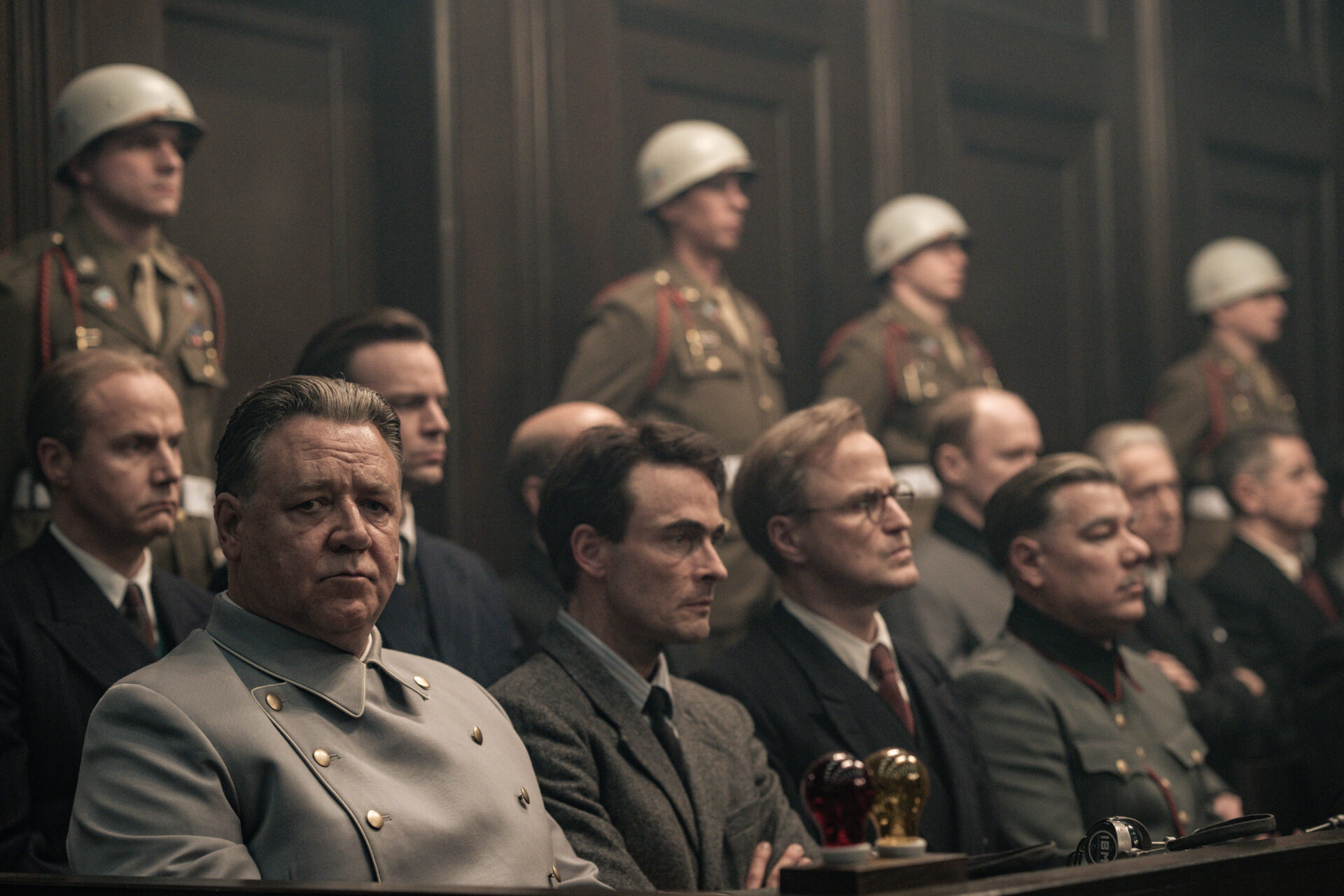
Russel Crowe's chilling performance as Hermann Goering carries the film. Photo: Ascot Elite Entertainment
Nuremberg, signed by James Vanderbilt, combines many of the shortcomings of our time without subtlety, according to our reviewer. The film is nevertheless in the vein of films that deal with the Second World War without romanticizing it.
There are films that annoy you. And you can't help but enjoy them anyway. They have certain flaws that would be prohibitive if they didn't have other redeeming qualities. Such is the case with Nuremberg, released last month, dissects the psyche of Hermann Goering, the most senior Nazi figure to be tried at the Nuremberg trials, played by Russell Crowe.
First, the things that annoy: the Australian actor's fake German accent. There are so many talented German speakers who could have played Goering in Goethe's language. Christoph Waltz would have played him perfectly. In 1961, Judgement at Nuremberg (directed by Stanley Kramer) had cast German actors, including the flamboyant Marlene Dietrich as the widow of a general executed by the Allies. In the courtroom, the waltz of performers, judges and defendants became part of the plot.
Also read about the same film A mirror held up to our consciences
It's also hard to understand the liberties taken with the course of the trial. One of the key scenes is the one in which the British prosecutor traps Goering, after the American prosecutor has got his facts mixed up. The British prosecutor manages to get Goering, who never ceases to proclaim his ignorance of the Final Solution, to say that he had knowingly followed Hitler in spite of everything.
The American prosecutor was clumsy, and it was the English prosecutor who pushed Goering into a corner, but in a far more subtle way. Sometimes, reality doesn't need a helping hand.
We also regret the pathos that has become the trademark of Hollywood films about the Second World War: epic music, wide shots, chiaroscuro and barely concealed warnings to contemporary viewers that fascism could re-emerge.
Let's move on to what makes Nuremberg is Russell Crowe's performance. Even with the ridiculous German accent he borrows to sound «authentic», he manages to portray the fearsome, charming, sensual and terrifying Goering. The dialogues between the fallen Reichsmarschall and psychiatrist Douglas Kelley (Rami Malek), who seeks to understand the psychological underpinnings of Nazism, highlight the moral ambiguity of the Nuremberg tribunals: the victors judging the vanquished, within a legal framework created for the occasion, and what about the carpet-bombing of German cities?
Talking about the Holocaust without having to show it
Despite its dramatic excesses, the film at least has the merit, like its illustrious predecessor Judgement at Nuremberg, It's a film that evokes horror without showing it, even if it does so less brilliantly than the 1961 film, an impressive fresco of post-war Germany.
Kramer takes the risk of eschewing sensationalism altogether: he doesn't deal with the trial of Nazi leaders, but that of the regime's officials, in this case the judges who enforced the racist and anti-Semitic laws. The main character is an aging American judge, chosen by default for a court that everyone is beginning to lose interest in.
His confrontation with the accused and German civilians in Nuremberg, destroyed by Allied bombs, explores much more deeply the banality of evil theorized by Hannah Arendt, as in Area of interest (Jonathan Glaser, 2023), which evokes the Shoah without ever showing it, except from a distance, from the apparent tranquility of the executioners' garden, or the brilliant Jean Renoir in La Grande Illusion («The Great Illusion»), A look at class relations and unbridled nationalism in a World War I prison camp.
These films convey the horror and infinite moral complexities of these historic events without having to bombard our senses with visual or sound effects in the manner of a Steven Spielberg.
Every month, our film review Jocelyn Daloz explores the seventh art in its socio-historical context.
You have just read an open-access column from our print edition (Le Regard Libre N°124). Debates, analyses, cultural news: subscribe to support us and access all our content.
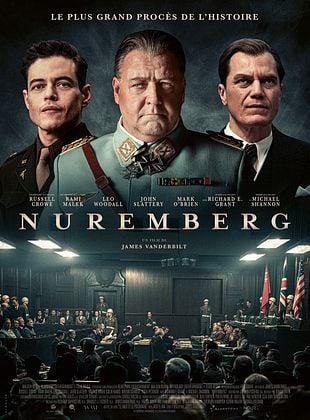
James Vanderbilt
Nuremberg
With Russell Crowe, Rami Malek and Richard Grant
January 2026
148 minutes
You'll also like






 French
  German
  English
Leave a comment