




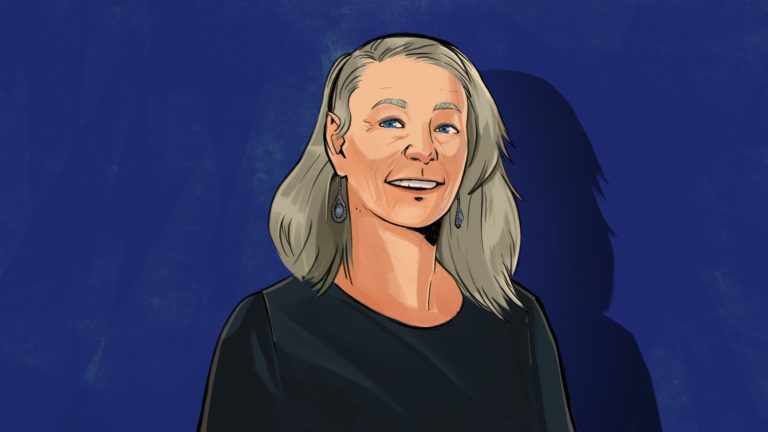
Myret Zaki: «Beware of those who claim to be neutral».»
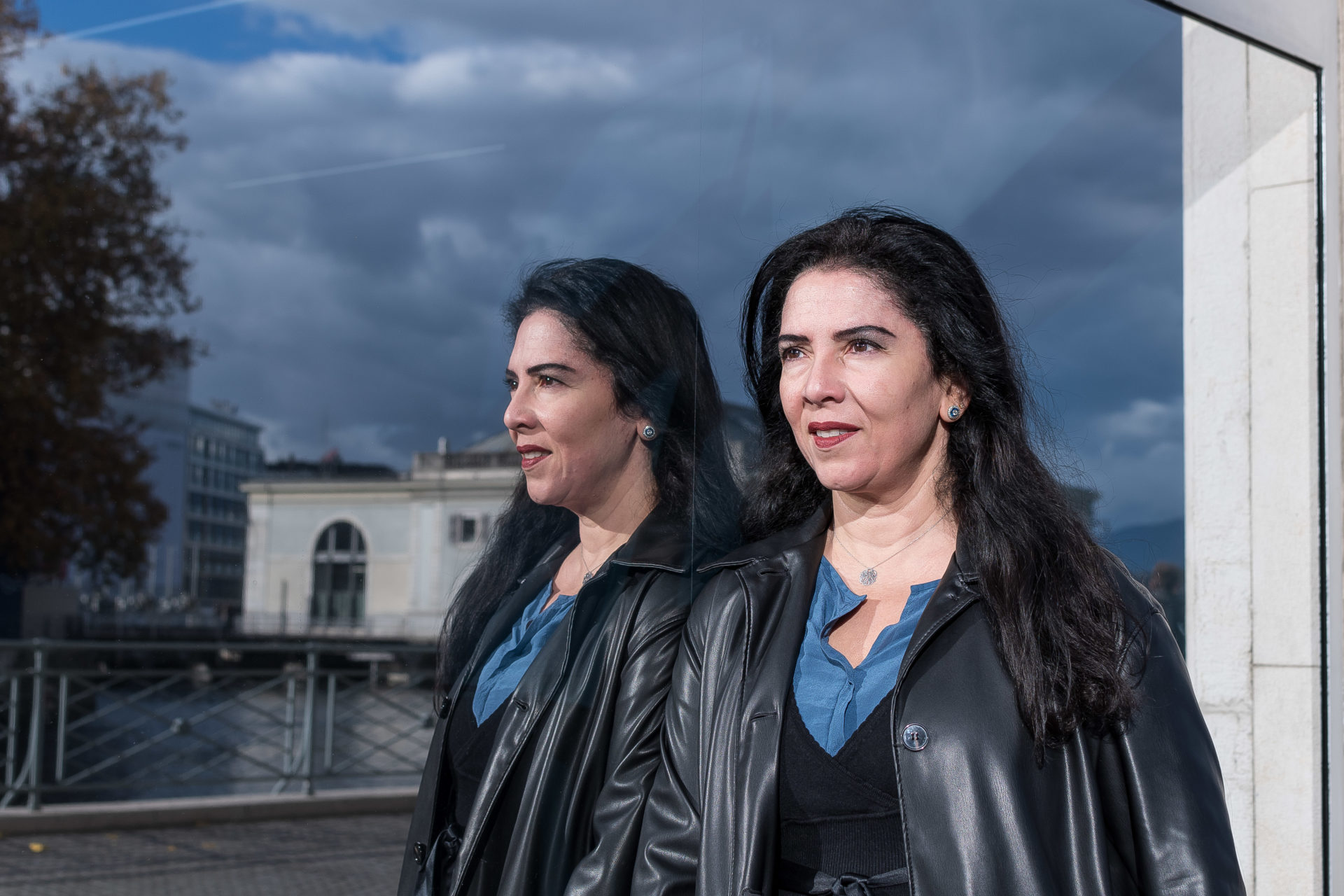
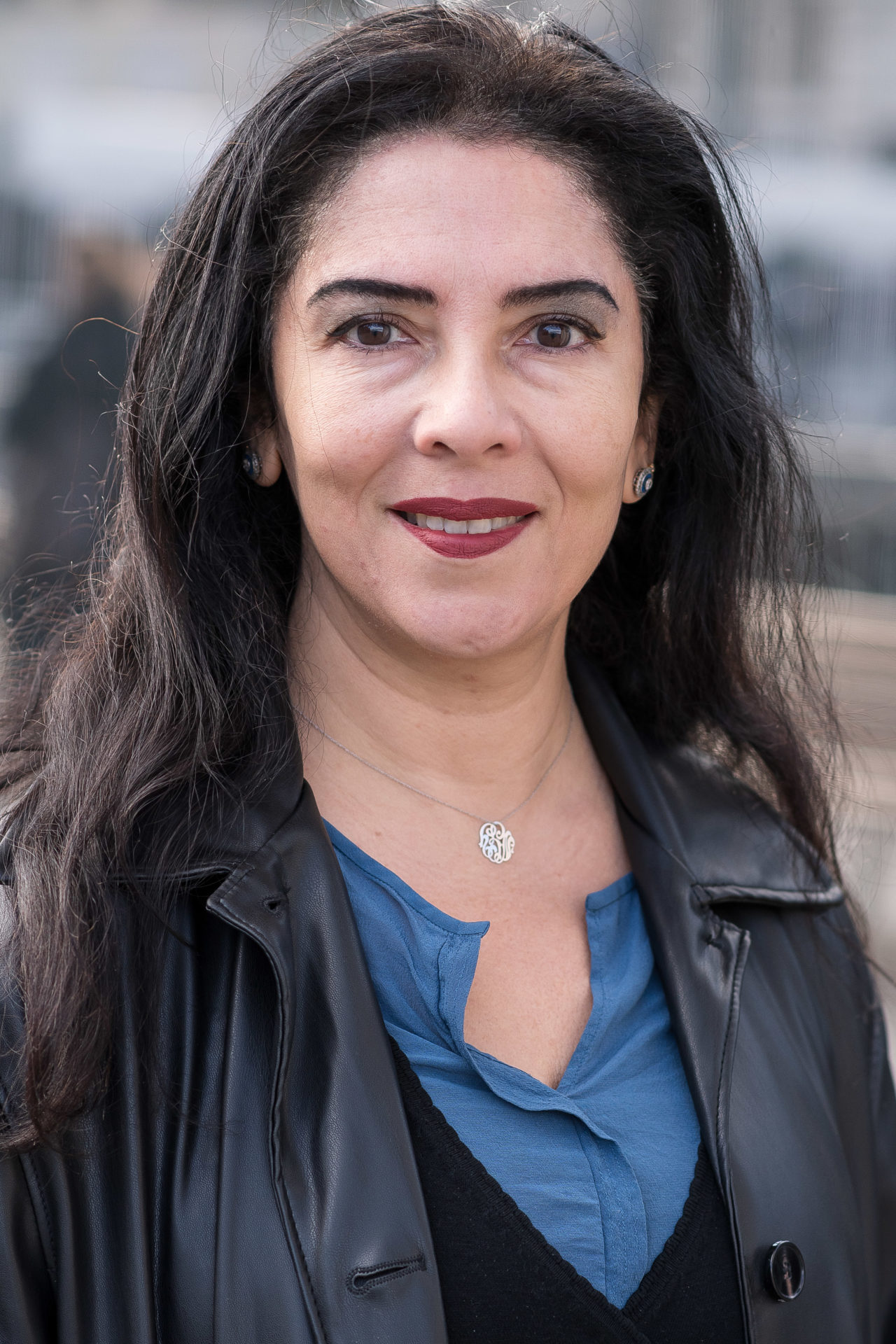
Myret Zaki, Geneva, 16.11.22 © Indra Crittin for Le Regard Libre
In his latest book, Economic misinformation, independent journalist Myret Zaki analyzes the way in which governments and corporations juggle information, with the aim of embellishing or even hiding certain facts. A journey to the frontiers of lies.
Le Regard LibreThe Larousse defines a lie as «the action of altering the truth. Isn't the term you use, »disinformation«, a gentle euphemism for this?
Myret Zaki: With lying, there's an intention to escape an embarrassing situation. In our case, the motives are the same. We don't want to show a certain reality, but there's no clear intention to lie to people, but rather to diminish the effect of less flattering figures, to emphasize what's more positive, or to hide the least attractive information by positioning it far down in a report, or by underestimating the negative and overestimating the positive. It's a whole reality that can be represented in a thousand different ways thanks to statistics. If I consciously choose the option that indicates the most flattering figure, is it a lie? In any case, it's an arrangement with reality. I know that the citizen who sees this figure will not be directly confronted with the raw reality, but will be filtered.
What strategy should a citizen adopt to avoid misinformation as much as possible?
It's very complicated, and that's why I felt it was my civic duty to write a book showing these realities. You have to do a lot of digging, have a very investigative mind, take an interest in statistical changes. You have to go deep into the figures, which is far from being within everyone's reach. If following the Twitter accounts of NGOs specializing in economic issues doesn't make you a statistician or a financial expert, it does at least help you to know who to listen to in order to get another side of the story, and thus to attenuate communication and marketing in order to get closer to objective information.
What do you mean by that?
We can't allow marketing and communication to spread unchecked to the public, we need mediators. This has always been the role of the media. They don't normally take a press or government release at face value, but review it, ask questions and bring the figures closer to reality, in order to obtain a more independent and objective account than the one originally provided by the communications body.
You talk about objectivity, giving the example of Twitter accounts that can process this information. What are the criteria for defining whether so-called «alternative» accounts are credible? The same applies to our readings: who can tell us that you are credible, for example?
I think it's within everyone's reach to select several voices that are interesting, in the sense that they are at least critical and appear independent in their organizational structures. Will a Twitter account or an individual be objective? No. I would argue that you tend towards objectivity by multiplying sources. Hence the idea of pluralism in democracies. The citizen achieves a broader, more objective truth when there is a plurality of political parties, enabling several points of view to be expressed and whole sections of society to be represented. As soon as we are confronted with one-sided thinking in the world of ideas, we lose the possibility of objectivity. Objectivity is the sum of propaganda. So I can form my own opinion from a very broad spectrum, and not be hostage to a single point of view.
You emphasize the particular semantics used by financial authorities to avoid destabilizing the markets. At a time when the slightest piece of unverified information, the slightest flawed tweet from Elon Musk, can create a stock market crash in a matter of minutes, don't you think that, on the other hand, it's the responsibility of these authorities to provide information on market reality, so as to avoid a panic?
We have had to deal with gigantic economic crises since this terminology was first used by the US Federal Reserve (Fed). This means that using a lexicon that conceals realities preserves a speculative bubble in the making and prevents market corrections that would otherwise occur on a regular basis. When the bubble becomes gigantic, it will burst and millions of people will fall victim, even those who have never been near the stock market. That's what happened in 2008, a period I followed closely and which has greatly influenced the way I think about the markets.
What particularly impressed you?
In particular, the fact that those who provoked the crisis have become enormously wealthy. What role did the central bank play? Its communication was always reassuring: the subprimes (editor's note: subprime mortgages) were not too risky and the markets were not overvalued. Are we assuming a responsible role or are we, on the contrary, concealing facts from the public, misleading it about the reality of the risk taken by the markets, on which ten thousand billion dollars evaporated?
In your opinion, having a more relevant lexicon on market realities would help avoid bubble effects.
Indeed, it would lance the abscesses, eliminating inefficiencies and the zombie companies that have multiplied with the crises. There would be no cartels, monopolies or rent-seeking.
You devote an entire chapter to the increasing amount of information provided by multinationals in their annual reports, with the aim, in your view, of drowning out certain key elements. Can we really describe this trend as misinformation, as long as everything is there for those who take the time to read it?
Anyone taking the time to read 300 pages of highly technical financial terminology would be doing so at the expense of everything else. Even with PDF documents, you can search by key words, but it's still hard to find the information in the middle of chapters on marketing and greenwashing. As a user, I can attest to the fact that it has become extremely complicated to find very simple information, forcing me to read miles of marketing material dealing with social and environmental responsibility, legal disclaimers and risk analyses that only professionals are capable of understanding. Access to essential information has become obscured: some is even footnoted. Why do we still open these reports with photos and very positive accounts written by the marketing department?
So we shouldn't read them anymore?
No, because it's not information. Or it could be legal and compulsory information behind the marketing part. The hierarchy of information and the proportions of the various chapters do not reflect a real desire to show investors all the sides of the company, including the less glamorous ones.
Do you have an example?
Of course it is. Today, there's a lot of speculation about Credit Suisse. We don't know what's really on its balance sheet, and we don't have any answers as to why its share price has plummeted, not to mention the rumors of bankruptcy that are spreading. When Credit Suisse found itself exposed to an Asian hedge fund, this was not reflected in its annual report for the period concerned. When UBS had accumulated up to 200 billion dollars of subprimes, There was not the slightest trace of it, either in its balance sheet or in its annual report. I editorialized on this and it was never denied. If the most colossal things don't appear in balance sheets, what does?
How is it that no legislation has been passed in the wake of the various crises?
A phenomenon of institutional capture means that the legislator has difficulty keeping up with the degree of specialization and sophistication of these annual reports. The latter would be hard-pressed to say that essential information is missing. The legislator will be the first to get lost, as the bank will always be more specialized than the legislator on the subject, to the point where financial institutions sometimes help the legislator to draft laws. In other words, complexity itself is the main barrier. What legislator will be able to prohibit the production of complexity?
Edward Bernays, the famous propagandist you quote, claimed that it wasn't wrong to manipulate opinion, because in a democracy, everyone is free to do so as they see fit. You refute this by asserting that, in such matters, the richer the better. But associations like Wikileaks and whistle-blowers like Edwards Snowden have shaken governments with relatively few resources.
That's all very well, but how long were they able to ply their trade? When no one was watching them, they were able to obtain crucial documents, but were prevented from operating. This becomes very political. Can a Wikileaks exist in a democracy knowing what happened to its founder Julian Assange? The answer is no, there is a deterrent effect.
In your opinion, are Western democracies employing methods that could be used by countries with less regard for individual freedoms?
The West is in competition with these countries. China is becoming more powerful, and our democracies have drifted to adopt some of the methods employed by our rivals, indeed. But not in the same way. Historians will certainly look back on this period and explain that these were authoritarian democracies at war, both militarily and culturally, and that doesn't encourage free information.
In your book, you mention the debunkers, who have made it their mission to unmask false information, and who you say are often motivated by the desire to eliminate ideas they don't like. Western governments would play with statistics to retain only the figures that are most flattering to their policies. Isn't it a very human bias to select the information that reinforces our opinions or choices, without any intention to lie or manipulate?
Of course, but we can't pretend that our presentation of the facts is scientifically accurate. We have to accept our biases. What debunkers that claim to be true. This is where we need to be concerned. I gave proof of this by verifying information from Vanity Fair about Trump's inaugural speech in relation to the number of spectators present at his inauguration. While there weren't many people there, there were plenty of viewers and a record audience. Fact-checking involves human biases, which must be acknowledged. Otherwise, it's disinformation.
Read also | Olivier Meuwly: The lie, a player in history
The level of mistrust between the populations of Western democracies and their leaders has never been higher. So, do you really think these government disinformation strategies are achieving their objectives?
The aim is to instill confidence. It should have had this effect, but it was only partial. Some of the upper classes have seen their standard of living improve and have accepted this information, because it doesn't contradict their feelings and experiences. The higher up the wealth pyramid you go, the greater the increase in income. For the 90% citizens, their feelings don't match the figures.
More precisely?
Take, for example, the discourse on the beneficial effects of globalization. The majority suffered the effects, the low-skilled white man on the periphery lost wages and did not benefit from active support policies like other communities, or from wage rises in the countries that welcomed relocation, even though he forms an important part of the electorate. It's a troublesome witness to the downside of globalization, and we haven't listened to it. What's more, the effects of inflation are felt much more keenly on low incomes. In this context, an average doesn't mean much, and we need to find new, more relevant statistics.
In your book, you quote a NATO report from 2020 which predicted that the next conflict would be a cognitive war, manipulating the opinions of belligerent populations. In the light of the war in Ukraine, which is unfolding in a manner worthy of the first half of the twentieth century, I'd like to take a closer look at the situation.th Doesn't the reality of the situation impose itself on everyone?
Unfortunately, no. On the battlefield, there is no factual reality that can be grasped from home. We depend on reports which, depending on the party involved, may be totally contradictory. Many sources have to be consulted, and while the information is obviously not objective on the Russian side, it can't be on our side either. It would be childish to think otherwise.
Read also | Vladimir Fedorovsky: «I experience this war as a personal tragedy».»
Your conclusion takes the form of a piece of advice: diversify your sources. But is the truth always to be found at the crossroads of different sources? Can't it sometimes come from just one source telling the truth while the others are lying?
I think so, because it's always at the crossroads of sources. Anyone who claims to be neutral is precisely the one who is suspect. Let's be wary of him. You have to assume your ideology. If we take American or Chinese imperialism as an example, my fellow journalists often find it hard to accept that they'd rather live in a world dominated by the Americans than by the Chinese. But this is never stated. Instead, they position themselves from the point of view of «truth». Once you declare where you're speaking from, you're already more credible. You have to listen to those who speak for the other side if you want the most objective information possible. The West's place in the world over the next few years is highly uncertain, and it's dangerous to underestimate our adversaries by adopting an overly complacent view of ourselves.
Write to the author: guillaume.heck@leregardlibre.com
Cover illustration: Myret Zaki in October 2022, Geneva © Indra Crittin pour Le Regard Libre
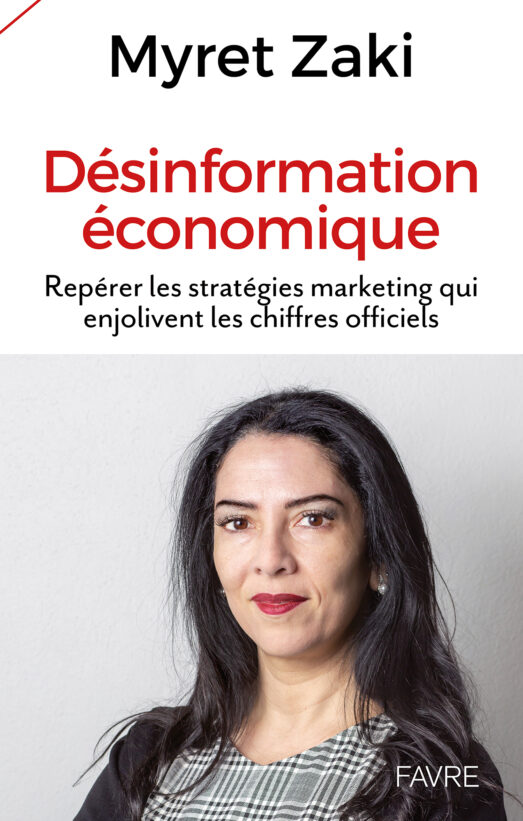
Myret Zaki
Economic misinformation. Spot the marketing strategies that embellish official figures
Editions Favre
2022
264 pages
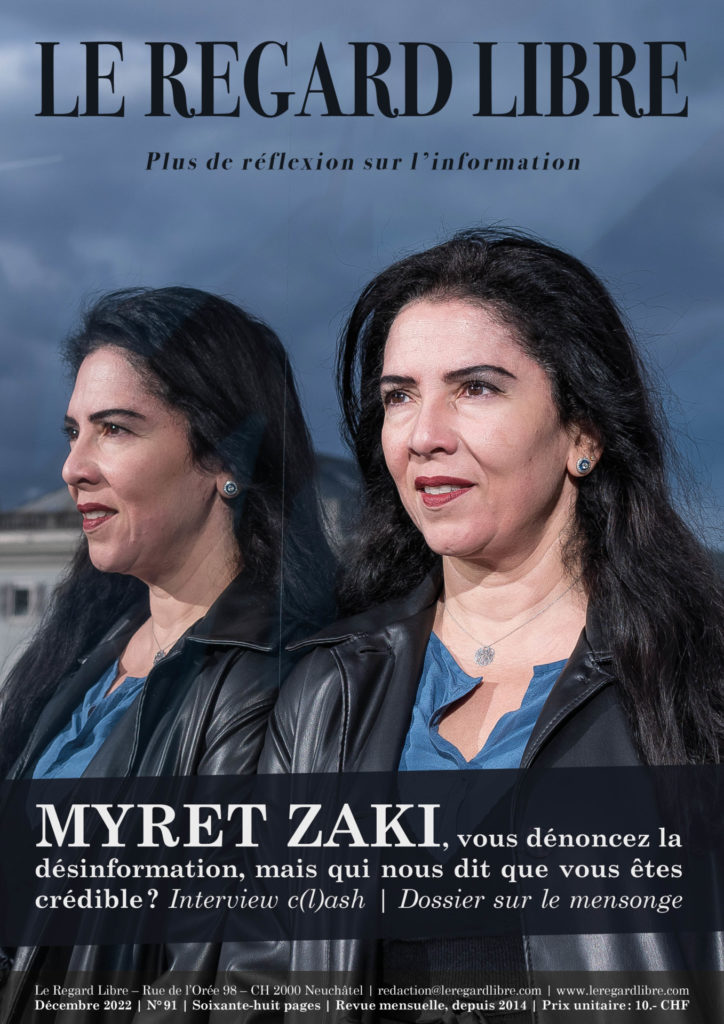
An interview from Regard Libre N°91 (December 2022)
Order the print issue or consult the e-Paper
You'll also like

 French
  German
  English
Leave a comment