



«Switzerland must not become the world's library».»
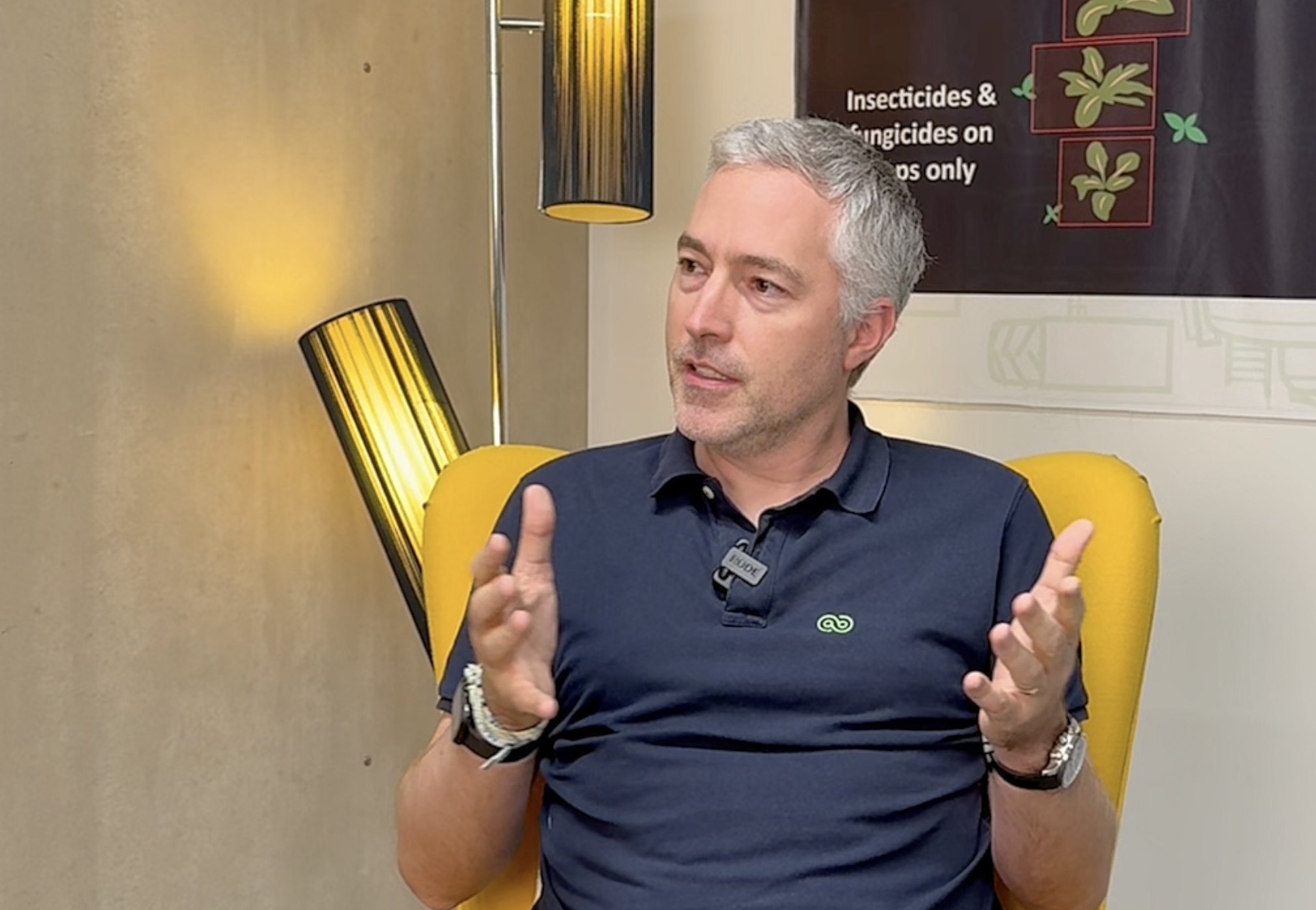
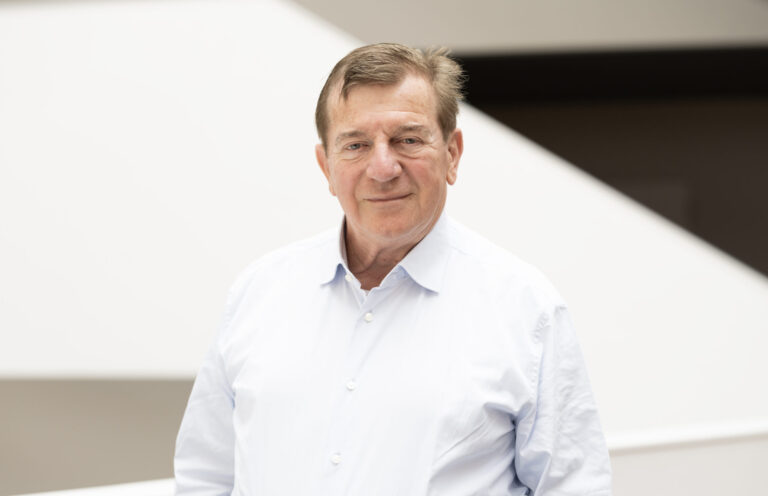
«We need to recreate today the major companies that will drive our prosperity tomorrow,» says Aurélien Demaurex.
Aurélien Demaurex embodies a singular path between ecology, entrepreneurship and politics. The co-founder of Ecorobotix shares his vision of an audacious country, and offers advice to those who want to put technological innovation at the service of the common good.
With 150 million francs raised over the past year, Vaud-based start-up Ecorobotix has established itself as one of Europe's leading players in precision agriculture. Its co-founder and human resources director, Aurélien Demaurex, advocates innovation in the service of living beings, where environmental protection goes hand in hand with economic prosperity.
Faced with global warming, protectionism and technological withdrawal, this former banker embodies a generation of entrepreneurs who refuse to give up. As a Green-Liberal member of the Vaud Grand Council, he is one of the few Swiss elected representatives to combine entrepreneurship with political commitment. In this interview, the HEC Lausanne graduate looks back on his career, sets out his vision of the role of the entrepreneur in society, and shares the recipes that have led him to success.
Le Regard LibreYou run one of the few Swiss start-ups to have surpassed the CHF 100 million valuation mark, with over 200 employees. What does the company do and where is it in its development?
Aurélien Demaurex: Ecorobotix was born of a simple idea: to use technology to reduce the environmental impact of agriculture. It all started with a brainstorm by my partner Steve Tanner, a farmer's son, who wanted to do away with widespread chemical weeding. Together, we designed robots that use artificial intelligence to detect weeds and spray only where necessary. Today, our «ARA» machine reduces the use of chemical products by up to 95%, thus reducing costs for farmers and preserving biodiversity. We sum up our mission in three words: reduce the quantity of chemical products, replace synthetic products with natural solutions and regenerate nature for a more sustainable agriculture.
Ecorobotix now exports some of its products. To what extent have you been affected by the tariffs - of 39% for several months - imposed on Switzerland by Donald Trump?
Around half of our sales are in the United States. The imposition of 39% tariffs on our products was therefore a major shock. Fortunately, we had built up stocks locally, which protected us for a time, but we had to adapt our strategy for the future. In concrete terms, we are working through our American subsidiary to limit the tax impact, and are working to relocate part of our production to North America. This choice, accelerated by customs duties, also makes sense ecologically and economically: we want to produce as close as possible to our customers.
You come from a family of entrepreneurs, but you first worked as an employee in banking and humanitarian aid. What motivated you to return to your roots?
I always knew that one day I would set up my own business, without knowing when or in what field. My humanitarian experience in Africa was the turning point: I saw the tenfold impact of our consumption patterns on the environment, due to the lack of recycling or regulation channels. This experience made me deeply aware of ecological issues, while reinforcing my desire to take concrete, entrepreneurial action. On my return, I met my co-founder, Steve Tanner, working in the field of environmental protection. We shared the same values and were at the same stage in our lives. He had a brilliant idea; we tested it, then turned it into a business. And so, in 2014, what began as a hobby became a true entrepreneurial adventure.
You also sit on the Vaud Grand Council. What drew you to politics?
My political commitment stems from the same ecological sensibility that led me to entrepreneurship. I've always had a taste for politics, but it was on my return from Africa, when the Green Liberal Party was being set up, that I decided to get involved. I helped found the French-speaking section of this political party, then sat on the municipal level before being elected to the Grand Council, somewhat by surprise. Today, my main motivation is to represent the voice of entrepreneurs in a political world often dominated by civil servants, lawyers and the professions. I want to bring an understanding of entrepreneurial reality, particularly in the fields of tech and start-up financing. And, in so doing, contribute to a better representation of entrepreneurs within institutions.
Entrepreneurs are a rarity in politics, whether at cantonal or national level...
It's a question of time and compatibility. The militia system is based on the idea that you can be an entrepreneur and an elected official at the same time, but in reality, it's extremely difficult. Running a 250-strong business already demands a great deal of energy. It may have been simpler in the past, but the world has speeded up, companies are more complex and the pressure is constant. What's more, the Swiss political culture is slow and procedural, whereas entrepreneurship demands quick and often radical decisions. These are two very different cultures, and worlds that operate at opposite rhythms.
This lack of representation of entrepreneurs in politics is also reflected, it seems, in public opinion. For example, with the Zucman tax debate currently taking place in France, one sometimes gets the impression that entrepreneurs are perceived as exploiters rather than contributors to society.
I believe that this perception is part of a more general phenomenon of distrust towards elites, be they politicians, business leaders or other authority figures. Today, there is a feeling of discrepancy between the reality experienced by the population and that perceived by these circles, often associated with money or power. Society has become more fragmented and polarized, even though we have never had so many means of communication. The Swiss don't like too many heads sticking out, and this cultural trait has undoubtedly become more pronounced.
What do you see as the social role of an entrepreneur?
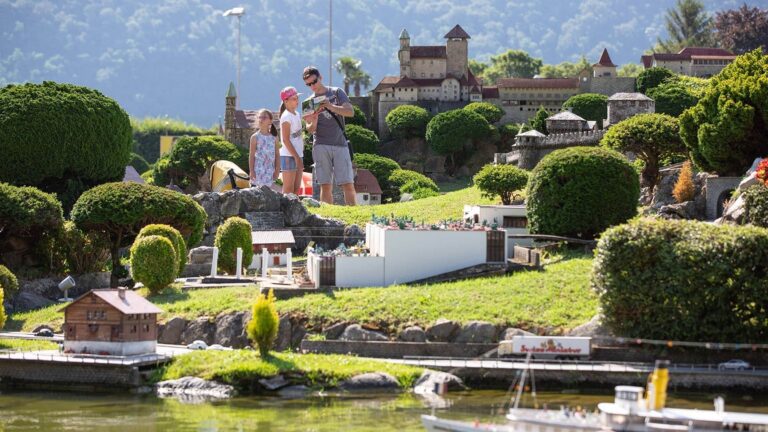
Switzerland lives and breathes on the successes of visionary entrepreneurs of the past, like Alfred Escher, who founded the companies that drive our prosperity: Nestlé, Roche and even Credit Suisse. And this last example shows that even a giant can collapse. So we can't rest on our laurels. We need to recreate today the major companies that will drive our prosperity tomorrow. Our country has a great capacity for innovation, but it must not become a library for the rest of the world. If we don't, we'll become a sclerotic showcase for our past glories - a kind of economic «Ballenberg». Entrepreneurs are here to prevent this.
Many young people no longer believe that innovation and capitalism can solve the climate crisis. Instead, they advocate degrowth or sobriety. How do you respond?
Admittedly, our system has its excesses: it sometimes takes more than it gives. But for me, the solution is not to overturn it, but rather to improve it. Growth has brought considerable advances - in health, comfort and prosperity - that cannot be ignored. To reject it would be to renounce this progress. I'm convinced that technology and the private sector will play a decisive role in solving the climate crisis. With 200 innovations like ours, we could practically solve the problem of carbon dioxide in the atmosphere. Of course, we need to consume responsibly, but I think the key is innovation for the common good.
You recently stated that Switzerland invests CHF 22 billion a year in research, but only CHF 3 billion in technology transfer.
Yes, it's one of my main hobbyhorses, both politically and entrepreneurially. The Confederation still invests too little in transforming its scientific discoveries, both public and private, into businesses and jobs. As a result, our ideas, born in higher education, are often financed by foreign capital and end up leaving the country. This is an economic loss, but also a question of sovereignty.
Take an algorithm like ours: if it were to malfunction and destroy crops instead of weeds, the consequences could be dramatic. In this context, depending on American or Chinese technologies becomes a strategic risk. We have the means to build our own ecosystem: Swiss pension funds and asset management represent over CHF 1,000 billion. All we need to do is redirect some of this capital towards our own start-ups, instead of funding those of others which, ironically, often end up killing off our own.
Swiss pension funds invest around 10 % of their assets in alternative investments, of which just 2 to 3 % in private equity and a tiny fraction in venture capital. In the United States, this share rises to around 14 %. How do you explain this discrepancy?
Above all, it's a cultural question. In Switzerland, we have a risk-management mentality - inherited from the world of banking and insurance - which favors stability and capital preservation over risk-taking. Yet our country is brimming with innovation sectors capable of becoming world leaders, such as precision agriculture. For these sectors to reach their full potential, institutions, and pension funds in particular, must have the courage to invest more in local start-ups. The younger generation is already more daring. They take risks, launch themselves and create. It's time for the older generation - those who hold the capital - to support them, to transform this creativity into lasting economic success.
Let's talk about entrepreneurship. What does your day-to-day work involve?
My role has changed enormously. In the beginning, I did absolutely everything: welcoming visitors, paying salaries, raising funds, tinkering with prototypes until late at night. Sometimes even repairing a burnt-out engine at the last minute during a demonstration to investors! Over time, I specialized. Today, I'm mainly in charge of human resources and have a cross-functional role as «chief of staff», a sort of right-hand man to the CEO, involved in various strategic projects. What I like about this job is that no two days are alike. You're constantly moving from one decision to another, from an emergency to an opportunity, with an agility that few other environments can offer. Everything moves very quickly - unlike in the world of politics, where it can take years for a piece of legislation to come to fruition. It's this energy and responsiveness that makes entrepreneurship so stimulating.
You now employ 250 people. How do you manage to grow without falling into the ponderousness you reproach the political world for?
This is a major challenge. As the company grows, it needs more structure and organization, while avoiding the rigidity of large groups. At Ecorobotix, we're still in a phase where we're chasing our own growth: we're expanding very fast, launching several products in parallel, opening new markets and international subsidiaries. The real danger is not so much of becoming bureaucratized as of failing to structure quickly enough to support this expansion. The aim is for structure to serve speed, to enable us to go even faster, not to slow us down. In short, we need to stay organized without losing the agility that is our strength - a matter of survival for a hyper-growth company.
For young people who dream of becoming entrepreneurs: what do you think are the essential skills to develop?
The first, and perhaps most important, is to identify the right person with whom to launch. Many projects fail not because of the idea, but because of the founding team. Entrepreneurship is a marathon, and tensions can quickly arise over questions of contribution or capital distribution. What's more, I'm trying to change legislation to facilitate these adjustments between founders, so that personal differences don't derail good projects. Then, of course, you have to be curious, persevering and capable of constant adaptation.
How do you choose the right person to partner with?
It's all about values. It's this common foundation that enables us to get through difficulties without falling apart. With Steve, beyond our complementary backgrounds - he's an engineer and I come from finance - we share the same vision, the same principles, and that's what has kept us together in moments of tension. It's a bit like a marriage: you need trust, respect and a solid foundation to make it last. In fact, my wife often jokes that Ecorobotix is our fourth child! We mustn't forget that this adventure has an impact on our family, friends and personal life. You have to make sacrifices, go out less, sleep less. It's an exciting but demanding life. That's why it's so important to surround yourself with the right people - both at work and at home.
Entrepreneurs also stand out for their ability to take risks. Tell me about the last time you took one.
We take them all the time, at every board meeting. But the biggest risk we've taken is the one of calling everything into question. Originally, Ecorobotix was developing a fully autonomous robot designed to weed fields without human intervention. Everyone thought it was a great idea, but no one was ready to buy it. Farmers already had tractors, and the idea of a robot on its own in their fields was too foreign to them. So we took the radical step of abandoning everything and designing a towed version of our robot. The choice was painful, but vital: our product adapted to farmers' habits, and success followed. Today, the irony is that we're gradually returning to the original concept, as the tractors themselves become autonomous. But at the time, this change of direction was a decisive gamble: if we hadn't made it, Ecorobotix would certainly no longer exist.
The path of an entrepreneur is also strewn with pitfalls. Can you tell us about a notable failure?
As a human resources manager, what really gets to me is when you realize that you haven't recruited the right person - especially when it comes to a key position. A few years ago, we hired someone for a management role, but his profile turned out to be unsuitable. This kind of mistake has far-reaching repercussions: tension in the team, loss of energy, loss of confidence. It's painful for everyone. Over time, I've learned that you have to be able to recognize very quickly when a collaboration isn't working, before the problem takes root. These mistakes leave their mark, but they also remind us that the success of a company depends above all on the people who make it up.
To conclude, what advice would you give to a young person who wants to start out as an entrepreneur?
I'd encourage him to take on a project that makes sense for him. Creating yet another application with no real use doesn't add up to much. It's better to tackle a real problem and seek to have a positive impact on society or the environment. It's this dimension of meaning that keeps us going in the long term.
Economics graduate and president of the Association Café-philo, Yann Costa is an editor at Regard Libre.
You have just read an open-access article from our print edition (Le Regard Libre special issue N°7). Debates, analyses, cultural news: subscribe to support us and access all our content.
You'll also like
 French
  German
  English
Leave a comment