




War in Ukraine: may this horrible surprise not be in vain
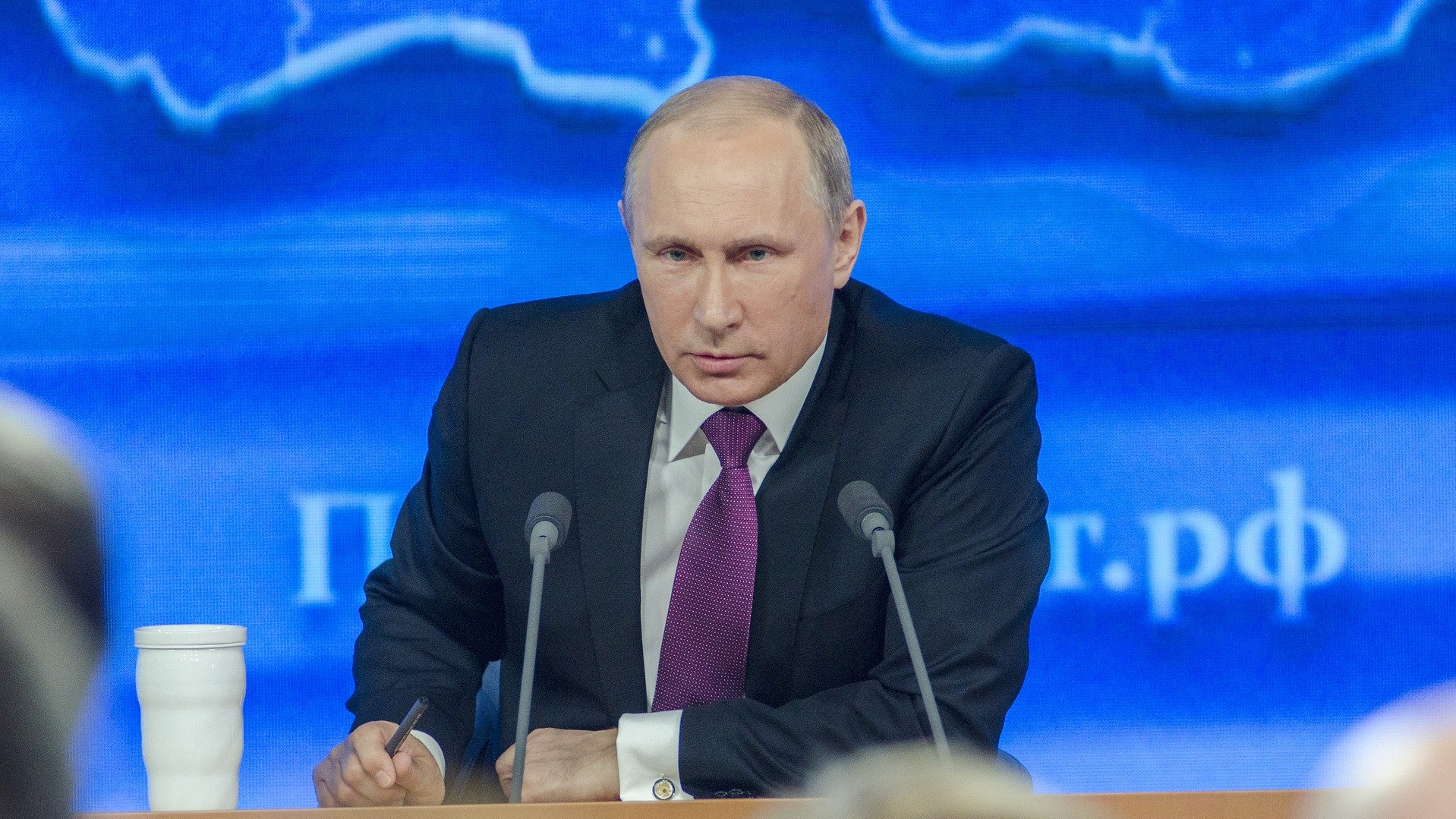
Vladimir Putin © Pixabay
Unpublished article - Clément Guntern
What madness has Europe fallen back into? Under cover of the insidious, paranoid rhetoric of an autocrat hiding in the Kremlin, the continent is once again at war. Vladimir Putin has been lying to the world for a very long time. We should have known better than to trust the Russian president. Let's draw the consequences.
For almost twenty years, all forms of discussion with Vladimir Putin have come to nothing. American and French presidents, as well as German chancellors, have tried to establish a dialogue with Moscow, but all have failed. Is it because the West has been steadily «nibbling away» at Russia's defensive glacis? Let's immediately reject this logic, which has no value in an international order governed by the law and custom of civilized peoples: states are sovereign, and therefore masters of their own destinies and the choice of their alliances, period. If diplomacy has suffered a defeat, it was because, in the end, everything had to lead to this essential war for dictator Putin.
Everything? The strengthening and modernization of its army, the gradual slide of Russia towards a muzzled society, the centralization of power in the purest tradition of Russian autocrats since Ivan the Terrible, the repeated tests to try out the men, equipment and methods in Georgia, Syria, during the American elections, in Crimea in the Donbass or the Central African Republic. And our response? Softness and cowardice.
Read also | Ukraine: who wants to fight against democracy?
After the annexation of Crimea, after the trusteeship - not to say annexation - of the Donbass, it was obvious that on the part of a predatory leader like Vladimir Putin, the lack of firm opposition from the West would be perceived as weakness. A political and military passageway was thus open that only a leader megalomaniac enough would dare to use to accomplish his criminal designs. From that moment on, Putin must have been convinced that the West, and Europe in particular, had forgotten the language he himself speaks so well, that of deterrence and power. Whatever his deep-seated motives: desire for expansion, fear of democratic societies and their potentially contagious effect on the Russian population... or both.
Ukraine's fate, even if not yet sealed, is not looking good. This country at the heart of Europe, and its people with it, have been sacrificed. May this horrible surprise not be in vain. The narrow political limits set by the West must be used without further delay to give the Ukrainians every possible support: strong sanctions, sending arms to the Ukrainians, and so on.
It is also imperative to reassess all other issues, such as Georgia, Moldavia and the Balkans, and their association with the European Union and NATO, the most effective means of deterrence left in Western hands. As a result, the Europe of defense, which was still only a distant need on February 23, has become a pressing necessity, one of the tools of the grammar of power to be relearned. With the exception of a few of Putin's press attachés, from Zemmour to Orban, who today find themselves very borrowed, Europe now has the opportunity to be coherent with itself, and appears more united than ever.
It's important to acknowledge once and for all, on the occasion of a passage marked by a very clear caesura, that we've entered a new world. Everything is now geopolitical, whether it's the construction of a gas pipeline, the purchase of fighter jets or European science policy. The world has changed. It's high time to adapt.
Write to the author: clement.guntern@leregardlibre.com
You'll also like


 French
  German
  English
Leave a comment