



Diversifying non-alcoholic beers: we tasted some
Le Regard Libre N° 77 - Max Moeschler
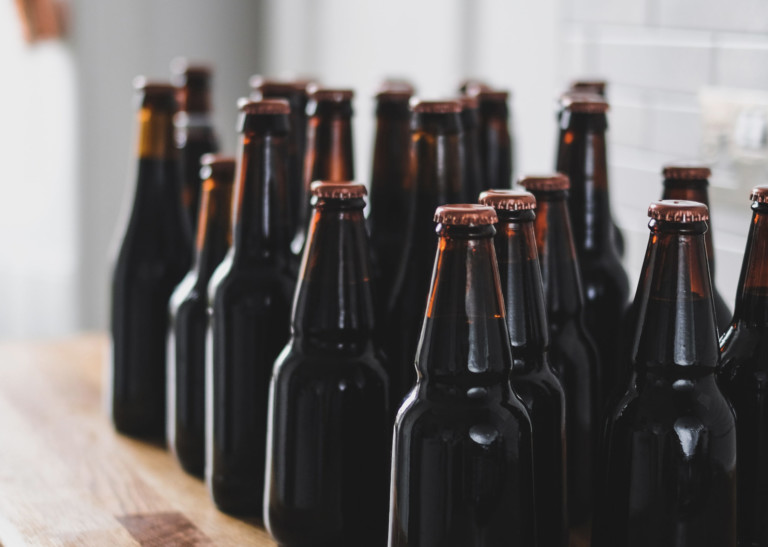
Alcohol-free beer, characterized by the absence of malt fermentation, making its alcohol content less than 0.5%, is winning over more and more Swiss consumers. Lending itself wonderfully to a variety of situations, it nonetheless has a reputation for being an uninteresting drink. Its taste has a lot to do with it. But in this respect, things are changing radically. The proof is in the tasting.
In Switzerland's teeming beer market, a rather unusual newcomer is gaining ground, rising from a timid 2.3% market share ten years ago to almost 4.5% today: alcohol-free beer. Although long suffering from a mixed reputation, the tide seems to have turned in recent years, with this beverage finding its way to more and more tables. It's hard, however, to separate the massive marketing push for alcohol-free beer from the often visceral reluctance to drink it. While you'll readily agree that the age-old «fake beer» or «chick beer» argument is terribly reductive and outdated, this beverage is still often criticized for its lack of taste and character. But what is it really? From industrial beer giants to craft breweries, we've tasted four of them for you.
- Our tasting begins with the green giant of beer, Heineken. In fact, the Dutch beer Goliath made a big splash with its alcohol-free beer as sponsor of the recent European Football Championship (incidentally, did you know we beat France?). This is the alcohol-free version of our famous lager. Tasting here will be as short as its length in the mouth, which is dangerously close to zero. If its alcoholic big sister already didn't shine in terms of taste, the alcohol-free version approaches abysmal depths in terms of nose and aroma. It's flat, a little gassy and vaguely resembles a diluted beer. To be avoided at all costs.
- Let's continue now with a brewery almost as industrial as the previous one, but Swiss (did I mention we beat France?): the classic Feldschlöschen. Here again, we're faced with the non-alcoholic version of the lager that is still the success story of the castle brand. And here again, there's nothing new under the sun: we find the typical bitterness of the alcoholic version, but slightly attenuated (understand: there's not much left). Although refreshing, the sensation of dilution is very unflattering on the palate. Without being overtly unpleasant, and to use an expression as Swiss as this beer, «it doesn't break the bank».
- Our exploration continues this time with the Scots of Brewdog. Although producing in large quantities and all over the world, the Highland brewery has not changed the artisanal approach of its beginnings and the care given to its beers, while remaining fiercely attached to its independence. We can therefore expect something interesting. In other good news, its new alcohol-free beer, soberly named «Punk AF», is modelled on Punk IPA, the brand's spearhead and light years away from the dead lagers previously tasted. And it works! On the nose, we find the exotic fruit notes typical of this style. On the palate, generous hopping pleasantly enhances the floral and fruity notes, with a nice bitterness. While perhaps lacking a tad of attack compared to its big sister, «Punk AF» is rich and retains the brewery's uncompromising approach. A real success!
- Finally, we return to Switzerland for the fourth and last beer of this tasting: Dr. Gab's Placebo., the famous Puidoux-based craft brewery. In addition to being 100 % craft beers, Placebo is not a variation on an existing beer, but a beer in its own right, demonstrating the company's determination to offer a new product and to dismantle the image of this type of foam as a substitute. Here too, the beer is of the India Pale Ale. On the nose, fruity and resinous notes emerge from skilfully controlled hopping. On the palate, it's fresh, lightly malty, with a moderate but present bitterness. It also has a long finish, which is often pointed out as the missing ingredient in non-alcoholic beers. The result is a well-balanced, singular beer to which we'd give the Good Lord without confession. We want more!
The growing success of alcohol-free beers is no coincidence, as it goes hand in hand with an increase in their quality. The bad image that many consumers have of non-alcoholic beers is ultimately inherited from industrial breweries that are less concerned with the taste of their product than with its profitability, as Luca Santos, founder of the French-speaking start-up Ivre de Plaisir, which offers non-alcoholic festive beverages via its e-commerce platform, explains:
«People were so used to tasting bad non-alcoholic beers that they found no interest in them, preferring its alcoholic version or sodas if they were looking for something non-alcoholic. These bad first experiences have turned people away from a drink that has potential.».
So we find ourselves in a vicious circle in which the low quality of the first non-alcoholic beers didn't generate much demand, which then made craft breweries reluctant to brew this type of product, due to a lack of customers... But as Brewdog and Dr. Gab's have shown, the tide is turning and more and more excellent breweries are starting to take up the exercise. But as Brewdog and Dr. Gab's have shown, the tide is turning, and more and more excellent breweries are beginning to take up the challenge, with results to match the alcoholic beers they offer, pointing to a bright future for alcohol-free beer.
Write to the author: max.moeschler@leregardlibre.com
Photo credit: © Mathieu Baume for Le Regard Libre
Our other articles on beer gastronomy: Beer by the hundreds
You'll also like

 French
  German
  English
Leave a comment