




Marianne Grosjean: The example of the Sabines
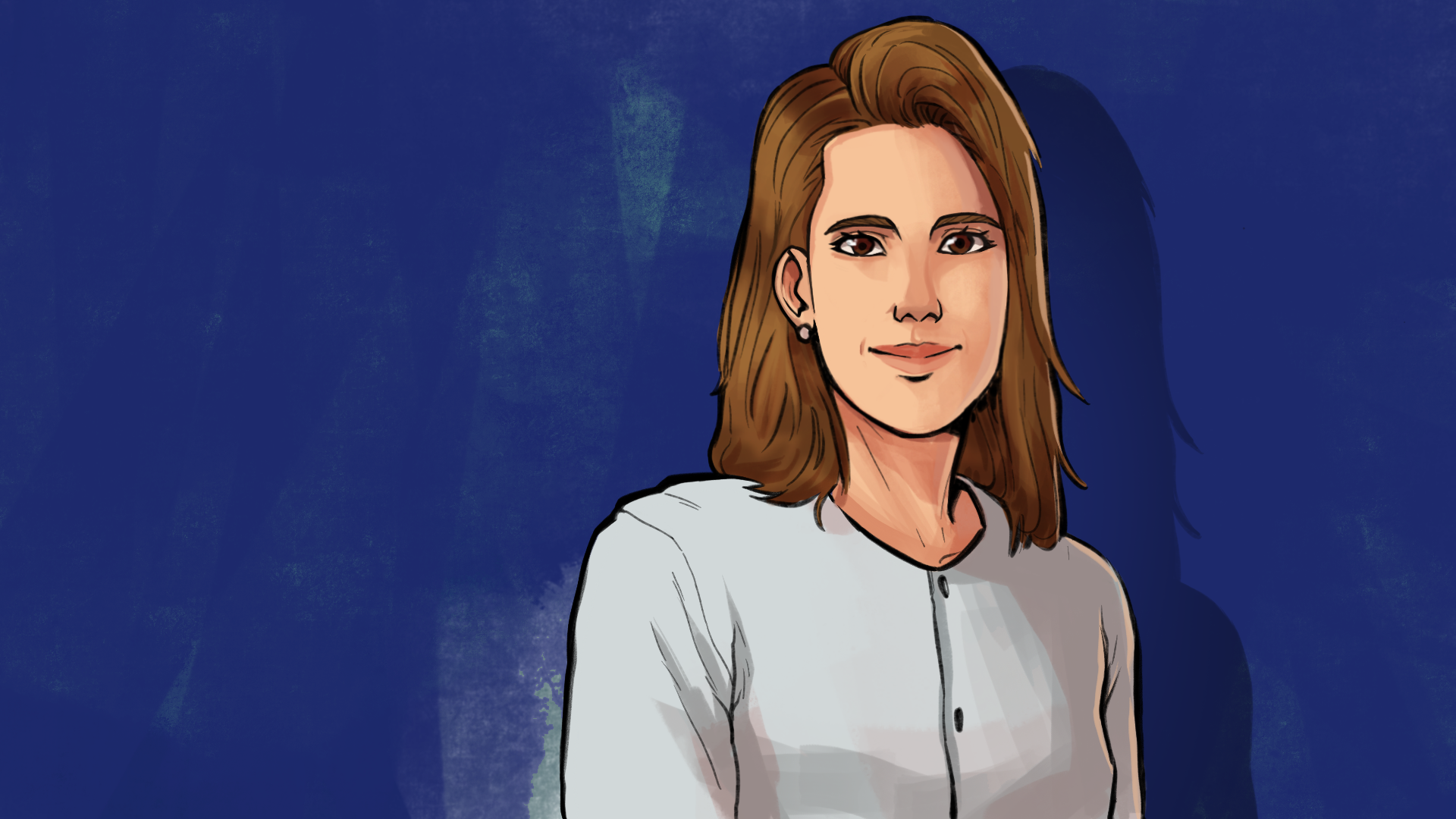
Journalist Marianne Grosjean, columnist for Regard Libre. Drawing by Nathanael Schmid
Journalist Marianne Grosjean sends out a message in each of her columns. This month, she reminds us that, from Antiquity to the present day, women have borne an essential responsibility.
At the age of 13, I was hanging on the every word of Madame Bornicchia, a Latin teacher at the cycle. Sitting at her desk, facing us, she had been recounting the history of Rome according to Titus Livius for two hours. «And then, at the fountain where she was going to draw water, Rhea Silvia spotted a super-handsome guy in armor, who was flirting with her. It was Mars,» recounts the teacher, amused by the extreme attention of all the students. From the forbidden union between the god and the vestal was born Romulus and Remus. As an adult, Romulus had to find wives for the citizens of the new city of Rome, in order to renew the generations. After failing to forge alliances with neighboring peoples, he invites them - among them the famous Sabines - to circus games. There, horsemen storm the stands to kidnap the young Sabines and make them their wives.
«There was no rape, Titus Livius is quite clear on that. On the contrary, the Romans were so patient with their new wives that the latter eventually gave in and accepted their condition as Roman wives with pleasure», assured Mrs Bornicchia.
However, several years later, the Sabines returned to attack Rome to reclaim their daughters and sisters. The Sabines, now Romans, hearing the battle, took to the streets with their children to prevent the fight. They pointed out that they would bear the brunt of the war by becoming either orphans or widows, and that they would not survive the pain. «From the soldiers to the chiefs, everyone is silent, overcome with emotion. They decide non solum to make peace, sed etiam to join Rome to form a single city.»
What women, those Sabines... I said to myself, mouth agape over my braces. We desire them to the point of kidnapping them to marry them. We love them so much that we expect them to love in return. And when they assert themselves in the middle of the battle, we respect them, listen to them and stop fighting. Because we recognize women's ability to defend not just their own interests, but the interests of all. Happiness and the future of society are in their hands, provided they take their place and are recognized for it. What an essential role women play in society!
I think back today to the wars going on and wonder where the Sabines are. Why don't we hear the voices of mothers, or why don't we listen to them? Why have some women lost their role as peacemakers and come to wish that the children they carried in their wombs would go and be blown up by their enemies, supposedly to die as martyrs? Why don't the powerful men who cause the world's instabilities choose a woman at their side who's equal to them, who'll put the brakes on them if they screw up, a woman they don't buy with their own money, an esteemed woman from whom they want to be worthy?
I dream of an international text that would bring women the world over into agreement. A text that we could recall when our men go astray in fighting, exploiting, dominating, trading in humans. Something like: «We, women of the world, want peace for ourselves and our children. We recognize that women in other countries also want peace for themselves and their children. We do not accept to be sold, bought, rented, owned, objectified, violated, raped. We don't accept this for our children either, nor for those of our enemies.»
Les Sabines' feminism is not a struggle. It's a reminder of the essential role women play in making the world go round.
The journalist Marianne Grosjean addresses a message to our readers in his column.
You have just read a column published in our print edition (Le Regard Free N°119).

You'll also like



 French
  German
  English
Leave a comment