




«Cleopatra and Frankenstein: comedy masks drama

First novel by English author Coco Mellors, Cleopatra and Frankenstein was published in French this autumn, following its success in the English-speaking world. A book with a puzzling title, for a story made of paradoxes.
It's 10:30 pm on New Year's Eve in New York when Cleo comes face to face with Frank in the elevator. They start chatting, the tone is bantering, the jokes fly and the attraction is mutual. While this novel opens with a scene worthy of a sentimental Christmas comedy, there's nothing romantic about the story of Cleo and Frank. Cleo is a broke college student whose visa is about to expire; Frank is twenty years older, has a lucrative advertising job and is an American citizen. They're as opposite as the book's enigmatic title suggests, but made of the same stuff: badly patched cracks.
«From the day of her wedding, when Frank had given her that blue orchid, dyed with poison ink, she should have guessed that he didn't understand her and never would.»
The discomfort of being oneself
Since this impromptu meeting, Cleo and Frank have never left each other's side, even marrying in the process. However, the fairy tale soon fades and the reader understands that Coco Mellors is not staging a comedy, but a drama. The drama of two unstable beings seeking to complete themselves. The drama of an age when excess is no longer a playground, but a gilded prison. With a light, offhand pen, the novelist unveils a gallery of extravagant, mocking and deeply flawed characters, all pursuing life's most delicate ambition: understanding and finding oneself.
Through the love story of Cleo and Frank, Coco Mellors tells us about social relationships. Friendship, love at first sight, rivalry, jealousy, passion, the sometimes benevolent, sometimes toxic bonds, the author explores our society in the simplest, most lucid way possible: by dramatizing human relationships.
Cleopatra and Frankenstein is the portrait of a completely disoriented generation, which sees happiness glimmering in the distance, but fails to grasp it, falling back on its generic: appeasement. A generation asphyxiated by the confused noise of the world. All the characters have their backs against a wall of resentment and disillusionment. Each, in his or her own way, is trying to pick up the broken pieces in their lives. But they all slowly slide towards the malaise that grips weary souls. And what works so well in this novel is that we recognize ourselves in the gestures held back, the monotony endured, the failures, the stolen glances. Because, in the end, it's not Cleo or Frank that Coco Mellors is talking about, but us.
«So, what was the best part of last year for you?" he continued.
- Just one thing?
- As you wish.
- Damn, I've got to think about that. Well, I switched to an antidepressant that allows me to orgasm again. It felt like a major victory.»
Zany dialogues between patent neurotics
The author imbues her story with a playful, frivolous tone, speaking of fractured individuals, neuroses and prevailing despair. The style is light, but never naïve. Therein lies the paradox! The novelist's great strength lies in the fact that her narrative is based entirely on dialogue, without the plot going round in circles or sounding hollow. On the contrary, the discussions between the characters are extremely funny, sometimes zany (as when one of the guests offers cocaine as a wedding gift), and often end in a "laugh-out-loud" moment. punchline, which gives the book a pleasant TV-series feel.
The feeling that comes over you once you've finished and closed the book is that you wonder why you should gauge it, analyze it and inevitably paraphrase it, and why you shouldn't just be content with the resonating melody and the memories it leaves behind. Because Cleopatra and Frankenstein is quite simply a novel that rings true.
Write to the author: quentin.perissinotto@leregardlibre.com
Photo credit: © Quentin Perissinotto for Le Regard Libre
You've just read an open-access article. Debates, analysis, cultural news: subscribe to support us and get access to all our content!
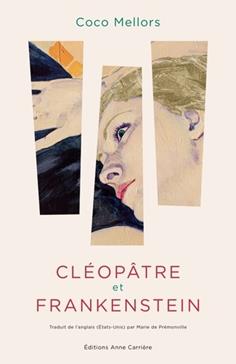
Coco Mellors
Cleopatra and Frankenstein
Translation by Marie de Prémonville
Editions Anne Carrière
2022
412 pages

You'll also like





 French
  German
  English
Leave a comment