



From May 68 to the present day, Virginie Linhart evokes «The maternal effect».»

Tuesday's books - Ivan Garcia
The life story of a young woman torn between her strange relationship with her mother and the upheavals of contemporary history. The maternal effect is the raw, sincere testimony of an author who, against all ideologies and morals, has become an everyday heroine.
The American novelist Ernest Hemingway had a strange conception of writing. «The best thing that can happen to a writer is to have an unhappy childhood», he said. Many writers would readily agree. Until a few years ago, May «68 was regarded by progressive society at large as the pinnacle of happiness and freedom. Like a lost Eden that had been destroyed. But since the Grand Soir, episodes such as the #MeToo movement or the Matzneff affair have emerged, and people who have been abused have spoken out. It makes you wonder whether May 68 was all that happy... A book written by a native of that decade gives readers the chance to make up their own minds on the matter. But she has written instead about her »unhappy adulthood".
The story of a broken family
Last January, Editions Flammarion published The maternal effect by Virginie Linhart. Writer-director Virginie Linhart has written a first-person account of her life in which the boundary between the narrator and herself becomes completely blurred. The author recounts her tumultuous relationship with her mother, a committed feminist and MLF activist. The latter, a very free-spirited woman, sees her daughter (almost) as a friend and often as a rival. Virginie Linhart underlines the paradox of this liberated woman who drastically restricts her daughter's life with emotional blackmail and prohibitions, because she reminds her of her old age and arouses the desire of men... Their relationship is strangely defined, with the mother refusing all obligations, even going so far as to marry and adopt in order to try her hand at a «new» motherhood. And since she doesn't do things by halves, she graces her daughter with murderous words...
«All you had to do was have an abortion: he didn't want that kid! Perhaps it was these words, spoken one summer morning by my mother, that triggered this story. This kid, my daughter, her granddaughter, whose seventeenth birthday we had just celebrated. What had happened to us? What happened between us for her to be able to utter such a sentence? I thought that until I found out, I wouldn't be able to see my mother again.“
From this epigraph, the story builds on Virginie's testimony and the deductions she draws from it. The testimony is coupled with an investigation into the author's family, interweaving her personal history and that of her predecessors with the major historical events of the 20th century.th centuries such as the Shoah and May 68. From the teenager who hears her mother's noisy orgasm in the next room, to the woman confronted with abortion and the hell of solitary motherhood, Virginie Linhart takes us on a whirlwind tour of life, the result of a lack of reference points due to a broken family. Between psychoanalysis sessions, illness, failed love affairs and other catastrophes, she «takes it in the neck» to put it crudely. The story is harsh, even cruel, without ever falling into victim pity or the reductionist «oppressor-oppressed» dichotomy.
While the mother figure is omnipresent in the book - whether between the narrator and her mother, or between the protagonist and her daughter Lune - the father figure is also present, and not just any father figure. Linhart. In French history and literature, this name occupies a certain place. Robert Linhart, Virginie's father, was the founder and founder leader of the Union des jeunesses communistes marxistes-léninistes (UJCml). The «Marxist Yid», as he was nicknamed by the author's grandfather, offered the readership L'Etabli, published in 1960 by Editions de Minuit. An autobiographical account in which the young revolutionary describes his daily life as a worker at the Citroën factory. But just as May '68 was in full swing, the man became seriously ill, to the point of becoming a vegetable. A dark trajectory that haunts his daughter, who is afraid of following in his footsteps.
Times have changed
The author wonders how to escape the «maternal effect», the unhappiness that seems genetically transmissible. To understand this, she investigates the origins of her family's unhappiness in the same way as Edouard Louis or Annie Ernaux, but with greater emphasis on interiority and psychology. At the crossroads between history and her family, she finds the answer by reflecting on this singular era, when the demand for freedom devoured all reference points.
Read also | The melancholy of the true left
The maternal effect explores the margin of interpretation left to each individual in relation to dogma and the times. Thus, in the course of the story, we find former soixante-huitards converted into capitalist reac’ or feminists who have become guarantors of a new morality. A particularly relevant case is that of abortion, brought to the fore during a dinner between Virginie and her lover E. Expecting twins from E., the narrator tries to convince him to keep the children, while E., relying on his own interpretation of feminist theories, wants her to have an abortion:
«We are the children of feminist mothers who fought in the 1970s to freely dispose of their bodies, to choose to have a child if they wanted, to live their sexuality as they wished. From these struggles, these slogans, these demonstrations that we witnessed, we drew diametrically opposed lessons. In his eyes, abortion is a banal, practical act, with no consequences other than a little time wasted accompanying me and coming to get me, because, he points out, “Don't worry, I'll be with you”. For me, waiting for a child, or children in this case, is in line with the freedom that our mothers demanded.»
The book reveals a dark and little-known part of the «May 68 phenomenon», where excessive freedom led to many excesses. It's a crude but not vulgar account that raises questions. Is it possible to be a free woman and, at the same time, a happy mother who doesn't repeat the mistakes of the past? With The maternal effect, Virginie Linhart answers in the affirmative.
Write to the’author: ivan.garcia@leregardlibre.com
Photo credit: © Jude Beck
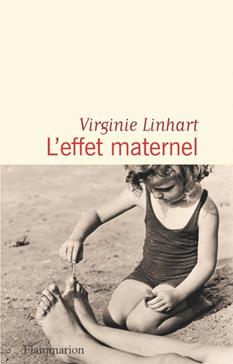
Virginie Linhard
The maternal effect
Editions Flammarion
2020
214 pages

Vous aimerez aussi




 French
  German
  English
Laisser un commentaire