







Karl Kraus, infrequent and visionary (3/3): «The prophet of the apocalypse».»
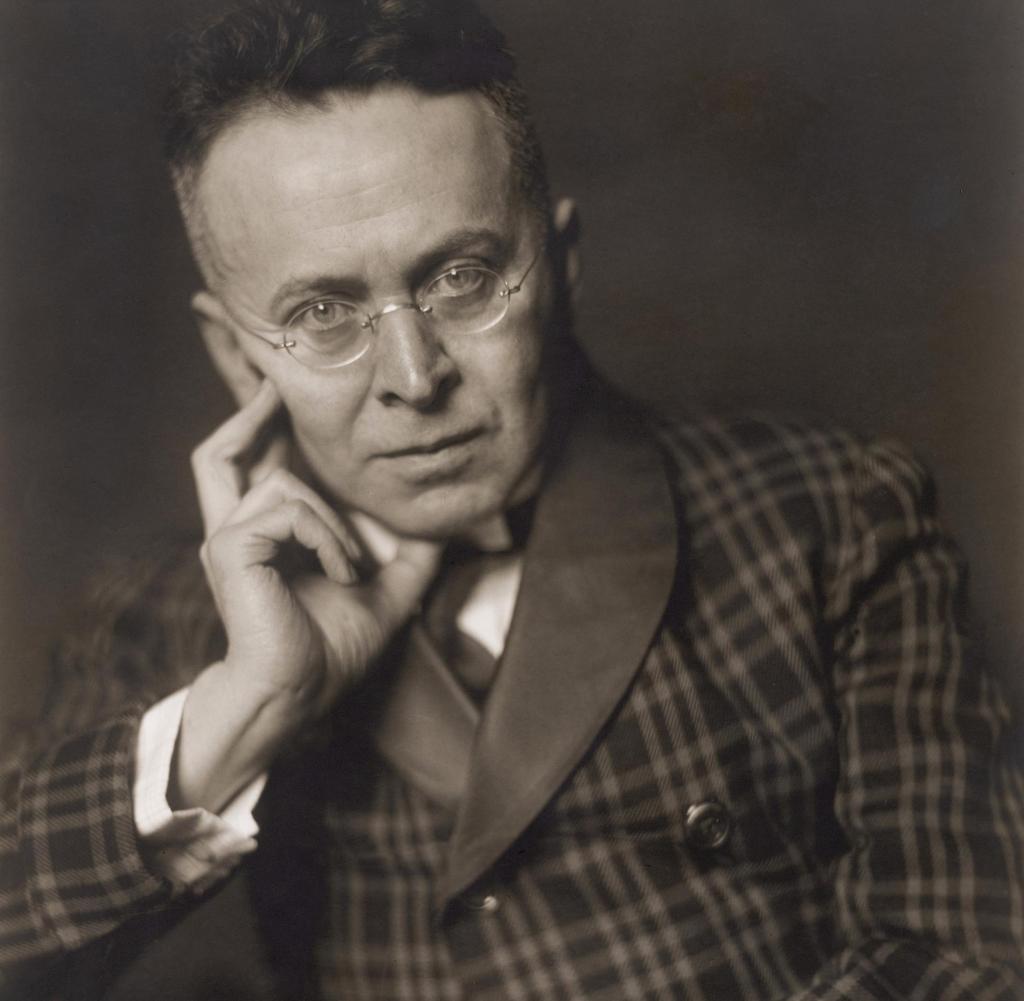
Karl Kraus's two major works were not translated into French until 2005. It's true that a certain number of academics had made a point of confining him to the restricted circle of colloquia, and had not shied away from republishing his works.his alleged anti-Semitism and his defense of Dollfuss, in order to make him unlikable and therefore unreadable.
As early as 1914, Karl Kraus was mobilized against the looming war. He would later write, in 1924: «From that moment, from that day in South Tyrol, when I heard the truckers howling with the enthusiasm that the butcher inspires in cattle sent to the slaughterhouse, my heart frozen in the face of the cause that provoked so much jubilation and that was a bad cause, even if it would have been just, burning with compassion for a humanity that was running with glee to its dishonorable doom, to its exhaustion, its execution, its mutilation, and sensing that this jubilation would fall silent as soon as the first step towards the sad truth of so-called glory was taken - from that moment I always fulfilled, in my writings and words, the obligations created for me by the feeling that now bound me to this homeland: disgust.»
During this period, in 1914, Die Fackel and is regularly seized. Kraus, for his part, demanded that the press be censored, as its harmfulness was even greater in these times of war: «Is the press a messenger? No, it is the event! A speech? No, life! It is not content to pretend that its dispatches constitute the real events, but it also provokes that disquieting amalgam which makes us believe that acts are always reported even before they occur, that it also makes them possible [...].»
During these war years, Kraus wrote The last days of humanity, a unique apocalyptic tragedy. In the 1922 edition, he specified that «the first draft of most of the scenes was written during the summers of 1915 and 1917, the prologue in July 1915, the epilogue in July 1917. Many additions and modifications were made in 1919, the year in which the acts were published [as a special issue in Die Fackel, where the epilogue appeared in November 1918]. This provisional edition was entirely revised and enriched in 1920, and the whole work was printed in 1921.»
The frontispiece of the original edition features a photo of the execution of Cesare Battisti, a social-democrat deputy in the Austrian Parliament who joined the Italian army when war was declared, was taken prisoner by the Austrians and hanged for high treason. Consisting of 209 scenes in 5 acts, with a prologue in 10 scenes and an epilogue in verse, the whole representing some 800 printed pages, «[...] this drama, whose performance, measured in terrestrial time, would extend over some ten evenings, is conceived for a Martian theater. The spectators of this world would not be able to resist it. For it is made of their blood [...]», as Kraus writes in his presentation. Mind-filling, desolate, horrifying, this hallucinatory work is undoubtedly one of the greatest anti-war texts ever written. For a glimpse, Editions Agone has published a short extract, Monologues of the Grouch and the Optimist, which takes up some of the dialogue between the Râleur (Kraus himself) and the Optimist (an «average» Viennese bourgeois). As in Third Walpurgis Night, all Kraus is in this tragedy: attacks ad hominem of his enemies, documentation and information taken at face value, self-sufficient quotations - the «killer quote» is a Kraus trademark.
On January 30, 1933, Hitler was appointed Chancellor by President Hindenburg. Between late December 1932 and October 1933, Die Fackel never appeared. This suspension of the magazine, as at the outbreak of the First World War, shows Kraus's disarray. Between May and September 1933, Kraus wrote Third Walpurgis Night. The title deserves some explanation: it's a clear reference to Goethe, Kraus presenting his text as a sequel to «Walpurgis Night» by Faust and the «classic Walpurgis Night» of Faust II. Goethe and Shakespeare are present from start to finish in this incredible work, which makes you wonder how it could have been written not after the Second World War, but ten years before. The criminal nature of the regime is precisely dissected. To the nagging question of whether it was possible to understand what was going to happen from 1933 onwards, and in particular the extermination of the Jews of Europe, the reading of Third night provides an unambiguously positive answer. «Kraus drew from only two sources. The disease and its antidote. The press, from which he «preserved hundreds of thousands of documents on [its] direct or indirect responsibility» and where he «went to find all the evidence against an existence that it had corrupted». And literature, essentially Goethe and Shakespeare, who according to Kraus, [Bouveresse writes], «already had a prescience of everything that is happening to us».
Mid-September 1933, Third Walpurgis Night was ready to go to print, the final proofs had been corrected, but in the end Karl Kraus decided not to publish it. He feared reprisals not only against himself, but also against his subscribers and anyone else who came into possession of the text. Issue no. 888 of Die Fackel which appeared in October 1933, is the shortest issue in the magazine's history: in addition to a tribute to his friend Adolf Loos, who died in August, the issue contains a single, abstruse ten-line poem by Karl Kraus: «Let no one ask what I've been doing all this time. / I remain speechless; / And do not say why. / There is silence, while the earth bursts. / No words that hit the nail on the head; / One speaks only from sleep. / And one dreams of a sun that laughed. / Things pass; / Then it was indifferent. / Speech fell asleep when this world awoke.» Instead of the satirical Kraus that everyone expected, attacking Hitler and Nazism, this poem was to sow confusion and misunderstanding, particularly among his followers.
As we saw in the first episode, in 1934 Karl Kraus sided with Chancellor Dollfuss, the only bulwark in his view against Pangermanism and the annexation of Austria. Trouble was brewing: Kraus, who supported Dollfuss's Austrofascist regime, began to be suspected of Nazi sympathies. In July 1934, issue 889 of Die Fackel a sixteen-page spread of articles from the international press and German Social Democrat and Communist exiles reproaching it for its silence expressed in the previous issue. In November 1933, the magazine Neue Deustche Blätter for example, published a ten-line poem modelled on Kraus's, which ends: «Die Fackel Karl Kraus? It's over! / And we don't care / That he fell asleep when barbarism awoke.»
The final act of this misunderstanding took place a week later, with the publication of issue 890-905 of Die Fackel 310 pages, entitled «Why Die Fackel ne paraît pas», which contains excerpts from Third night, The first sentence is «Mir fällt zu Hilter nichts ein», which can be translated as «Hitler inspires nothing in me». What Kraus means is not that he has nothing against Hitler, contrary to what many have tried to understand, but that the satirist can do nothing against the barbarism to come. And the «Mir» («me») is a clear distancing from the exiles, who have now adopted the «uns» («we») of «solidarity» of the opponents of Nazism. Even for his ardent supporters, including Walter Benjamin and Bertolt Brecht, Kraus becomes incomprehensible and indefensible.
Luckily, the Kraus archives, together with the corrected proofs of Third Walpurgis Night - the text of which he continued to refine until his death, and which first appeared in German in 1952 - were taken out of Austria in 1938, and were sheltered in the United States by his executor, lawyer Oskar Samek, and in Switzerland by his secretary and head of the archives of Die Fackel, Helene Kann. They have since joined the Vienna City Library, and have been digitized (available online) and studied.
Prophetic, apocalyptic, visionary, uncompromising, with a language so perfect and full of witticisms, allusions and references that it takes several readings to understand the text - not to mention the difficulty of translating it! -With these two masterpieces, Kraus is undeniably one of the greatest German-language writers of the first half of the 20th century.th century.
Pascal Vandenberghe is an avid reader and bookseller.
You can read the previous episode.
Vous aimerez aussi




 French
  German
  English
Laisser un commentaire